

























Most brands start with weight. “We’re selling 250 grams, so we need a 250 gram pouch.” It sounds sensible, and it’s the most common reason a first packaging order comes back wrong.
Weight tells you very little about the space your product actually occupies. The right pouch depends on volume, density, the dimensions themselves, gusset depth, headspace, the pouch style you choose, and how the product gets filled. Miss one of those and you end up with a bag that won’t seal cleanly, tips over on the shelf, or reaches the retailer looking half empty.
This guide covers how pouch measurements are structured, how to compare standard sizes against a working chart, how to calculate the capacity your product needs, and how to decide between standard and custom. If you’re still settling on a format, start with our guide to choosing the right pouch for your product.
Understanding Pouch Size and Capacity
Before you look at a single measurement, it helps to separate two ideas that most packaging conversations blur together. Getting this distinction right saves more reorders than any other part of the process.
Pouch Size vs. Pouch Capacity
These two get used interchangeably and they shouldn’t be.
- Pouch size is the physical measurement of the bag: width, height, and gusset depth, quoted edge to edge.
- Pouch capacity is how much of your product actually fits inside once it’s sealed and looks right on a shelf.
A supplier can tell you a pouch measures 6″ × 9.5″ × 3″. Only your product can tell you whether that holds 200 grams or 400.
Why Product Weight Alone Is Not Enough
The gap between the two comes down to bulk density: how much space a given weight of your product takes up.
Whole coffee beans don’t nest together, so air fills the gaps and 250 grams needs more room than you’d expect. Fine powders do the opposite and settle tightly into less volume. Snacks are looser still, since chips and granola trap air during filling. Pet treats sit in between, though their shape matters as much as their weight, because irregular pieces leave voids that dense kibble wouldn’t.
Same number on the label, four very different pouches. That’s why density belongs at the front of your sizing decision, not the end of it.
How Pouch Dimensions Work
Pouch specs look simple until you try to turn them into a real fill weight. This section breaks down what each number actually controls and how much of it you get to use.
Width, Height, and Gusset
Pouch sizing runs on three numbers.
- Width is the measurement across the front panel, controlling side-to-side fit and printed face size.
- Height is bottom to top, affecting shelf space and label layout.
- The bottom gusset is the depth of the base that expands when filled. It’s what lets a pouch stand.
Metric specs appear as W × H + D, so 200 × 300 + 100 mm. US specs are written as Width × Height × Bottom Gusset in inches. Same three measurements, different notation.
External Size vs. Usable Space
Every quoted dimension is external, and several things eat into it before your product goes in. The top seal takes a strip of height. A zipper takes more, and you can’t fill into that zone at all. A tear notch sits above it. Then comes the fill line, where product stops and headspace begins.
Add it up and a pouch listed at 9.5″ tall might give you closer to 7.5″ of genuinely fillable height. That difference is where most sizing mistakes are born.
Why Gusset Depth Changes Capacity
Two pouches can share identical width and height and hold completely different amounts, because the gusset does the volume work. A deeper gusset means more capacity and a wider, more stable footprint. A shallow one keeps the pouch slim but limits how much it holds and makes it far more likely to tip once filled. As a working rule, gusset depth of roughly 35 to 50 percent of pouch width stays balanced.
Standard Pouch Sizes and Capacity Chart
Most products land close to one of a handful of proven sizes, which is why a chart is the fastest way to narrow your options. Use the table below to find your starting point, then adjust from there.
| Pouch Size | Width | Height | Gusset | Approx. Capacity | Suitable Products |
| Small | 4″ (100 mm) | 6″ (150 mm) | 2.4″ (60 mm) | 50–100 g | Samples, spices, sachets |
| Medium | 6″ (160 mm) | 9.5″ (240 mm) | 3″ (80 mm) | 150–250 g | Coffee, powders, tea |
| Large | 8″ (200 mm) | 12″ (300 mm) | 4″ (100 mm) | 300–500 g | Snacks, nuts, pet treats |
| Extra Large | 11″ (280 mm) | 15.5″ (400 mm) | 4.75″ (120 mm) | 600 g–2 kg | Bulk foods, pet food, grains |
Actual capacity varies depending on product density, shape, settling, and required headspace.
Worth knowing: our published sizing tables were built using coffee beans as the reference product. If your product is denser or lighter than beans, expect your real fill weight to land above or below these figures. Treat the chart as geometry to start from rather than a guaranteed fill weight.
How to Choose the Right Pouch Size
This is the part that turns a rough guess into a confident order. Work through the six steps in sequence and you’ll arrive at dimensions you can actually defend to a co-packer.
Step 1 — Define the Target Fill Weight
Start with the number that goes on the front of the pack. Common retail weights are 100 g, 250 g, 500 g and 1 kg, and there’s a commercial reason to stay near them. Shoppers compare across a shelf, and an odd fill weight makes that harder.
Step 2 — Measure Product Volume or Bulk Density
No lab equipment needed. Take a container with a known volume, fill it the way your product will actually be filled, and weigh what’s inside. Repeat two or three times and average the result. You now know how many grams occupy one litre.
Step 3 — Estimate Required Capacity
Required Volume = Product Weight ÷ Bulk Density
If your granola comes in at 400 g per litre and you’re packing 500 g, you need roughly 1.25 litres of product volume before anything else is added.
Step 4 — Allow Space for Sealing and Headspace
Now add room on top: clearance for the top seal, extra if there’s a zipper, slack so the product can move without straining the seams, and an allowance for settling in transit. Ten to fifteen percent above your calculated volume is a sensible starting point, and air-heavy products need more.
Step 5 — Select a Starting Pouch Size
Take your total required volume back to the chart and pick the closest match. If you’re between two sizes, size up. An underfilled pouch reads as poor value, but a slightly generous one just looks well packed.
Step 6 — Test With the Actual Product
Charts and formulas get you to a shortlist, not a decision. Order samples in your chosen size, fill them on your real equipment, and check three things: does it stand straight when full, does the seal close cleanly, and does it still look right after shipping? Products settle. A pouch that looks perfect at the filling line can look half empty on the shelf.
Choosing the Right Pouch Style
Style and size are decided together, because each format handles volume differently. Here are the five that come up most often and what each one does best.
Stand Up Pouches
The default for most retail products. The bottom gusset expands as you fill, giving shelf presence and a large printable front panel. See our stand up pouches.
Flat Bottom Pouches
More structure, more capacity for the same footprint, and a squared-off premium look. Popular with coffee and pet treat brands because the shape holds itself. Explore flat bottom pouches.
Lay Flat Pouches
Three-side-seal bags for samples, single-serve portions, and slim items that don’t need to stand. Available in lay flat pouches with custom width and height.
Spouted Pouches
Built for liquids, sauces, and anything pourable. Sizing here is about controlled pouring and grip as much as volume, so the shape has to work in one hand.
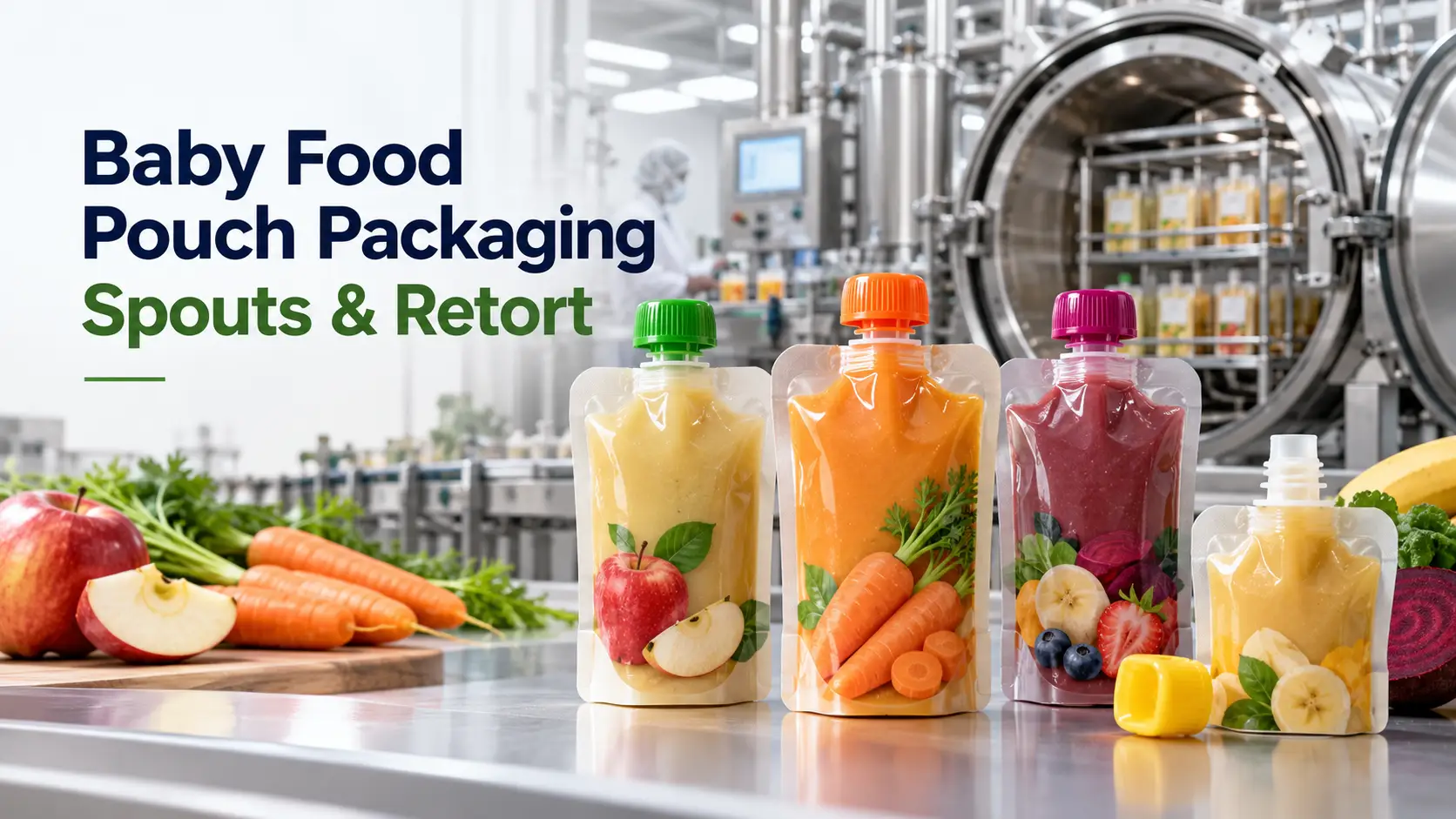
Retort Pouches
For heat-processed, shelf-stable products. The structure has to survive the retort cycle, so material and dimensions get specified together. See retort pouches.
Standard vs. Custom Pouch Sizes
Once you know roughly what volume you need, the next question is whether an off-the-shelf size will do. Both routes are valid, and the answer usually comes down to how close your product sits to a common fill weight.
When Standard Sizes Work Best
Standard dimensions make sense when your fill weight lands close to a common size, you want to move quickly, you’re sampling before committing, or you’d rather keep production simple across several SKUs.
When Custom Sizes Make More Sense
Custom is the better call when your volume falls awkwardly between standard sizes, you need a specific shelf presentation, you’re building portion-controlled packs, your branding calls for particular proportions, or you want dimensions optimised for shipping cartons.
| Factor | Standard Size | Custom Size |
| Product fit | General | Precise |
| Flexibility | Moderate | High |
| Development time | Faster | Longer |
| Custom branding | Good | Better |
| Unique products | Limited | Strong |
One thing changes this calculation: we don’t charge extra for custom sizing. The usual reason to compromise on dimensions is cost, and if that isn’t in play, there’s rarely a good argument for squeezing your product into a size that doesn’t quite fit.
Pouch Size Examples by Product Type
Theory only takes you so far, so here’s how the sizing rules play out across the categories we pack most often. Use these as sanity checks against your own numbers.
Coffee
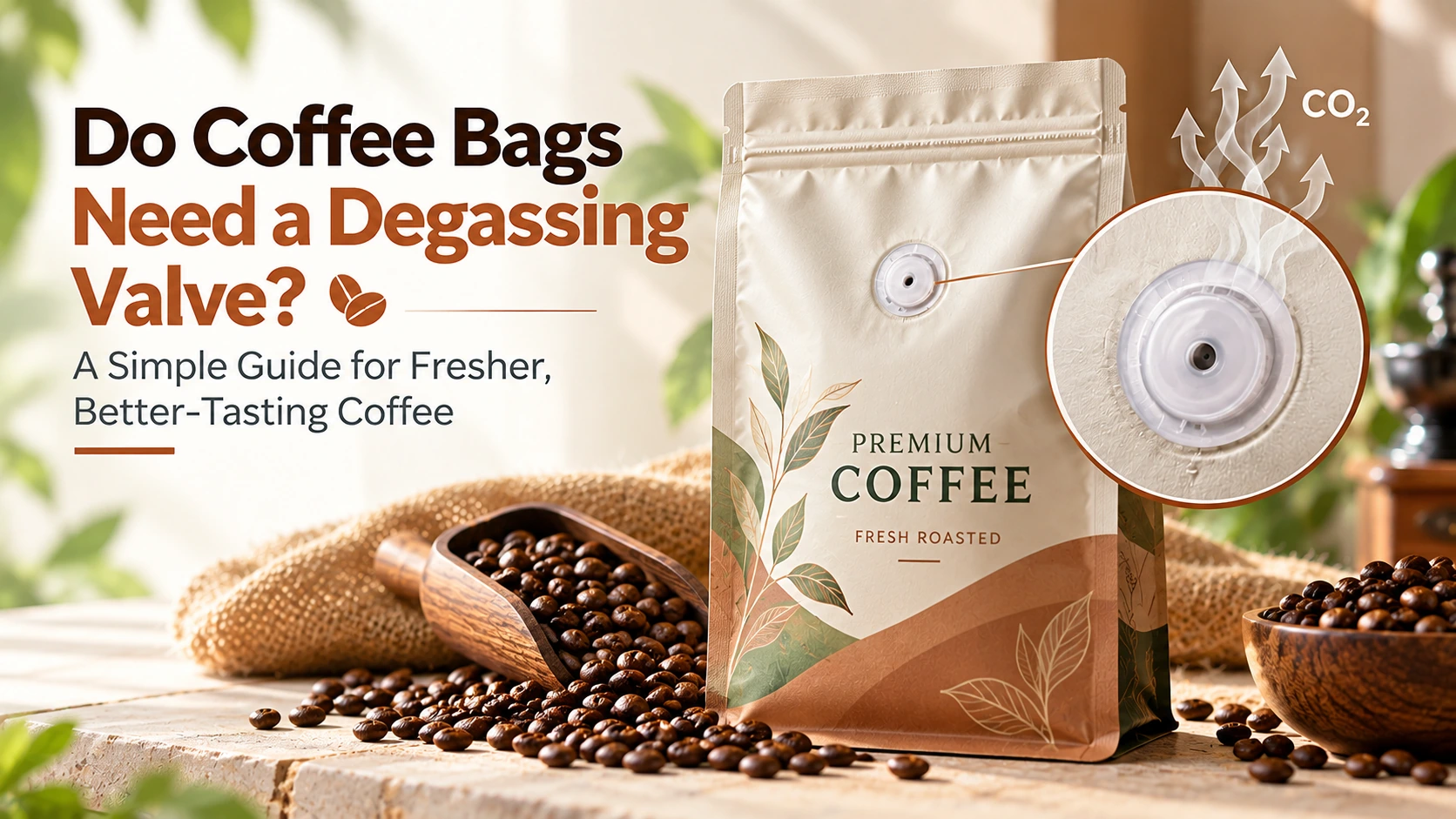
Whole beans need more volume than the weight suggests. Leave generous headspace for sealing and factor in a degassing valve for freshly roasted product. A 12 oz retail bag typically runs around 7″ × 11.5″ × 4″.
Powders and Supplements
Dense and efficient, so you can often use a smaller pouch than expected. Leave room for a scoop, and remember the zipper eats the fill height that powder would otherwise use.
Snacks, Nuts, and Granola
The trickiest category. Trapped air inflates the pouch at filling, then the product settles in transit and the bag looks emptier. Irregular shapes crush under weight too, so don’t size so tight that the product gets compacted.
Pet Food and Treats
Heavier weights need a wider base and deeper gusset for stability. Resealing matters to pet owners, and the film has to handle repeated opening without tearing at the notch.
Liquids and Sauces
Sealing integrity is everything. Watch for bulging at the sides when full, and place the spout where it pours cleanly without the pouch collapsing in the user’s hand.
How Pouch Size Affects Design and Printing
Dimensions don’t just decide what fits inside, they decide what you can put on the outside. Locking size before artwork is what keeps a design brief from becoming a reprint.
Printable Area
Your dimensions decide how much branding space you have. A small pouch forces you to be ruthless: bigger type, fewer claims, one clear message. Larger formats give you room for detail, but only if the layout stays disciplined.
Seals, Zippers, and Safe Areas
You can’t print edge to edge. Seal zones, the zipper track, the tear notch and the gusset fold all sit outside the safe area, and artwork placed there will be distorted or cut. Flat bottom pouches add side panels that need planning early.
Finalize the Size Before Creating Artwork
The order that avoids expensive rework:
Size → Test → Dieline → Artwork
Confirm dimensions, fill test them, request the dieline for those exact measurements, then design on it. Designing first and sizing second is how brands end up paying for artwork twice.
Common Pouch Sizing Mistakes
Nearly every sizing problem we see traces back to one of the same seven decisions. Catching them before production is the difference between a clean launch and a costly reprint.
- Choosing based only on weight. Volume decides fit, not grams.
- Ignoring product density. The same weight of powder and granola need very different pouches.
- Using published capacity as a guarantee. Every chart is built around a reference product that probably isn’t yours.
- Forgetting seal and zipper clearance. That space is gone before you fill anything.
- Overfilling the pouch. Strained seals fail in transit, and a stretched pouch looks cheap.
- Finalizing artwork before confirming dimensions. Expensive and entirely avoidable.
- Skipping a real fill test. The cheapest insurance in the whole process.
Final Pouch Size Checklist
Run through this list once before you sign off on a production order. If you can tick every line, your dimensions are ready.
- Target fill weight
- Product density or measured volume
- Pouch style
- Width, height and gusset depth
- Headspace allowance
- Closure type
- Material requirements
- Fill test completed
- Final dieline approved
Conclusion
The right pouch size isn’t the one that matches your fill weight. It’s the one that matches your product’s actual volume once density, usable space, and real-world behaviour are accounted for. A chart gives you a starting point. Your product gives you the answer.
The process is simple enough to repeat every time. Start with a standard size, measure how your product genuinely fills space, run a real fill test on your own equipment, and move to custom dimensions only when the standard option leaves you compromising on fit, stability, or shelf presence. Do that and you’ll seal cleaner, ship better, and look right on the shelf the first time.
Need Help Choosing the Right Pouch Size?
Not sure which pouch dimensions will work for your product? Share your product type, target fill weight, and preferred pouch style with Flexible Pouches. Our team can help you identify the right size, material, and customization options before production.
FAQs
1. What are the most common stand up pouch sizes?
Small pouches around 4″ × 6″ × 2.4″ suit samples and spices. Medium sizes near 6″ × 9.5″ × 3″ cover coffee and powders. Large formats around 8″ × 12″ × 4″ work for snacks and pet treats, while extra large sizes handle bulk products up to 2 kg.
2. How do I calculate the right pouch size for my product?
Divide your target fill weight by your product’s bulk density to get the required volume, then add 10 to 15 percent for sealing and headspace. Match that total to the closest chart size and confirm it with a fill test.
3. What is the difference between pouch size and pouch capacity?
Size is the physical measurement of the bag. Capacity is how much of your specific product fits inside once seals, zipper clearance and headspace are subtracted from the external dimensions.
4. How does product density affect pouch capacity?
Density determines how much space a given weight occupies. Dense products like protein powder pack tightly and need less volume, while airy products like granola or whole coffee beans need more room for the same weight.
5. How much headspace should I leave in a pouch?
Around 10 to 15 percent above your product volume is a reliable starting point. Products that settle heavily in transit, such as chips and granola, usually need more so the pouch still looks full on arrival.
6. Should I use a standard pouch size or order a custom size?
Standard sizes are quicker when your fill weight lands close to an existing option. Custom sizing makes more sense for unusual volumes, specific shelf presentation, or portion control, and there’s no upcharge for it at Flexible Pouches.