















Nobody walks into a store thinking about packaging. They are thinking about their dog, or their cat, and whether the food inside is any good. But the bag is the first thing they pick up and the first signal they read. Long before their pet gets a single bite, a shopper has already sized up your brand by its packaging.
And that bag has a hard job. It keeps the food fresh, blocks air and moisture, and holds onto the smell that makes a fussy eater eat. It also has to convince a stranger your brand is worth trusting
Why Does Pet Food Packaging Matter More Than Most Brands Think?
Pet food packaging is not one job, it is two. It has to sell the product on a crowded shelf, and it has to protect the product once it leaves that shelf. Skip either one and it shows up in your numbers.
The selling happens fast. Two seconds, maybe three, before a shopper’s eyes move on.
The protection is the less obvious half. Packaging for pet food is protection as much as it is presentation, and a good bag earns its keep by handling all of this:
- Freshness. Crunchy kibble stays crunchy, and treats do not go soft.
- Shelf presence, so your small brand holds its own beside the giants.
- Trust. A clean, solid bag just reads as a careful product.
- Fast recognition, so your regulars find you without hunting.
- Real safety, against moisture, air, odor loss, and dirt.
- Everyday convenience, once the bag lives on someone’s counter.
That is why the brands that grow stop treating packaging as the last thing on the list. They build it in from day one.
What Should Great Pet Food Packaging Actually Do?
Great pet food packaging has four jobs. Protect the food. Stay easy to use. Survive the trip. Look sharp doing it. Drop any one and the whole pack falls short. A gorgeous bag that leaks air is useless. So is a rock-solid bag you cannot open without a knife.
So in plain terms, the bag should:
- Keep food fresh the whole way, factory to food bowl
- Protect the smell and the nutrition, not just the shape
- Stop moisture before it turns into mold or a stale batch
- Open and reseal without a wrestling match
- Handle both the store shelf and the shipping box
- Spell out the key details clearly, no fine-print games
Do all that, and nobody notices your packaging at all. Funny enough, that is the win.
How Does Packaging Protect Dry, Wet, and Treat-Based Pet Food?
Packaging protects dry, wet, and treat-based food differently, because each one fails in its own way. One bag cannot cover all three.
Dry kibble? It fears moisture and lost odor, so it wants a tight barrier. Wet food is a whole other problem. Wet pet food packaging has to hold a high barrier and a seal strong enough for liquid and heat. Treats sit in the middle, where freshness and clean resealing matter most.
Here is how the protection shifts by product:
| Pet food type | How packaging protects it | Common format |
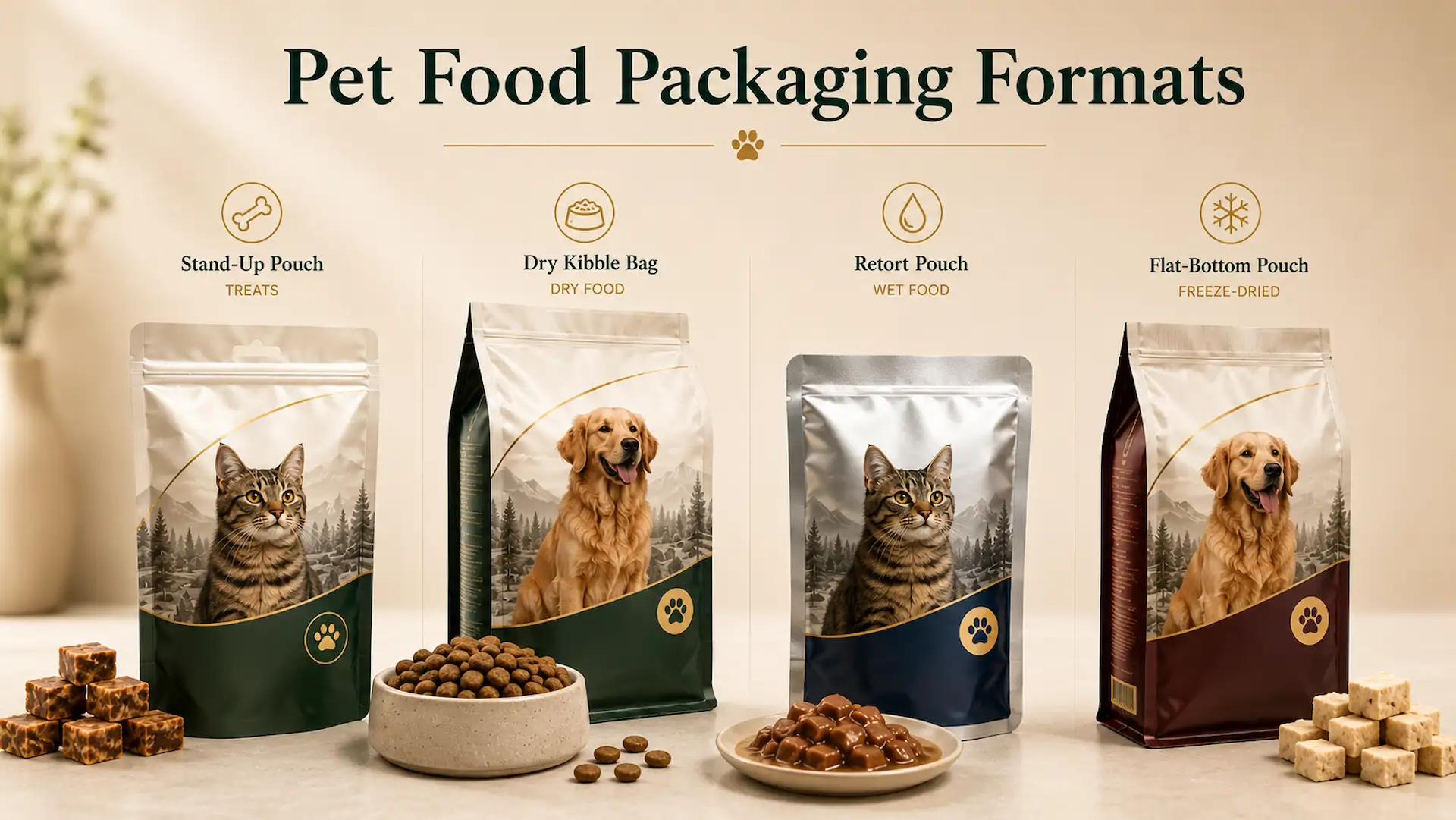
| Dry kibble | Blocks moisture and odor loss | Stand up pouches, larger bags |
| Treats and snacks | Locks in freshness, reseals cleanly | Stand up or flat pouches |
| Wet pet food | High barrier, handles liquid and heat | Retort pouches |
| Freeze-dried or premium | High-barrier film guards texture | Flat bottom or stand up pouches |
| Supplements and powders | Secure closure, clean labeling | Stick packs, child-resistant pouches |
Match the pack to the food, and you protect the one thing the buyer paid for. A premium freeze-dried dinner that turns up soft has lost the whole point.
Which Pet Food Packaging Bags Work Best for Different Products?
The pet food packaging bags that work best come down to three things. How heavy the product is. How you want it shown off. And where it sells. No single bag wins for everything, but a short list covers nearly all of it.
So here is the match-up:
- Stand up pouches. The workhorse. Great for treats, snacks, and smaller packs, and they stand tall on a shelf.
- Flat bottom bags, for premium food that wants a solid, box-like look
- Lay-flat pouches, ideal for samples, single servings, and lightweight stuff
- Rollstock, when you are running big volumes on form-fill-seal machines
- Child-resistant pouches, made for supplements and special-use products
- Larger bags and sacks, for bulk dry food
Flexible Pouches builds every one of these to custom sizes, and their minimums start around 1,000 units. For a smaller brand, that is the gap between looking premium and waiting years to afford a huge run.
Quick note: The best bag is hardly ever the fanciest one. It is the one that fits your product and matches how your customer actually uses it at home.
Why Is Custom Pet Food Packaging Better Than Generic Bags?
Custom pet food packaging wins over generic bags for one plain reason. It is built for your product, not squeezed into whatever stock size was already sitting around. Generic is cheap and fast, sure. It also makes every brand look like every other brand on the shelf.
Go custom, and the choices are yours:
- Size cut to your exact product weight
- Material chosen for your shelf life and food type
- Your real brand colors and logo, printed properly
- Clear windows that show off the actual food
- A zipper, so the pack reseals like it should
- Tear notches for a clean open, no scissors hunt
- Finishes: matte, gloss, soft-touch, kraft, your call
- A sharper look, on the shelf and on the product page
This is where innovative pet food packaging earns its price. A bag made for your product tells a buyer it is worth the money, before they read a single line.
How Can Sustainable Pet Food Packaging Support a Better Brand Image?
Sustainable pet food packaging lifts your brand image by sending one clear signal: you care about more than the sale. And more pet owners are hunting for exactly that. Get it right, and it becomes a real reason someone picks you over the shelf next door.
One rule, though. Green packaging only helps if it still guards the food.
Sustainability pays off for your brand when it:
- Matches what your buyers already care about
- Wins over the shoppers who actually read the label
- Uses lightweight flexible packaging that cuts material waste
- Keeps its protective job, so food safety never takes a hit
- Comes with plain, honest wording about the material
Flexible Pouches runs recyclable and fully compostable film, so you can go greener and keep the food fresh at the same time.
Worth remembering: Sustainable packaging should never cost you freshness or safety. If the food spoils sooner, that green choice creates more waste, not less.
Recyclable, Biodegradable, or Compostable Pet Food Packaging: What Is the Difference?
The difference is all about how each one breaks down, and where. People toss these three words around like they are the same. They are not. And that mix-up is how brands end up making a green claim they cannot stand behind.
Here it is in plain words:
| Type | What it means | Best thought of as |
| Recyclable | Enters recycling streams where they are accepted | Reused into new material |
| Biodegradable | Breaks down under certain conditions over time | Breaks down naturally |
| Compostable | Breaks down in composting conditions | Turns into compost |
Short version: recyclable pet food packaging leans on your local recycling program, while biodegradable pet food packaging and compostable pet food packaging depend on the material and how it gets binned. Whatever you pick, tell people how to throw it away. A clear disposal line beats a vague “eco friendly” badge every time.
What Packaging Features Make Pet Food Easier for Customers to Use?
The features that make pet food easier to use are the small ones your customer touches every day. Resealing. Easy opening. Simple storage. A bag hangs around for weeks, so these little things decide whether it feels premium or just plain irritating.
The features that turn a one-time buyer into a repeat one:
- Resealable zippers that keep freshness in between feedings
- Tear notches for a quick, no-mess open
- Handles on the big bags, so pouring is not a two-hand job
- Pour spouts, where they actually help with portions
- Clear windows for a fast look at what is left
- Sizes that suit different pets and households
- Strong seals that hold, not ones that quit halfway
- Tough material that takes real handling and storage
A bag that opens clean, closes tight, and stores easily? People buy that one again.
How Can Packaging Help Pet Food Stand Out on Shelves and Online?
Packaging helps pet food stand out by winning two fights at once: the shelf and the screen. A bag that looks amazing in your hand can vanish as a thumbnail online. So it has to work in both worlds.
To pull that off, look at:
- A front panel that reads in one glance
- Benefits a shopper grabs in a second or two
- Premium colors and finishes that feel like quality
- Ingredient and nutrition details that are easy to read
- A design that actually photographs well for listings
- Enough toughness to show up undented
- An unboxing moment that lands for direct-to-customer brands
Custom pet food packaging hands you the controls for all of it. On a shelf full of lookalikes, the most confident bag gets picked first.
What Labeling and Safety Details Should Pet Food Brands Not Ignore?
The labeling and safety details you cannot ignore are the ones buyers and regulators expect right on the front. Miss them and you gamble with trust and with compliance. None of it has to read like a legal contract. It just has to be true and easy to find.
Most pet food packs should carry:
- Product name
- The pet species it is made for
- Net quantity or weight
- Who made or distributed it
- The full ingredient list
- Guaranteed analysis
- Feeding directions
- Food-safe material for anything touching the food
- Honest claims, with no slippery wording
Clear labeling is not just ticking boxes. It tells a buyer, plainly, that you have nothing to hide.
How Do You Choose the Right Pet Food Packaging for Your Brand?
You choose the right pet food packaging by answering a handful of honest questions, then matching the format and material to your answers. It feels like a big call. Break it down, and it gets a lot smaller.
Before you order, run through these:
- What kind of pet food are you selling?
- How long does it need to stay fresh?
- Stores, online, or both?
- Does it need to reseal for daily use?
- Do you want a sustainable material?
- What pack size does your customer like?
- What design style fits the brand?
- How many units per run?
Answer those, and a good packaging partner can take it from there. Pet food flexible packaging stretches across a huge range, from a tiny treat pouch to a bulk sack, so there is almost always a fit.
Conclusion:
Great pet food deserves great packaging. That is not a slogan, it is just true. The bag guards freshness, keeps the food safe, and sets the first impression a buyer ever forms of you. Treat it as an afterthought and people notice. Treat it as part of the product and it pays you back.
The right pack builds trust, lifts shelf appeal, and leaves a buyer sure they chose well. It pulls its weight in a store and in a delivery box alike. Get the packaging right, and your whole brand looks stronger for it.
Ready to Package Your Pet Food the Right Way?
Custom pet food packaging, resealable pouches, eco-friendly film, or flexible packaging shaped around your exact product: Flexible Pouches can handle it. Custom sizes, low minimums, recyclable and compostable options, and a fast turnaround, so your brand looks sharper, stays fresher, and competes without flinching.
Grab a free quote and start building a bag that works as hard as what goes inside it.
FAQs
1. What is the best packaging for pet food?
There is not one right answer. It comes down to the product. Dry food, treats, wet food, freeze-dried meals, and supplements all want different barrier protection, sealing, and storage features. Match the pack to your product type, shelf life, and sales channel. For a lot of brands, a custom stand up pouch is a smart, flexible place to start.
2. Why are pet food packaging bags so popular?
They are light, easy to customize, and simple to store, which covers most of what a brand needs. They reseal well, print beautifully, and suit the majority of dry food and treat products. On top of that, they cost less to ship than rigid packaging.
3. What is custom pet food packaging?
It is packaging built around your specific product instead of a stock mold. The size, material, shelf life needs, printing, finish, and features like zippers or windows are all chosen to fit your brand. Nothing gets forced into a bag that was never meant for it.
4. Is eco-friendly pet food packaging good for product freshness?
It can be, as long as the material still gives you the barrier protection you need. Sustainability and freshness have to pull in the same direction. Good eco packaging protects the food first and helps the environment second, without letting the product go off any quicker.
5. What is the difference between biodegradable and compostable pet food packaging?
Biodegradable packaging is built to break down under certain conditions over time. Compostable packaging is built to break down specifically in composting conditions. What actually happens depends on the material and how it is disposed of, which is why clear disposal guidance matters so much.
6. What features should pet food flexible packaging include?
Look for resealable zippers, tear notches, strong seals, and high-barrier materials. Clear windows, custom sizing, and durable film help too. Put together, they keep the food fresh and make the bag easy for your customer to live with every day.