



























Put a lay-flat pouch and a stand-up pouch next to each other and the differences look minor. Same films are available to both. Same printing. Same barrier laminates, if you specify them. The gap only opens up once you fill them.
One stands. One doesn’t. From that single point, everything else follows: how the product gets merchandised, how much warehouse space you burn storing empties, what you pay per unit, and how the customer deals with the pouch after the first opening. Neither format wins outright. What decides it is your product, your sales channel, your order size and what the pouch has to do beyond holding contents. Below we compare lay-flat pouches and stand-up pouches on structure, materials, features, cost, applications and sustainability.
What Is a Lay-Flat Pouch?
A lay-flat pouch is sealed on three sides at the factory. The fourth side stays open so you can fill it, then it’s heat sealed closed. There’s no gusset at the base, so nothing expands when the product goes in and the pouch stays flat. You’ll see the same format listed as a three-side seal pouch, a 3 side seal pouch, a flat pouch or a pillow pouch depending on who’s selling it.
The construction is simple. Front and back panel, sealed along three edges, closed on the fourth after filling. From there you can add a resealable zipper, a tear notch so it opens cleanly, a hang hole for peg display, or a clear window. The material range isn’t limited by the simple structure either, so a lay-flat pouch can run on anything from basic clear film to full aluminum foil laminate.
Common Uses for Lay-Flat Pouches
Spices, seasonings, drink powders, supplement sachets, cosmetic samples, single-serve snacks, small pet treat portions and promotional giveaway packs. The pattern is portion size. When the fill is modest and the pouch doesn’t have to claim shelf space on its own, flat construction does the job for less money.
What Is a Stand-Up Pouch?
A stand-up pouch adds an expandable gusset at the bottom. Fill the pouch and that gusset opens out, giving it a base to sit on. That’s the whole mechanism, and it’s why stand-up pouches dominate retail flexible packaging.
The upright stance buys you two things: a front face that stays pointed at the shopper, and enough structure to carry heavier fills and closures comfortably. Construction is a front panel, a back panel and a folded bottom gusset, with heat-sealed edges holding it together. Most retail SKUs also carry a zipper, with a tear notch above the zipper line, and you can specify a degassing valve or pour spout where the product calls for one.
Common Uses for Stand-Up Pouches
Whole bean and ground coffee, snacks, nuts, dried fruit, granola, confectionery, pet food, larger treat bags, powdered supplements and most multi-serving foods. The common thread is a product someone buys once and returns to repeatedly, which is exactly where an upright pouch with a zipper earns its extra cost.
Lay-Flat vs Stand-Up Pouches: Key Differences
Both formats are clear now, so here’s the comparison in one place. Read down the standing ability row first, because almost every other difference in the table follows from it.
| Factor | Lay-Flat Pouch | Stand-Up Pouch |
| Construction | Flat, usually three-side seal | Includes a bottom gusset |
| Standing ability | Does not stand independently | Designed to stand upright |
| Shelf presentation | Flat, peg or secondary display | Strong upright shelf presentation |
| Storage | Very compact | Compact before filling |
| Typical structure cost | Usually simpler | Usually more complex |
| Resealability | Available | Very common |
| Barrier options | Low to high | Low to high |
| Printing | Front and back panels | Front and back panels |
| Common use | Samples, small portions, powders | Retail and multi-use products |
Structure and Bottom Gusset
Everything traces back to this. A lay-flat pouch is two panels sealed at the edges. A stand-up pouch folds a third panel into the base, which unfolds under the weight of the product and creates a footprint. That extra panel is also what makes the tooling and production slightly more involved.
Shelf Display and Product Presentation
Both formats give you a full front and back panel to print on, so this isn’t about who gets more room for artwork. It’s about orientation. A stand-up pouch faces the shopper directly on a shelf and holds that position without support. A lay-flat pouch gets merchandised differently, hung on pegs, stacked in trays, boxed inside a carton, or shipped straight to the buyer.
If your product has to survive a crowded aisle, upright wins that fight. If it never touches a retail shelf, the advantage is worth nothing to you.
Storage and Shipping Efficiency
This one is measurable and it shows up on invoices. Empty lay-flat pouches stack almost perfectly flat, so a carton holds more of them and takes less warehouse space. Less film per unit also means lower freight weight, which matters once you’re ordering in volume. Stand-up pouches store reasonably well empty, but the gusset adds bulk you can’t design away.
Consumer Convenience
Ask how the product actually gets used at home. A single-serve sachet is torn open once and binned, so a tear notch covers it. A 500g coffee bag gets opened twenty times over three weeks, which makes a zipper worth paying for.
Both formats accept zippers, but a lay-flat pouch with a zipper still won’t stand upright. That catches people out regularly. Resealability and standing ability come from different parts of the pouch, and adding one doesn’t give you the other.
Cost and Packaging Complexity
Lay-flat pouches are simpler to produce and use less film, so the base structure generally costs less. Format is only one line in the quote though, and often not the biggest one.
Barrier Protection and Material Options
Worth stating plainly before anything else: choosing lay-flat or stand-up construction does not determine how well your product is protected. That comes down to the laminate structure, the material combination and seal quality. A properly specified lay-flat pouch will beat a basic stand-up pouch on shelf life every time.
The barrier layers are doing four jobs. Blocking oxygen, which turns oils rancid and degrades vitamins. Blocking moisture, which keeps dry products crisp and stops powders clumping. Blocking light, which protects spices, teas and supplements from breaking down. And holding aroma in while keeping outside odors from getting through.
Common Flexible Packaging Materials
- PET: clear and durable, works well behind windows
- BOPP: solid for dry foods, takes gloss or matte finish cleanly
- PE: usually the sealant layer rather than the outer film
- Metallized PET: strong moisture and oxygen barrier with a metallic look
- Aluminum foil laminate: highest protection, standard for coffee, tea and pharma
- Kraft and paper-look structures: natural finish for organic and artisan brands
Our material options cover all of these across both pouch formats, so the film decision stays independent of the shape decision.
Custom Features Available for Flexible Pouches
Most of these apply to either format. The question isn’t what’s available, it’s what your product genuinely needs.
- Resealable zippers: worth it on anything opened more than once, wasted cost on single-serve
- Tear notches: small detail, but a pouch that opens cleanly gets remembered kindly
- Hang holes: round, sombrero or custom shapes, useful for peg-displayed products
- Clear windows: good for product visibility, though every window is a gap in your barrier film
- Matte, gloss and soft-touch finishes: changes how premium the pouch feels in hand more than most people expect
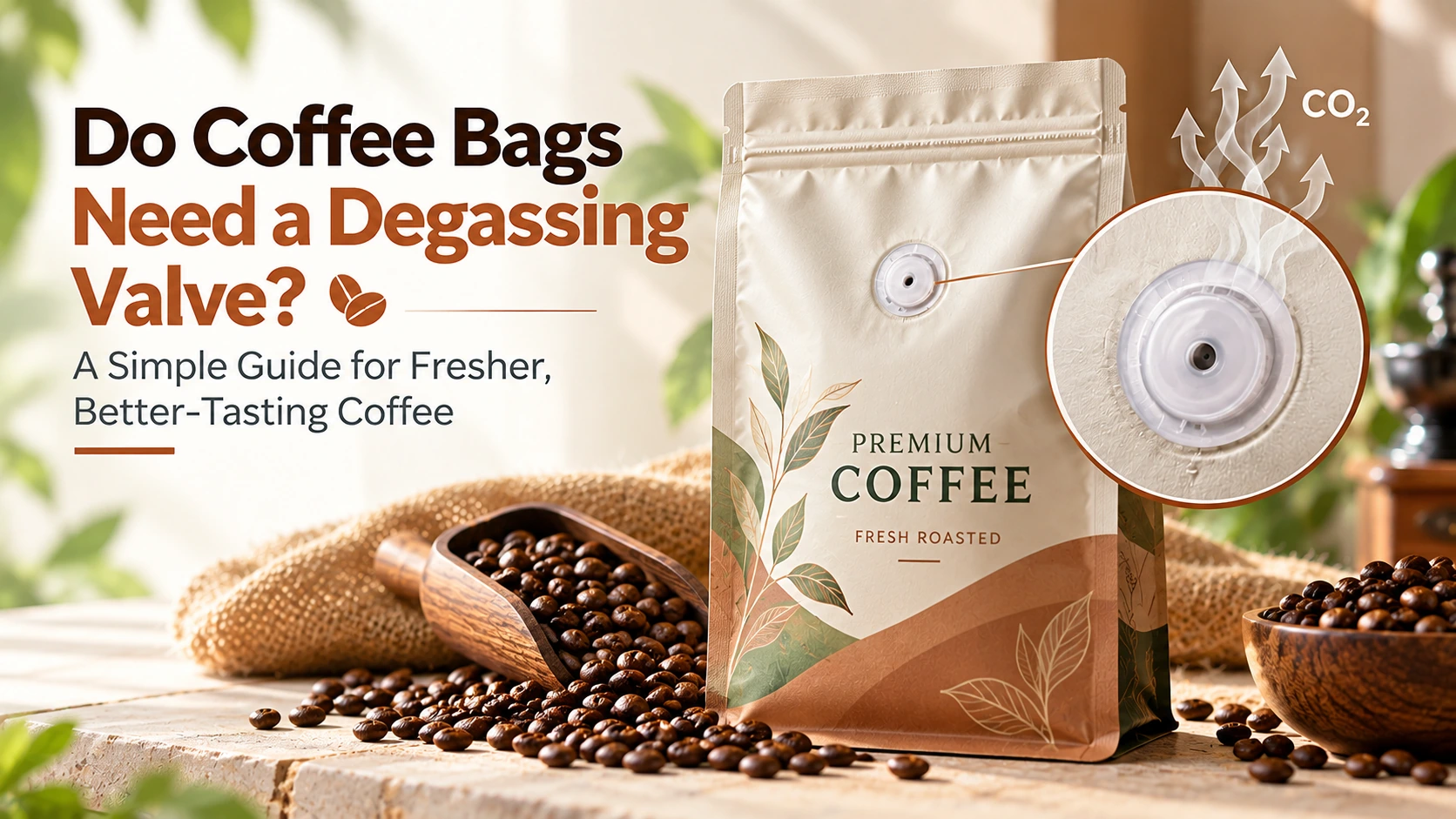
- Degassing valves: specifically for freshly roasted coffee, not a general upgrade
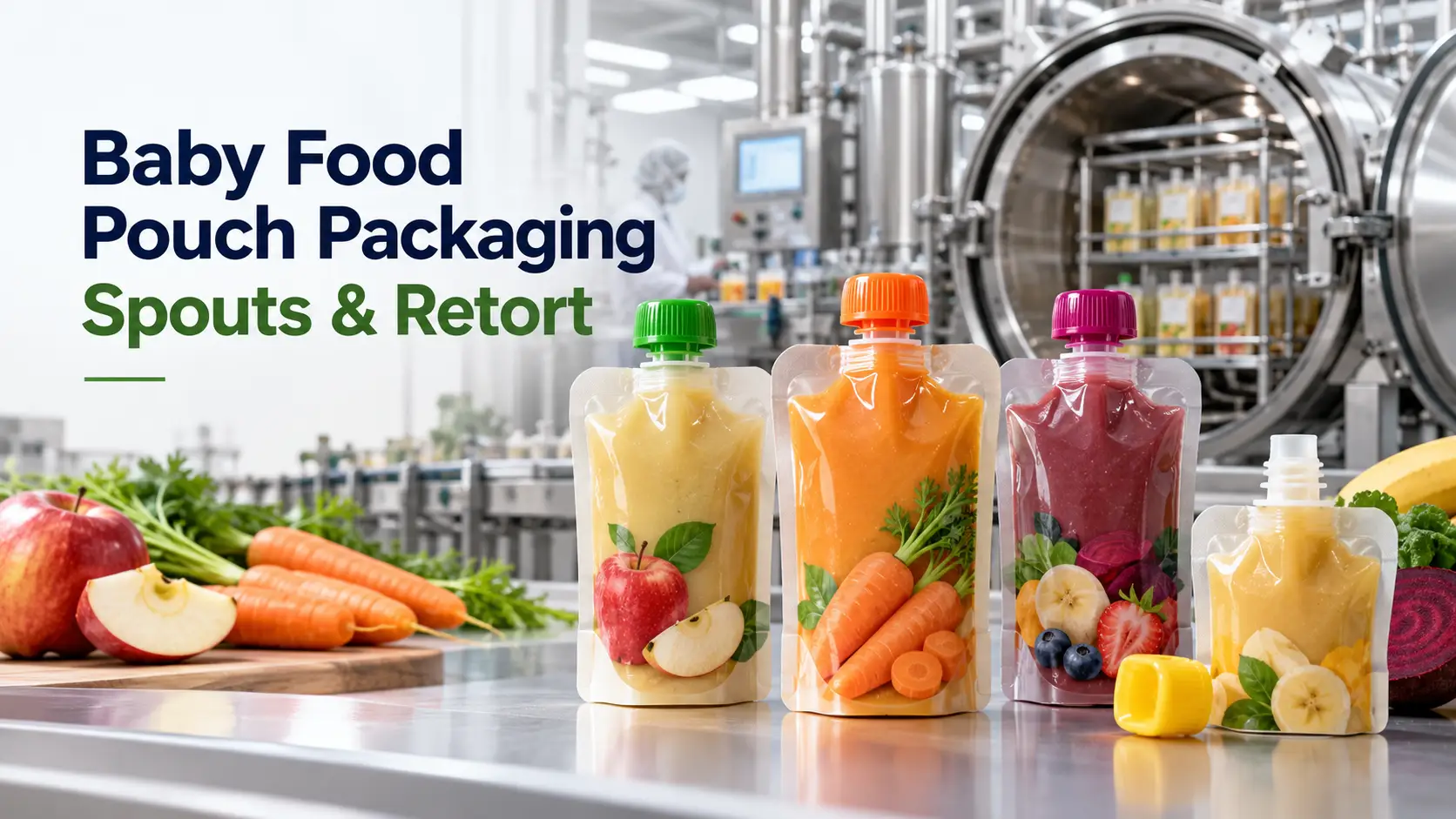
- Pour spouts: for liquids and anything needing controlled dispensing
- Rounded corners: cosmetic, but softens a boxy look
Sizing isn’t fixed to a catalog either. Custom sizing means any width and height you need for your fill weight.
Printing Options for Lay-Flat and Stand-Up Pouches
Both formats print identically, so this comes down to your order profile rather than your pouch shape.
Digital printing suits smaller runs and multi-SKU orders. There are no plates or cylinders to produce, so setup costs stay low and artwork changes are quick between runs. If you’re launching four flavors at once, this is almost always the right call.
Rotogravure printing is built for volume and repeat production. Once the cylinders exist, it delivers consistent photographic quality across long runs at a lower cost per unit. Both methods handle full-color artwork, so the deciding factors are order quantity, number of designs and how often the artwork will change.
Which Pouch Is Better for Different Products?
Every row below is a starting point rather than a rule, because barrier needs and sales channel can override the format every time. Use it to see the pattern, then check it against your own product.
| Product | Recommended Starting Point | Why |
| Coffee | Stand-up | Shelf display, zipper and valve options |
| Snacks | Stand-up | Retail visibility and resealability |
| Spices | Lay-flat | Compact and lightweight |
| Seasoning samples | Lay-flat | Small portion efficiency |
| Supplement samples | Lay-flat | Single-use format |
| Full-size supplements | Stand-up | Multi-use convenience |
| Pet treats | Stand-up | Display and resealability |
| Cosmetic samples | Lay-flat | Small-format packaging |
| Promotional samples | Lay-flat | Lightweight and compact |
| Multi-serve powders | Stand-up | Easier repeated access |
Lay-flat pouches are the stronger starting point for samples, trial sizes, single servings, slim products, peg-displayed items and multi-packs sold inside secondary packaging. Stand-up pouches suit retail products competing for shelf attention, multi-use products opened repeatedly, larger fill weights and anything where upright branding carries commercial weight.
When Using Both Formats Makes Sense
Plenty of brands don’t choose. They run both, and each format does a different job.
A coffee brand uses stand-up pouches with a valve and zipper for the retail bag, then lay-flat sachets for sample packs going into subscription boxes and trade shows. A supplement brand does the same, stand-up for the 30-serving size and lay-flat sachets for single doses and trial packs. Same artwork, same brand, two jobs. If you’re launching and genuinely unsure which format fits, this is often the honest answer.
Choosing Pouches for Retail vs E-Commerce
Where the product sells changes what the pouch has to be good at. A format that performs on a shelf isn’t automatically the right one in a shipping box.
Retail Packaging
On a shelf, visibility decides whether the product gets picked up at all. Upright presentation keeps your front panel facing the aisle, which is the only surface most shoppers ever see. Shelf footprint matters too, since a buyer allocates space by the inch and a compact pouch can earn more facings than a bulky one.
Peg displays are the exception to the upright rule. Flat formats with a hang hole sit cleanly on a hook, while gusseted pouches tend to bulge and hang awkwardly. If your retail placement is a peg wall rather than a shelf, lay-flat is the better fit even in a store.
E-Commerce Packaging
Online, nobody sees the pouch until it’s already been paid for, so shelf presence stops being a factor entirely. What replaces it:
- Shipping weight: every gram is a recurring cost across every order
- Package dimensions: a slimmer profile can drop your parcel into a cheaper band
- Protection in transit: seal strength and puncture resistance matter more than display
- The unboxing moment: this is where your branding actually lands, not on a shelf
For smaller items, lower weight and a flat profile usually favor lay-flat construction. For larger fills that need repeated opening, a stand-up pouch still earns its place because the customer experience continues long after delivery.
Samples, Subscription Boxes and Promotional Packs
This is lay-flat territory almost every time. The portions are small, the pouches have to sit flat inside a box without wasting space, and cost per unit matters far more than display, because there’s no display involved at any point in the journey.
Are Lay-Flat or Stand-Up Pouches More Sustainable?
This question deserves a more careful answer than it usually gets, because pouch shape isn’t what decides it.
What Actually Determines Sustainability
- Material quantity: how much film the pouch uses per unit
- Film structure: mono-material laminates are far easier to recycle than mixed ones
- Real-world recyclability: whether your local stream actually accepts the structure, not whether it’s technically recyclable
- Product protection: a pouch that fails at its job creates more waste than it saves
- Pack sizing: oversized packaging wastes film and shipping space at once
- Transport efficiency: lighter, flatter packs move with a smaller footprint
A Word on Eco-Friendly Claims
A pouch isn’t sustainable just because it uses less film or has a kraft-paper look. Kraft appearance in particular gets treated as proof of something it doesn’t prove, since many kraft-look structures still carry a plastic barrier layer inside.
The bigger risk is under-protecting the product. If your packaging saves ten percent on film but lets the contents spoil early, the waste from the spoiled product will dwarf whatever the packaging saved. Specify sustainability at the material level with recyclable pouches or compostable structures, in whichever format your product actually needs.
What Determines the Cost of Custom Pouches?
Format is one line in the quote. These are the others, roughly in order of how much they usually move the number.
| Cost Factor | Why It Matters |
| Order quantity | The single biggest lever on unit price |
| Material and barrier structure | A foil laminate costs considerably more than basic film |
| Printing method | Digital keeps setup low, roto lowers unit cost at volume |
| Pouch dimensions and fill volume | More film per pouch, more cost per pouch |
| Number of SKUs | Affects setup, plate or cylinder costs and run efficiency |
| Added features | Zipper, window, valve, spout each add material and process |
| Surface finish | Soft-touch and specialty finishes carry a premium |
| Filling and sealing requirements | Equipment compatibility can dictate structure |
Lay-flat pouches usually have a simpler build, while stand-up pouches need a bottom gusset and the tooling that goes with it. But as the table shows, material, barrier requirements, features and volume can move the final price more than format alone. A high-barrier lay-flat pouch costing more than a basic stand-up pouch is a normal outcome, not an odd one.
How to Choose the Right Pouch for Your Product
Start with the product itself. Is it solid, powder or liquid? Single serving or multi-use? What’s the fill weight, is it sensitive to moisture or oxygen, and what shelf life do you need to hit? Those answers narrow the material before they narrow the format.
Then look at how it will be sold. Retail shelf, peg display, e-commerce, subscription box or sample kit, and whether it’ll sit inside secondary packaging. After that, decide which features the product actually needs rather than which ones are available. Finally, factor in production reality: order quantity, number of SKUs, printing method, your filling and sealing equipment, and lead time.
Final Decision Checklist
- Does the pouch need to stand upright?
- Is the product single-use or multi-use?
- How will customers actually see it?
- What barrier protection does it require?
- Does it need a zipper or another closure?
- What size and fill weight are required?
- What quantity will you order?
- How will the pouch be filled?
- What sustainability requirements apply?
- Has the final structure been tested with the real product?
Number ten gets skipped more than any other, and it causes the most expensive surprises.
Ordering Custom Lay-Flat and Stand-Up Pouches
The process runs in a straight line. Choose your format, define size and material, select your features, submit artwork, review the proof, then production and delivery. If you’d rather see the pouch in hand before committing to a full run, request a mockup or prototype first. It’s the cheapest way to catch a sizing or artwork problem before it multiplies across ten thousand units.
Conclusion:
Lay-flat pouches earn their place when compact packaging matters, portions are small or single-use, you’re producing samples and trial packs, or the product sells from a peg or inside secondary packaging. Stand-up pouches earn theirs when shelf presence affects sales, customers open the product repeatedly, resealability is genuinely useful, or upright front-facing branding is worth paying for.
Settle the format, then move on to the decisions that matter more. Material structure, barrier level and features should be chosen around the product, not around the shape of the bag. That’s what determines whether the packaging protects what’s inside and still looks the way you intended by the time it reaches a customer.
Need Help Choosing the Right Pouch?
Tell us your product, size, quantity and packaging requirements, and Flexible Pouches can help you identify the most suitable format and material structure.
FAQs
- What is the difference between a lay-flat pouch and a stand-up pouch?
A lay-flat pouch is sealed on three sides with no bottom gusset, so it rests flat. A stand-up pouch has an expandable gusset at the base that opens when filled, letting it stand upright on a shelf.
- Are lay-flat pouches cheaper than stand-up pouches?
Usually, since the structure is simpler and uses less film. But material choice, barrier level, added features and order quantity often influence the final price more than format does.
- Can lay-flat pouches have resealable zippers?
Yes. A zipper can be added so customers reseal after opening. It still won’t stand upright, because resealability and standing ability come from different parts of the pouch.
- Which pouch is better for food packaging?
Both work. Stand-up suits multi-serving retail products like coffee, snacks and pet food. Lay-flat suits spices, single servings and samples. The barrier structure matters more than the format.
- Do stand-up pouches provide better barrier protection?
Not automatically. Barrier performance depends on the laminate structure, material combination and seal quality, not the pouch shape. A well-specified lay-flat pouch can outperform a basic stand-up pouch.
- Are lay-flat and stand-up pouches recyclable?
Both can be produced in recyclable or compostable structures. Recyclability depends on the film structure, whether it’s mono-material, and what your local recycling stream accepts.