



















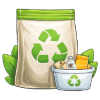



Protection used to be the whole job. Not anymore. A pack now has to look premium on a shelf, hold up through a supply chain, and survive the question a retail buyer asks somewhere around the third meeting: what happens to this after the customer finishes with it? Recyclable stand up pouches are the answer a lot of brands land on. Same format, same shelf presence, same zipper and window options. The difference is what the film is made of, which is what moves you toward real recyclable packaging instead of a claim on the back panel.
The catch is worth saying early. Plenty of packs sold as recyclable are not, and the shopper has no way of telling. Choosing properly means understanding the material, knowing what it gives up, and being honest about where the empty pouch can actually go.
Here is how they work, where they fit, where they struggle, and what to sort out before you order.
What Are Recyclable Stand Up Pouches?
A stand up pouch has a gusset folded into the base. Fill it, the gusset opens out, and the pack stands on its own. That is the entire mechanism, and it explains why the format took over retail flexible packaging.
Recyclable versions swap the material rather than the shape. Most are built on mono-material structures, usually polyethylene, rather than a laminate of several different plastics.
Why that one change matters: a conventional pouch might carry PET on the outside, foil in the middle, PE inside, and adhesive holding the stack together. Every layer does a job. None of them can be separated at the speed a recycling plant runs, so the whole thing goes to landfill.
In simple terms, recyclable stand up pouches provide:
- Strong packaging performance
- Flexible design options
- Improved recyclability
Why More Brands Are Switching to Recyclable Packaging
Two forces are pushing this, and they are pushing from opposite ends. Customers pull from the front. Regulation and retail buyers push from the back.
Here is why brands are making the move:
- Consumer Awareness: shoppers increasingly pick brands whose packaging they can do something with afterwards
- Stronger Brand Image: sustainable stand up pouches earn trust that ad spend cannot buy
- Reduced Shipping Costs: less film means less freight, on every single order, forever
- Retail Requirements: more buyers now ask about packaging before they will list you
- Future Readiness: waste regulation keeps tightening, and redesigning under deadline costs far more than doing it now
Move early and it is a choice you made. Move late and it is a compliance exercise somebody else set the timing on.
How Recyclable Stand Up Pouches Work
Traditional pouches stack different materials because each one contributes something the others cannot. It delivers outstanding shelf life. It also makes recycling impossible, and those two facts are directly connected.
Recyclable pouches solve this problem by using:
- Mono-material structures, usually PE based
- Compatible layers that can be processed together
- Advanced sealing and barrier technologies
Despite the simpler build, modern recyclable pouch packaging still delivers:
- Strong seals
- Good product protection
- Zippers and closures
- High-quality printing
There is real engineering behind that. When the sealant layer and the outer layer are both polyethylene, they melt at similar temperatures, which narrows the heat seal window considerably. Converters get around it with oriented PE for the outer web, raising its melting point enough to seal the inside without burning through the outside. Ten years ago that problem is what kept mono-material off most production lines.
Key Benefits of Recyclable Stand Up Pouches for Brands
The benefits land in different parts of the business, which is why this decision rarely sits with one person. Marketing cares about one thing here, operations about another.
1- Better Brand Positioning
Recyclable packaging shows a brand thought past its own shelf. Customers pick that up quickly, and it feeds straight into trust.
2- Lightweight and Efficient
Less material per pouch, less weight per pallet, lower freight on every shipment. Unlike most sustainability wins, this one shows up as a recurring saving rather than a one-off.
3- Strong Shelf Appeal
Printed recyclable stand up pouches stand upright and face the shopper directly. Same artwork quality a conventional pouch gets, same finishes, same window options.
4- Customization Options
Custom stand up pouches get built around the product instead of the product being squeezed into a stock size that nearly fits.
5- Wide Product Compatibility
These pouches suit:
- Snacks
- Coffee
- Supplements
- Pet food
- Powders and dry goods
Are All Stand Up Pouches Recyclable?
No. And this is where brands get caught, usually after the artwork is approved.
A pouch combining plastic with aluminum foil performs superbly and cannot realistically be recycled anywhere. On a shelf it looks identical to one that can be. Nothing about the format tells you which is which, which is exactly why the claim has to come from the structure rather than the look.
To be recyclable, a pouch must:
- Use compatible materials right through the structure
- Follow proper structure guidelines
- Be accepted by the recycling systems where you sell
That third one gets skipped constantly. A film can be genuinely recyclable and still have nowhere to go in your market, which makes your supplier’s knowledge as important as the film they quote you.
Recyclable vs Traditional Pouch Packaging
Side by side, the trade-off stops being abstract. Read the barrier performance row twice, because that is the one place traditional structures still hold a genuine lead.
| Feature | Recyclable Stand Up Pouches | Traditional Pouch Packaging |
| Material Structure | Mono-material (PE or similar) | Multi-layer (plastic + foil + adhesives) |
| Recyclability | Designed for recycling streams | Difficult to recycle due to mixed materials |
| Environmental Impact | Lower impact, supports sustainability goals | Higher impact due to complex materials |
| Barrier Performance | Good (improving with new technology) | Very high barrier protection |
| Shelf Appeal | Excellent with modern printing options | Also strong but less sustainability-focused |
| Weight & Shipping | Lightweight, reduces shipping costs | Heavier compared to flexible recyclable options |
| Brand Perception | Positive, eco-conscious positioning | Neutral or less aligned with sustainability trends |
| Cost (Short-Term) | Can vary slightly depending on materials | Often standard pricing |
| Cost (Long-Term) | Better due to efficiency and brand value | May not offer long-term sustainability benefits |
| Recycling Availability | Depends on local systems (store drop-off common) | Very limited or not recyclable |
What Products Work Best in Recyclable Stand Up Pouches?
Dry and low-moisture products are the easy wins, because they ask least of the barrier. The further you get from that, the harder the film has to work.
These include:
- Snacks
- Coffee and tea
- Protein powders
- Supplements
- Pet treats
- Dry foods
Coffee is the interesting one on that list. It needs a serious oxygen barrier and a degassing valve, and it still runs in mono-material structures now, which tells you how far the films have come. Oily products and anything with a two-year shelf life are where the technology is still catching up.
What Brands Should Consider Before Choosing Recyclable Pouch Packaging
Sustainability is one requirement sitting alongside several others. The pouch still has to protect the product, run on your line, and survive the journey to a customer. Work through these before anyone signs anything.
Product Barrier Needs
Some products genuinely need more than a mono-material film currently delivers. Recyclable structures have improved enormously, and they still do not match a foil laminate on oxygen. Test with your real product, not a sample of something similar.
Shelf Life Requirements
Set the target first, then find a structure that reaches it. A film that holds freshness for four months is not a problem unless you printed a twelve-month date on the pack.
Filling and Sealing Compatibility
Not every pouch runs on every line. Mono-PE films often need the seal temperature and dwell time dialed back, and sometimes the line speed with it. Find that out during trials rather than during your first production run.
Design and Branding Needs
Packaging is a marketing surface as much as a container. Think about:
- Printing quality
- Colors and finish
- Labeling space
Printed recyclable stand up pouches deliver strong branding when the artwork is designed around the film rather than adapted to it after the fact.
Recycling Reality (Not Just Claims)
Recycling on a label does not mean recycling in practice. Know what the systems accept in each market you sell into, and tell customers plainly whether the pack goes curbside or to a store drop-off point. Vague wording here is what gets brands into trouble.
Cost vs Long-Term Value
The first quote may come in higher. Lower material use, cheaper logistics and a stronger position with retailers tend to close that gap over a year or two.
Supplier Expertise
A good recyclable stand up pouch manufacturer will tell you when a structure is wrong for your product. That conversation is worth more than a small saving on the film, and you only find out who gives it by asking hard questions early.
Custom Recyclable Stand Up Pouches: Features That Matter
Customization is the strongest argument for custom recyclable stand up pouches. The film changes. Almost nothing else has to.
Size and Shape Options
From small snack packs to bulk formats, the pouch gets sized to the fill weight rather than the other way round. Nothing wastes film faster than a pouch that is slightly too big.
Closure Systems
Zippers keep the product fresh and the pack easy to live with. On a recyclable structure the zipper has to be PE based too, or it drags the whole pouch out of the recycling stream on its own.
Tear Notch and Easy Open
A tear notch opens the pouch cleanly without scissors. Small thing. People notice it every single time they use the product.
Hang Holes and Display Features
A hang hole puts your product on a peg as well as a shelf, which widens where a buyer can place you in store.
Finish and Look
Brands can choose:
- Matte finish for a premium feel
- Glossy finish for vibrant colors
Finish changes what people assume the product is worth before they have read a word of the label.
Transparent Windows
A window removes doubt faster than any claim printed beside it. Worth remembering that every window is a gap in the barrier, so it belongs on dry goods more than on anything sensitive.
High-Quality Printing
Modern recyclable pouch packaging holds print quality well, so moving to a recyclable film does not mean compromising the visual identity you already built.
Get these right and the pouch stops being a container and starts being the thing people recognize you by.
Common Challenges Brands Should Know Before Switching
Real benefits, real complications. Every one of these is cheaper to handle before production than during it.
Barrier Limitations
Products sensitive to oxygen or moisture may need more than a fully recyclable structure currently reaches. The gap is closing year on year. It has not closed for every category yet.
Recycling Infrastructure Gaps
Systems differ enormously by region. Most recyclable flexible packaging depends on store drop-off rather than curbside collection, and your on-pack instruction has to say which one applies.
Cost Considerations
Changing materials or suppliers moves costs around. Judge it across a couple of years rather than against this quarter’s packaging invoice.
Misleading Sustainability Claims
Some packaging is sold as eco-friendly without being recyclable in any meaningful sense. Verify:
- Material structure
- Certifications
- Real recyclability in your markets
Transition Challenges
Moving from traditional packaging to recyclable stand up pouches can require:
- Testing
- Equipment adjustments
- Supplier coordination
Plan for those three and the switch becomes a project rather than a disruption.
Why Recyclable Flexible Packaging Is a Smart Long-Term Move
Packaging is shifting faster than it has in decades, and most of that movement points the same direction.
Growing Consumer Awareness
Customers check more than they used to, and they are better at spotting a claim with nothing behind it. Recyclable stand up pouches answer that scrutiny instead of hoping to dodge it.
Regulatory Pressure Is Increasing
Rules on packaging waste keep tightening across major markets. Choosing recyclable structures now means you are not redesigning an entire range against somebody else’s deadline later.
Efficiency in Logistics
Flexible packaging uses less material and less space than rigid formats, which leads to:
- Lower shipping costs
- Reduced storage needs
- Improved supply chain efficiency
Brand Differentiation
In a crowded category, packaging gives you something to say. Sustainable packaging gives you something that holds up when a customer goes looking.
Continuous Innovation
Barrier performance, print quality and film strength all keep improving. Products that could not run in recyclable structures three years ago are running in them now, and that list keeps growing.
Long-Term Cost Benefits
Initial costs vary. Over time the picture usually includes:
- Reduced material usage
- Lower transport costs
- Better brand value
Which makes this a decision that ages well rather than one you revisit under pressure.
Conclusion
Recyclable stand up pouches strike a workable balance between performance, design and sustainability. They cut environmental impact while keeping the shelf appeal and packaging quality a brand needs to compete properly.
Three things decide whether it works: knowing what your product actually requires, choosing a structure that meets it, and working with a supplier who will tell you when you are about to make a mistake.
The films keep getting better, and the range of products they can handle keeps widening. Brands that move now get the efficiency, the brand position, and a head start on the rules that are coming anyway.
Upgrade to Recyclable Packaging Today
Start your custom packaging journey with recyclable stand up pouches built for performance and shelf appeal. Send your product, fill weight and shelf life target, and you get a structure recommendation alongside the quote.
Request Your Custom Quote Today!
FAQs
- What are recyclable stand up pouches?
Flexible packs made from materials that can be recycled after use, usually built on mono-material structures such as polyethylene instead of mixed layers that have to be separated first.
- Are stand up pouches recyclable everywhere?
No. It depends entirely on local systems. Some areas run store drop-off collections for films, others will not take flexible packaging at all, so check every market you sell into.
- What makes a stand up pouch recyclable?
Compatible materials throughout, so the whole pack can be processed together. The zipper and any fitment have to match the film family too, or one component takes the pouch out of the stream.
- Are recyclable food pouches safe for packaging?
Yes. They are made to meet food safety standards and give proper protection across a wide range of food products.
- Can I order custom recyclable stand up pouches with printing?
Yes. Full custom printing, finishes, zippers, windows and tear notches are all available on recyclable structures, so the pack looks the way you intended.
- What products are best for sustainable stand up pouches?
Dry foods, snacks, powders, supplements and pet products lead the list, mainly because they ask less of the barrier than oily or high-moisture products do.