

























A pet food bag used to have one job: keep the kibble in and the air out. That’s no longer enough. Walk down any pet aisle now and the packaging is doing a lot more protecting freshness through a rough delivery, spelling out exactly what’s inside, and backing up whatever sustainability claim is printed on the front.
None of that happened by accident. Pet owners are reading labels the way they read their own grocery labels, and packaging is one of the first things a brand gets judged on before anyone even opens the bag.
This guide covers the pet food packaging trends that matter for 2026: what’s driving them, which formats fit which product, where the materials actually stand, and where brands tend to go wrong.
It’s worth saying upfront that pet food, as a category, has grown more slowly than people assume. Market estimates put it around $43 billion, with growth last year sitting just above 1% a slowdown compared to the pandemic-era boom. That matters for packaging decisions. In a slower-growth market, brands are competing harder on shelf presence and trust signals rather than simply riding category expansion, and packaging is one of the few levers a brand controls directly.
Why Pet Food Packaging Is Under So Much Pressure Right Now
Pet humanization has raised the bar. Pets are family now, and the shopping behavior shows it. People expect the same transparency on a bag of dog food that they’d want on their own coffee or granola. A flimsy pouch with a sticker slapped on for a label just doesn’t compete anymore.
New formats need different protection. Kibble isn’t the only game in the aisle. Wet, fresh, raw, freeze-dried, air-dried, refrigerated, each one behaves differently in storage and shipping, and a barrier film built for dry kibble will let a raw diet spoil in days. The product has to determine the packaging, not the other way around.
Regulation is catching up to the claims. Extended Producer Responsibility (EPR) fees are now tied to how recyclable a package actually is in several U.S. states and across the EU, so a “hard to recycle” multi-material bag doesn’t just look bad, it costs more. California’s SB 54, for example, is pushing producers to account for plastic packaging waste in ways that weren’t priced into a bag’s cost a few years back. At the same time, PFAS-free packaging has become a real compliance question rather than a nice-to-have, driven by both EU rules and growing pet-owner awareness of what’s in the materials touching their pet’s food.
Sustainability claims are getting harder to read, not easier. One packaging analyst tracking dog food labels counted as many as 162 different sustainability claims across the category. That’s not a typo, it’s a real problem for shoppers trying to compare two bags side by side, and it’s part of why paper-based and kraft packaging is gaining ground. A kraft pouch reads as sustainable at a glance, without a shopper needing to parse a claim at all.
10 Pet Food Packaging Trends Worth Watching in 2026
These trends overlap more than they compete. Go recyclable and your barrier options shift. Go premium and you’re rethinking whether a window works with your film structure. Treat this as a set of related decisions, not ten separate boxes to check.
1. Recyclable pouches that still protect freshness
Recyclable and eco-friendly pet food packaging has moved from “nice to have” to expected. The hard part has always been keeping food fresh in a structure a recycling facility can actually process, and monomaterial films are closing that gap. Recyclable claims are one of the most common sustainability claims on new pet food and treat launches, and adoption keeps climbing.
What that looks like in practice:
- Mono-material films instead of mixed-layer laminates
- Recyclable zippers and closures that match the film
- Clear recycling instructions printed on the pack
- A solid fit for dry food, treats, and supplement pouches
One caution: a pouch labeled “recyclable” doesn’t automatically belong in curbside recycling. Some structures only work through store drop-off programs, so it’s worth confirming which bucket yours falls into before the claim goes to print.
2. High-barrier films that use less material
Barrier performance and sustainability used to be in tension. Newer films hold back oxygen, moisture, grease, aroma loss, and light using thinner structures than older laminates needed. A weak barrier isn’t a small miss; it lets the product go stale, and the whole pouch ends up in the trash with food still inside. Kibble and an oily jerky treat don’t need the same protection, and a film tuned for one can quietly fail the other.
3. Packaging built for fresh and minimally processed pet food
Fresh, raw, and minimally processed pet food is one of the fastest-growing categories, and standard kibble bags were never built for it. These products swing through temperature changes, take a beating in transit, and need seals that survive repeated freeze-thaw cycles. Some require retort-grade structures to sit safely at room temperature. Brands moving into fresh or raw for the first time often assume their dry-food pouch supplier can just tweak the existing bag; that assumption is usually where the first batch of complaints starts.
4. Resealable formats built for daily feeding
Feeding a pet happens every day, not once. A zipper that fails after two weeks is one of the most frustrating things a pack can do, because it fails in the customer’s hands, at dinner time, over and over.
- Zippers rated for repeated use
- Tear notches for quick, one-handed access
- Travel-friendly sizes for pets on the go
- Portion control built into the pack, not added as an afterthought
Resealable and reclosable formats now show up across a large share of new pet food launches; this stopped being a bonus feature a while ago.
5. Coordinated packaging across product lines
Plenty of pet owners mix dry food, wet food, toppers, treats, and supplements for one animal. Brands that design these as a coordinated family matching colors, consistent hierarchy, a shared visual language get a quiet sales bonus: someone who already trusts the kibble bag is more likely to pick up the topper sitting next to it.
6. Right-sized packs for trial, portion, and value
Not every pet owner is ready to commit to a large bag of unfamiliar food, especially after a vet points at the current bag as the problem. A smaller trial size takes that risk off the table.
- Trial sizes for new customers
- Smaller formats for premium lines
- Single-meal portions
- Less overbuying, which means less wasted food
7. Digital printing for faster product launches
Digital printing has made short runs realistic even for small and mid-size brands, cutting out the plates, cylinders, and multi-week setup that used to come with any new print job. That means testing a flavor, reacting to a shortage, or running a limited edition can happen in days instead of months, without gambling on a full production order upfront.
8. Clear labels and QR codes that build trust
People want to know what’s actually in the bowl, but a label crammed with fine print doesn’t help anyone. QR codes let brands move the heavy detail off the label and onto a page people can dig into when they want to. A meaningful share of pet owners specifically look for the country of origin on pet food packaging that’s not a niche concern anymore.
- Ingredient sourcing details
- Country of manufacture
- Batch traceability for recalls and safety
- QR codes linking to fuller product information
9. Premium packaging borrowed from human food and snack brands
The line between how brands package human snacks and how they package pet treats keeps getting thinner. Matte finishes, soft-touch coatings, small product windows all lifted from the coffee and snack aisle, and it works, because shoppers read those cues the same way regardless of who’s eating the product. One thing to watch: a fully opaque, heavily finished pouch can work against a brand if it hides the product entirely. Most premium designs keep at least a small window as a compromise.
10. E-commerce-ready pouches that survive the trip
More pet food gets bought online every year, and a pouch that looks perfect under store lighting can still arrive crushed after a few days in a shipping box.
- Puncture-resistant structures
- Seals and seams built to handle stacking and drops
- Pack sizes suited to direct-to-consumer orders
Brands selling in both retail and online often run two slightly different specs of the same pouch, same face out front, tougher build where it doesn’t show.
Pet Food Packaging Materials: A Quick Reference
Format gets most of the attention, but the film underneath it decides whether the whole strategy actually works. A few materials come up constantly in pet food packaging conversations right now:
- rPET and HDPE — strong barrier properties, widely accepted in curbside recycling, a solid default for brands that want recyclability without giving up shelf life.
- LDPE and PP — flexible, workable in both pouch and rigid formats, recyclable in a growing number of regions but not yet universal.
- PLA — made from cornstarch or sugarcane, compostable under the right conditions, though “the right conditions” usually means an industrial composting facility rather than a backyard bin, which is a distinction worth spelling out on the pack.
- Kraft paper laminates — increasingly popular for dry food and treats because they read as sustainable instantly, without requiring the shopper to decode a claim.
None of these is a universal answer. The right material depends on the product’s moisture content, oil content, target shelf life, and where it’s actually going to be recycled or composted once it reaches the customer.
Which Format Fits Which Pet Food Product?
| Format | Best For | Key Benefit |
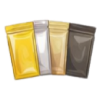
| Stand-Up Pouches | Kibble, treats, supplements | Shelf visibility with resealable convenience |
| Flat-Bottom Pouches | Premium kibble | Box-like base, more branding surface |
| Rollstock | Sachets, stick packs, single-serve | Runs on automated fill-seal lines at volume |
| Retort Pouches | Wet, shelf-stable meals | Withstands heat processing for long shelf life |
Stand-up pouches remain the default for dry pet food. They stand upright on the shelf, hold their shape in a pantry, and take a resealable zipper without issue. They also print cleanly across a wide size range, which matters if you’re selling the same formula as both a trial pack and a full-size bag.
Flat-bottom pouches give premium kibble lines a bigger footprint and more branding real estate, which is why so many higher-end brands reach for this shape to stand apart from standard bags.
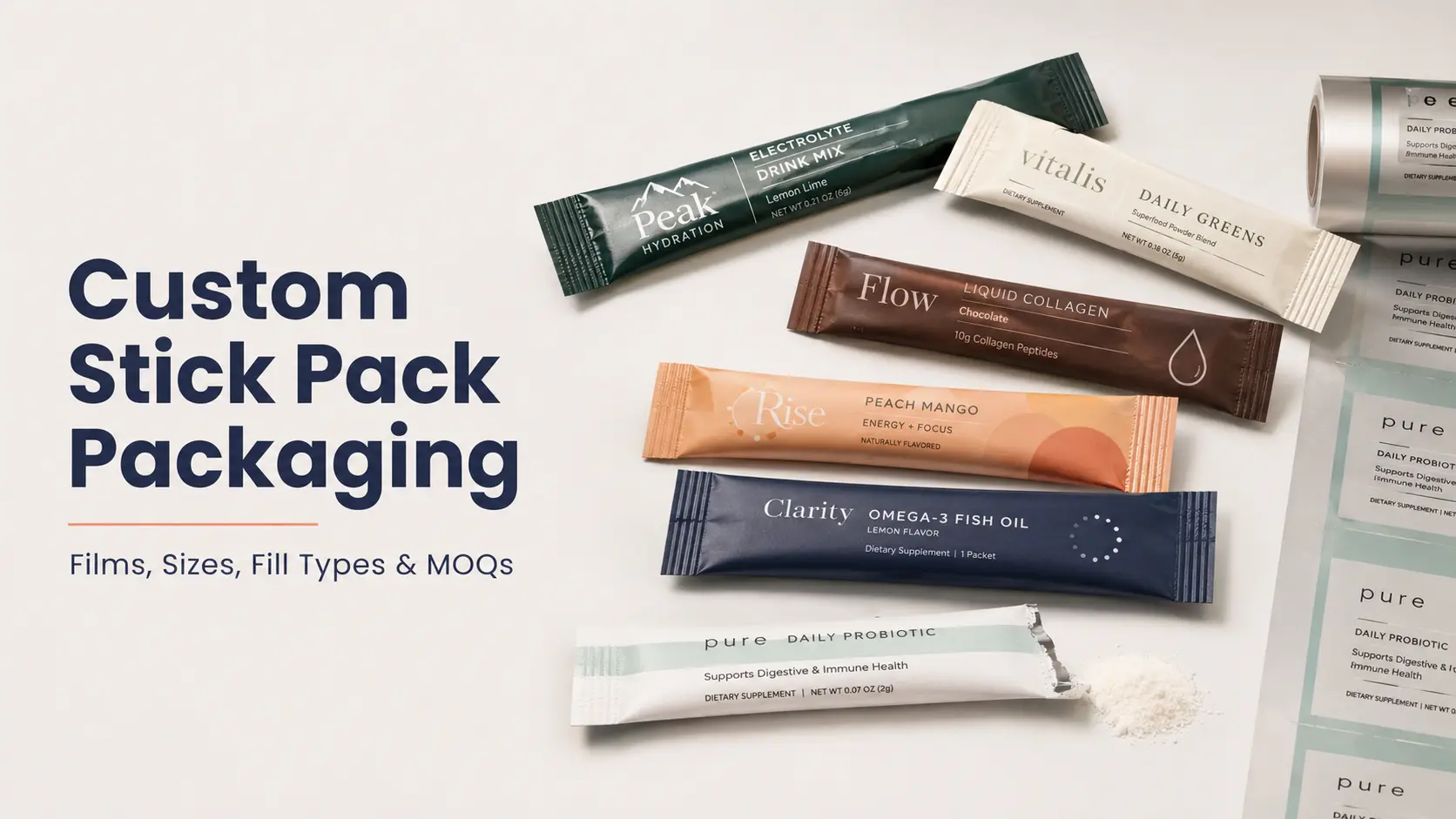
Rollstock feeds directly into automated form-fill-seal equipment, making it the practical choice once volume outgrows what pre-made pouches can support especially for sachets, stick packs, and single-serve treats.
Retort pouches are built to survive thermal processing, which is why they’re the standard for wet and shelf-stable pet food that needs to be kept without refrigeration. They also beat a metal can on shipping weight and shelf space.
Choosing Sustainable Packaging for Pet Food: A Practical Checklist
- Start with the product. Moisture, fat content, and shelf-life targets narrow the material options before you look at anything else. A baked treat and an oily jerky treat can look similar on paper but need very different films once grease enters the picture.
- Match the barrier to shelf life. A film has to handle oxygen, moisture, light, grease, aroma loss, and puncture resistance together. Skip protecting against even one, and the pack looks fine on day one, then fails in storage months later — right when it’s most expensive to fix.
- Build in features that cut waste. Resealable zippers, portion sizing, and easy-pour openings reduce how much product gets wasted after opening, which affects the customer’s wallet as much as your return rate.
- Check recyclability where the product will actually be sold. Recyclable, biodegradable, and compostable are not interchangeable terms, and a pouch that’s recyclable in one country can be rejected in the next.
- Verify every claim before it goes to print. If a sustainability claim can’t be explained in one clear sentence, it isn’t ready for the pack. Regulators in several regions are tightening rules on environmental packaging claims, so a copy that cleared review a year ago might not clear it today.
- Test before full production. Seal strength, shelf life, drop tests, and leak tests are far cheaper to catch on a mockup than on a pallet of finished stock.
Common Mistakes Pet Food Brands Should Avoid
- Printing a “recyclable” claim before confirming local facilities can actually process that material
- Choosing a barrier film on price alone, then dealing with spoilage complaints a few months later
- Redesigning an entire product line at once instead of testing one SKU first
- Assuming a pouch that looks great on a shelf will survive a delivery van untouched
- Treating “sustainable” as one single material decision instead of a combination of film, closure, and print method that all have to line up
Most of these come down to treating packaging as a final step instead of part of the product itself. Fixing even one or two tends to cut returns faster than a redesign built purely around looks.
Here’s a scenario that plays out often enough to be worth naming directly. A brand launches a freeze-dried treat in a standard kibble-style pouch because it’s already set up with that supplier and it’s the path of least resistance. The pouch looks fine in the warehouse. Three months later, moisture creep from inconsistent sealing has softened a portion of the batch, and customer complaints start showing up in reviews before anyone traces it back to the film. The fix isn’t complicated, a higher-barrier structure suited to a freeze-dried product but it’s a fix that costs far more to make after launch than it would have cost to get right the first time.
Building This Into a Real Strategy
Protect freshness before chasing a design trend. None of the trends above matter if the food spoils before it reaches the bowl. Build sustainability into the material and closure choices together rather than bolting it on as a slogan (a recyclable film paired with a non-recyclable zipper still can’t be processed as a whole unit). Design around how people actually store, carry, and reseal the pack at home, since most of a pouch’s life happens on a kitchen counter, not a shelf. And keep information easy to find, readable labels and honest ingredient details build more trust than a wall of fine print ever will.
None of this happens in isolation. A recyclability decision affects which zippers are available. A move toward kraft paper affects how a window or foil accent will look. Treating these as one connected decision, not a checklist worked through line by line, is usually what separates packaging that performs from packaging that just looks good in a pitch deck.
Where Flexible Pouches Fits In
Every trend on this list comes down to the same question: does your packaging supplier let you make these decisions without slowing down a launch?
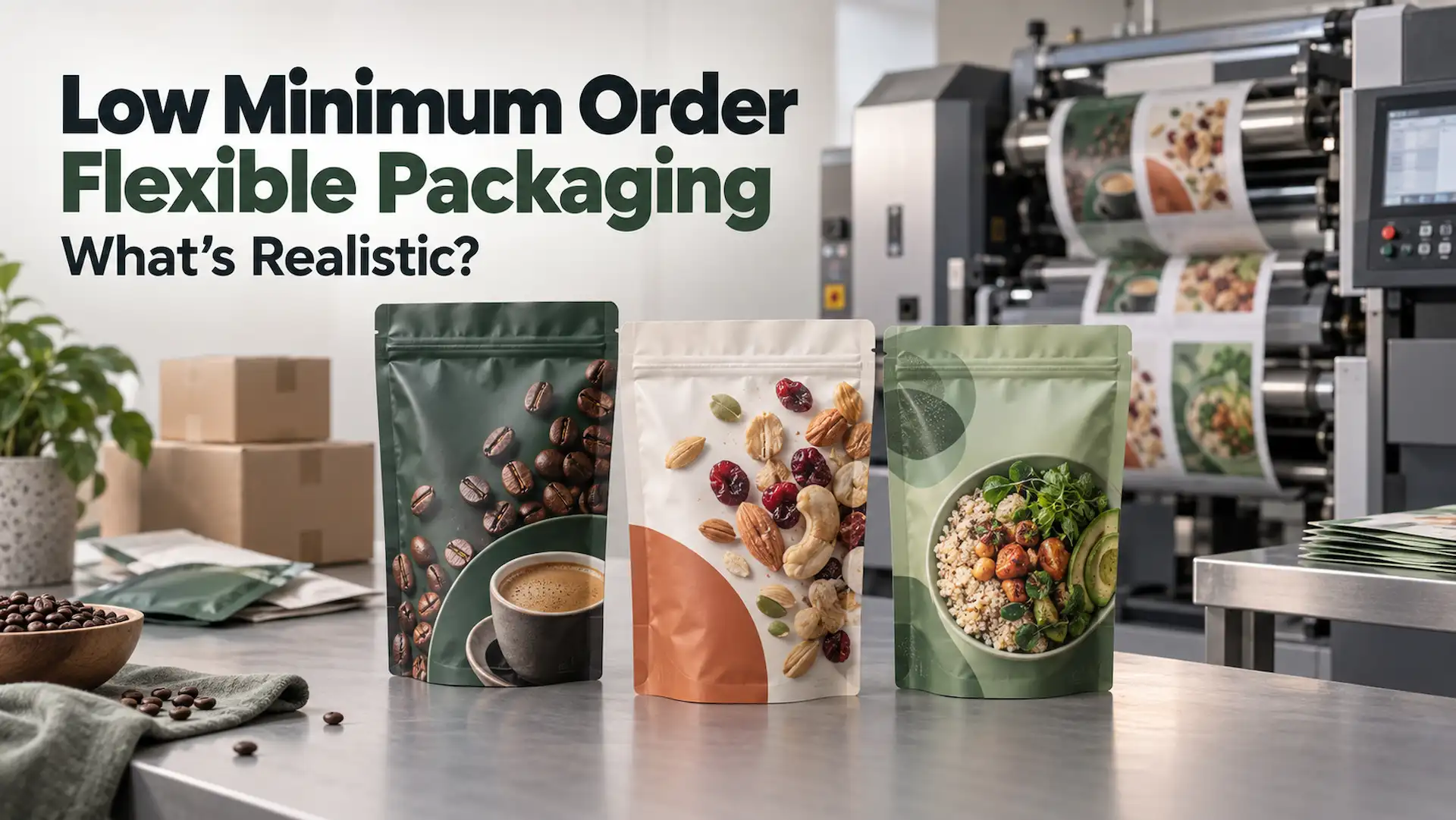
Flexible Pouches builds stand-up pouches, flat-bottom bags, lay-flat pouches, retort pouches, and custom rollstock for pet food brands, with recyclable and plastic-free, compostable film options available on any size or configuration — including zippers and degas valves. Digital printing means low minimums (runs as small as 1,000 units), no plates or tooling, and full custom sizing, so testing a new flavor or format doesn’t require a huge upfront commitment. Most digitally printed orders ship within 10 business days, with free worldwide shipping to most destinations.
Request a Custom Packaging Quote
FAQs
1. What are the biggest pet food packaging trends for 2026?
Recyclable monomaterial pouches, high-barrier films that use less material, resealable everyday packs, PFAS-free structures, digital printing for faster launches, and clearer labels with QR codes.
2. What is the most sustainable packaging for pet food?
It depends on the product and on what local recycling infrastructure can actually handle. For most dry food and treats, monomaterial recyclable pouches currently offer the best balance of sustainability and shelf life.
3. Are pet food pouches recyclable?
Some are. It comes down to the film structure, the closures, and whether local facilities accept that material — worth confirming with your supplier before printing any recycling claim.
4. Which packaging works best for dry pet food and treats?
Stand-up pouches and flat-bottom bags, mainly because of strong shelf visibility and resealable zippers.
5. What packaging works best for fresh or wet pet food?
Retort pouches and high-barrier, freeze-thaw resistant structures. Fresh and raw formats need seals that survive repeated temperature swings; wet, shelf-stable meals need something built for thermal processing.
6. How do resealable pouches help maintain freshness?
A tight-sealing zipper keeps air and moisture out between feedings, which slows staleness far better than a bag that’s just folded over and clipped.
7. Is compostable packaging a good fit for every pet food brand?
Not automatically. Compostable films like PLA usually need an industrial composting facility to break down properly, so they work best for brands whose customers have access to that infrastructure, or for brands willing to state that limitation clearly on the pack rather than implying backyard compostability.
8. How many units do you need to order to get custom pet food packaging?
It depends on the printing method. Digital printing has pushed minimums down considerably compared to traditional rotogravure printing, making runs in the low thousands realistic for brands that want to test a new flavor or format before committing to a larger order.