





























Most food does not go to waste because something was wrong with it. It goes to waste because of time, exposure, and handling. It dries out, picks up moisture, oxidises, gets crushed in a trailer, leaks through a weak seal, or sits half-used in a cupboard because the pack would not close again. None of that has anything to do with the recipe. All of it has something to do with the packaging.
That is why flexible packaging for food has become one of the more useful tools for cutting waste out of a supply chain. For a manufacturer, the maths is straightforward: fewer returns, fewer markdowns, fewer complaints, more predictable shelf performance. For the person who buys the product, it is simpler still. Food stays good longer and is easier to finish. This article covers why food is lost in the first place, what flexible packaging can realistically do about it, and how to pick a structure that fits your product rather than one that just looks the part.
Why Does So Much Food Become Waste Before It Is Consumed?
Ask a brand manager why their product spoils and you’ll usually hear “it doesn’t hold up.” True, and useless for specifying anything. Break it down and nearly every case comes back to one of five failure modes.
Oxygen Exposure and Oxidation
Never dramatic, always corrosive. Oils go rancid, roast coffee flattens inside a week, snacks stale, colour drifts off-spec. The product is still safe when it happens. It just isn’t sellable.
Moisture Gain and Moisture Loss
Runs both directions and both hurt. Moisture leaving gives you drying and staling. Moisture getting in gives you sogginess and clumping. Powders cake solid, crackers soften, dried fruit turns to gravel. Shoppers judge texture before anything else, so this one generates complaints.
Light and Temperature Exposure
Light degrades oils, pigments, and vitamins. Heat accelerates whatever chemistry is already running inside the pack. Rarely the primary failure, but both shorten your window.
Leakage, Punctures, and Physical Damage
Vibration on the road. Compression halfway down a pallet. A puncture off a sharp case corner. A seal that crept open in a chiller. Food untouched, still unsellable.
Food Waste After Opening
Happens out of sight, so it gets ignored. The pack won’t close again, the portion was wrong for that household, storing the rest is a nuisance. Back of the cupboard, binned a month later.
Important Note: These don’t share a fix. Barrier does nothing for punctures, and thicker film does nothing for oxidation. Spec before you diagnose and you’ll pay for performance you didn’t need while the actual problem carries on.
What flexible packaging actually is
Thin films and laminated structures, built layer by layer around what a product needs. One layer for barrier, one for sealing, one for strength, one to print on. That layering is the entire point and it’s what separates a specified pouch from a bag.
Formats you’ll come across:
- Stand-up pouches, zippered or plain
- Lay-flat and three-side-seal
- Rollstock for form-fill-seal lines
- Stick packs and sachets for single servings
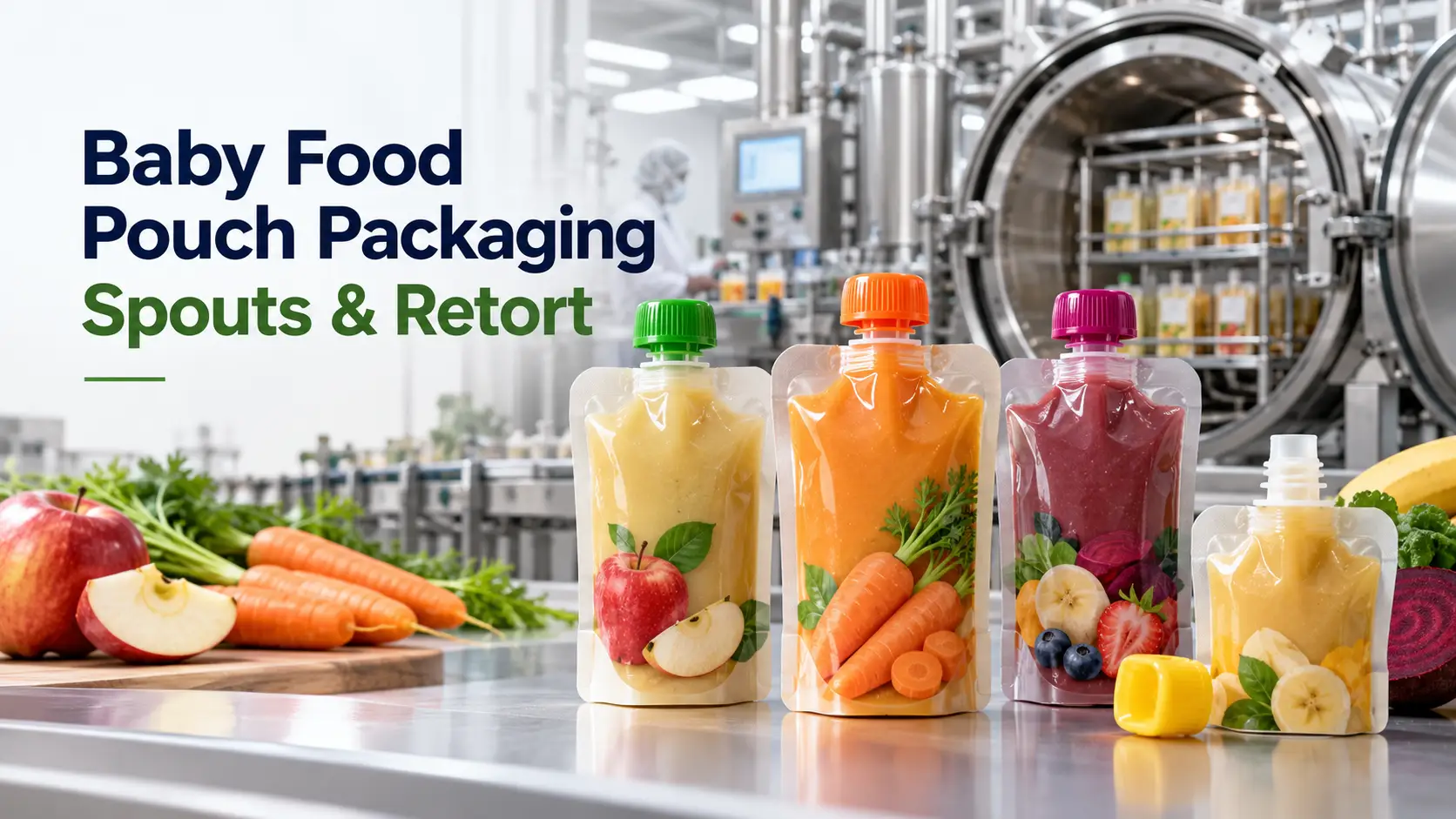
- Spouted pouches for liquids and purees
- High-barrier structures for oxygen-sensitive products
How flexible packaging reduces food waste
Seven things a well-specified structure actually does. Most products only need three or four of them, which is why diagnosis comes before design.
- It extends shelf life through barrier protection. Barrier films control how much oxygen and water vapour move through the wall of the pack. Get the barrier right and shelf life often improves without touching the formulation. Shelf life is frequently a barrier problem, not a recipe problem, and it is a lot cheaper to fix the pack than to reformulate the product.
- It keeps food fresh after opening. Press-to-close zippers, sliders, caps, and spouts mean the pack still works on the fifth opening. This matters most for snacks, cereal, dried fruit, cheese, powders, frozen food, and pet food, where the product is used over weeks rather than in one sitting.
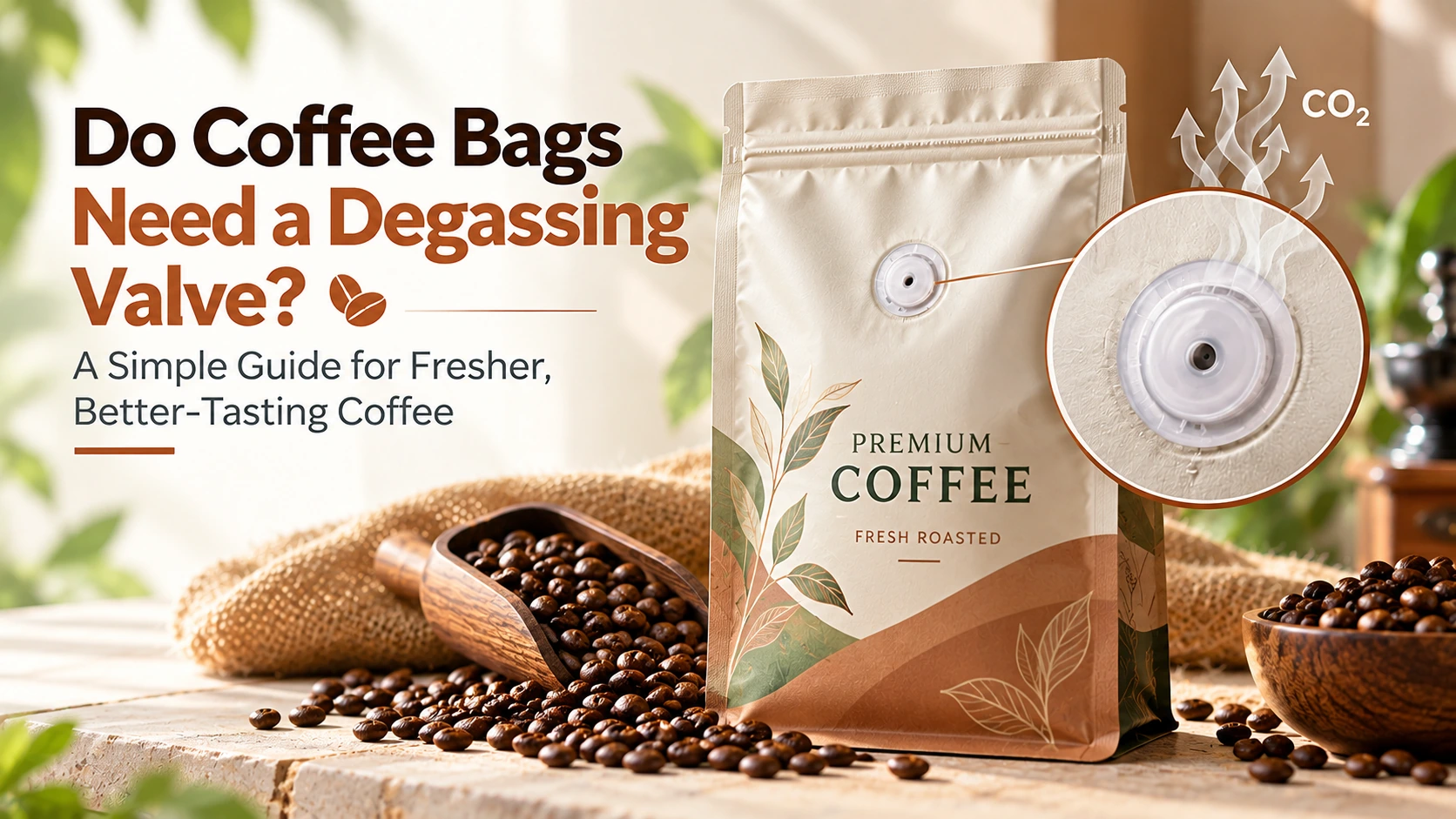
- It controls conditions inside the pack. A one-way degassing valve lets freshly roasted coffee release CO₂ without letting oxygen back in. That is a small component solving a very specific waste problem, and it is only possible because the structure was designed around the product.
- It prevents leaks and seal failures. A great film with a bad seal still fails. Seal integrity depends on the sealant layer, sealing temperature, dwell time, and whether product gets into the seal area during filling. Flexible structures can be designed around a wide, forgiving sealing window, which cuts rejects on high-speed lines.
- It protects food through transport and handling. Vibration, drops, compression, cold-chain stacking. Flexible packs handle all of it when the film is specified for it. An unglamorous waste reducer that never shows up in a sustainability report but shows up clearly in your damage numbers.
- It supports right-sized portions. Smaller is not automatically better. A pack that runs out too fast annoys people; a pack that is too big gets half-thrown-away. The right size matches how the product is genuinely consumed.
- It improves dispensing. Spouts, caps, tear notches, and easy-pour formats reduce spills and let people get the last of a sauce or powder out. Less mess, less residue, less thrown away.
How Flexible Packaging Can Lower the Carbon Impact of Food Waste
The emissions argument usually gets framed around the film. It’s the wrong place to look first.
Preventing Food Waste Also Prevents Wasted Resources
A discarded pack of chicken carries the feed, water, energy, refrigeration, and road miles behind it. Stop that pack going in the bin and all of it is prevented. Almost always a bigger number than the footprint of the film itself, which is the part everyone argues about.
Lightweight Packaging Can Improve Transport Efficiency
Flexible formats generally weigh less and ship denser than rigid equivalents, so transport and warehousing emissions tend to drop. How much depends entirely on the comparison, so treat it as likely rather than guaranteed.
Food Protection vs. Packaging Reduction
Taking material out stops being sustainable the moment the thinner structure lets more food spoil. Best design sits where material efficiency and product protection intersect. Push hard either way and you lose.
Which flexible packaging features help reduce food waste?
Most of the waste reduction comes from a handful of features doing specific jobs. Here’s what each one is actually for.
| Packaging feature | Purpose | Food-waste benefit | Common applications |
| High-barrier films | Control oxygen and moisture | Extends usable shelf life | Coffee, snacks, powders |
| Resealable zipper | Allows repeated closing | Maintains freshness after opening | Snacks, cereal, pet food |
| Degassing valve | Releases gas without letting oxygen in | Protects aroma in fresh-roast products | Coffee |
| Spout or cap | Controlled dispensing | Reduces spills and leftovers | Sauces, liquids |
| Strong seals | Prevent leakage | Fewer damaged and rejected packs | Most food categories |
| Puncture-resistant film | Physical protection | Reduces transport damage | Frozen and heavier products |
| Right-sized packaging | Portion management | Less unfinished product at home | Snacks, mixes, single servings |
Important Note: Treat this table as a starting point. Final structure depends on your filling line, fill temperature, and distribution conditions, so validate a real sample against your own product before committing to a production run.
Best flexible packaging options by food product
Different categories fail in different ways, so the right structure changes with the product. A starting point by category.
Snacks, cereals, and bakery. Moisture and oxygen control plus a reliable reseal. Texture is what customers judge, so holding crispness matters more than appearance.
Coffee, tea, and spices. High barrier against oxygen, moisture, and light, with a degassing valve for fresh-roast coffee. Aroma is the product, and aroma is fragile.
Powders and dry mixes. Moisture protection to stop clumping, plus clean dispensing and a reseal that survives repeated use.
Sauces and condiments. Spouted pouches. Controlled dispensing cuts spillage and the residue that gets binned with the pack.
Frozen foods. Freezer-grade films that stay tough cold, resist punctures, and reseal well. Freezer burn and torn bags are the two main loss routes.
Meat and seafood. Oxygen control and seal integrity above all. Vacuum or high-barrier structures, depending on the shelf-life target.
Ready meals and heat-processed foods. Retort pouches and other heat-capable structures, where the process demands them.
How Manufacturers Should Choose Packaging to Reduce Food Waste
Five steps, in order. Skipping the first two is how most projects end up solving a problem nobody had.
Step 1 — Find where the food is being lost. In production, in transit, at retail, in storage, or after opening. Each one points at a different fix.
Step 2 — Name the failure mode. “It spoils fast” is not a specification. Oxidation, moisture pickup, leakage, puncture, freezer burn, seal failure, and oversized packs are all different problems.
Step 3 — Match performance to the product. Now you can talk about oxygen barrier, moisture barrier, seal strength, temperature resistance, puncture resistance, closure type, and dispensing. This is where material options become a design decision rather than a purchase.
Step 4 — Pick the format and pack size. Driven by product type, filling method, target shelf life, distribution route, and how the customer actually uses it. A stand-up pouch is not automatically right just because it sells well elsewhere.
Step 5 — Test under real conditions. Filling trials, seal testing, transport simulation, storage, and repeated opening. Shelf-life claims validated in a lab and never in a trailer have a habit of falling apart.
Common packaging mistakes that increase food waste
Most failed packaging projects don’t fail because flexible packaging was the wrong call. They fail because the wrong thing was optimised for.
- Choosing on appearance and hoping performance follows. A premium-looking pouch with the wrong barrier will underperform and generate waste. It’ll photograph beautifully while doing it.
- Getting the barrier level wrong in either direction. Under-specify and product spoils. Over-specify and you’ve added cost, weight, and end-of-life complexity for protection nobody needed.
- Treating seal design as an afterthought. Seal specs and line compatibility get sorted out at the last minute constantly, and it’s where a surprising share of rejects originate.
- Sizing for the shelf instead of the household. Large packs look efficient on a pallet. If people don’t finish them, you’ve moved the waste rather than removed it.
- Overengineering. Extra layers add cost and complicate recycling. The goal is the simplest structure that still protects the food, which is harder than it sounds.
- Forgetting the pack has a life after opening. Everything gets designed for the moment of purchase. Most household waste happens weeks later.
- Skipping real-world validation. Lab conditions are gentle. Trailers, freezers, and kitchens are not.
Can flexible packaging be sustainable as well as protective?
Mostly yes, with caveats worth taking seriously rather than glossing over.
- Mono-material structures have improved a lot. Single-polymer laminates now hit barrier levels that were genuinely difficult a few years back, and they sort far more cleanly at recycling facilities.
- Downgauging works within limits. You can often take material out without losing meaningful protection. Push past the limit and you’ve traded packaging waste for food waste, which is a worse deal.
- Recyclable pouches depend on local infrastructure. A structure that’s technically recyclable in a market with no collection stream is recyclable on paper only. Check the system, not just the claim.
- Compostable isn’t automatically better. It needs industrial composting access and it usually offers less barrier, which shortens shelf life. Sometimes right. Not a default.
- Food protection outweighs packaging weight, almost always. The emissions in wasted food dwarf the emissions in the film around it. Protect first, then optimise material.
- Certification and paperwork matter. Supplier claims should be backed by documentation you can actually produce when a retailer asks.
Conclusion
Flexible packaging reduces food waste when it’s built around the specific reasons your product loses quality. Barrier buys shelf life. Seals stop leaks. Durable film survives distribution. A reseal that works keeps the product usable after opening. Sensible sizing means less gets abandoned. None of it is exotic it’s decisions made deliberately instead of by default.
The environmental case comes from the same place. Every pack that reaches someone and gets eaten carries all the water, energy, and transport that went into it. Preventing that loss matters more than shaving microns off a film. Protection first, material optimisation second.
Need Flexible Packaging Designed Around Your Product?
The right structure starts with your product, your shelf-life targets, your filling process, and your distribution conditions. Get in touch for a quote and we’ll work out what fits.
FAQs
1. How does flexible packaging reduce food waste?
By controlling what actually spoils food. Barrier layers limit oxygen and moisture, strong seals stop leaks, durable films survive transport, and a working reseal keeps product usable after opening.
2. Does flexible packaging extend the shelf life of food?
Often, when the barrier matches your product’s real failure mode. If oxidation or moisture exchange is the limit, a better barrier usually extends shelf life with no formulation change.
3. Which flexible packaging features help keep food fresh longer?
High-barrier film, a reliable reseal, strong seals, and product-specific parts like degassing valves for coffee. The combination matters more than any single feature.
4. What type of flexible packaging is best for food products?
Depends on the product. Snacks need moisture and oxygen control, coffee needs aroma protection and a valve, frozen food needs puncture resistance, sauces need controlled dispensing.
5. How can resealable packaging help reduce household food waste?
Most household waste happens after opening. A closure that still seals on the tenth use keeps the rest fresh, so less gets forgotten and thrown out.
6. Can flexible packaging reduce carbon emissions as well as food waste?
Two ways. It prevents emissions locked into food that would otherwise be binned, and lower pack weight can cut transport emissions against heavier rigid formats.