




























Packaging costs in the USA are shifting fast, and a lot of businesses are still trying to figure out why. Tariffs are one of the biggest reasons behind it. Paper goods, imported films, and many other materials used in custom packaging keep getting pricier, which means boxes, labels, pouches, and printed items now carry higher production and shipping costs than they did last year. For brands selling food, cosmetics, supplements, pet products, or retail goods, even a small price bump on raw materials can eat into profit margins. That is why so many business owners are now paying close attention to packaging design price tariff updates before launching new products or planning their next move.
The tricky part is that customers still want high-quality packaging, so cutting corners is not really an option. Brands cannot drop quality just to save a few dollars, which is why more companies are searching for smarter, more flexible packaging choices that keep costs in check without hurting shelf appeal. Tariffs are also making the market feel a bit unpredictable. Suppliers keep tweaking their prices, and planning a packaging budget for the months ahead has become harder than usual. Getting a clear picture of how tariffs are shaping custom packaging now can help your brand make better calls before prices climb even higher.
Why Packaging Costs Are Rising in the USA
There is no single reason behind the price jump. It is a mix of things hitting at once. Fuel is up, shipping is slow, raw goods are tight, and the new tariffs are putting more weight on imported materials. Suppliers have to pay more, so they charge more. That cost then lands on the brand owner.
If you follow packaging materials price news, you have likely seen plenty of talk about the paper price increase 2025. Mills are charging more for kraft, recycled fiber, and coated boards. Resin prices keep moving with oil rates. And US import tariffs affect packages by adding extra cost on every roll of film or foil coming in from overseas.
A few of the biggest reasons your quote looks heavy right now:
- New tariffs on imported films, resins, and foils
- Paper mill price jumps due to short pulp supply
- Pricey inks and printing chemicals from overseas
- Fuel and freight rates that won’t sit still
- Strong demand for greener materials
Important Note: Tariff rates do not stay the same for long. Ask your supplier for a fresh quote before any big order. The price you saw last quarter may be old news today.
What Tariffs Mean for Custom Packaging Buyers
A lot of folks hear “packaging design price tariff” and think it only hurts the big guys. Not true. Small brands and even side-hustle shops are feeling it too. When raw goods get more expensive, your pouch or label gets more expensive. Simple as that. Picking smart material options early in the design step can save you a real chunk of money before the order even ships.
This is what most brand owners are seeing in their inbox right now:
- Quotes that are 5% to 15% higher than last year
- Lead times that drag out a few extra weeks
- Suppliers asking to swap in a different film blend
- Smaller print runs instead of one big bulk order
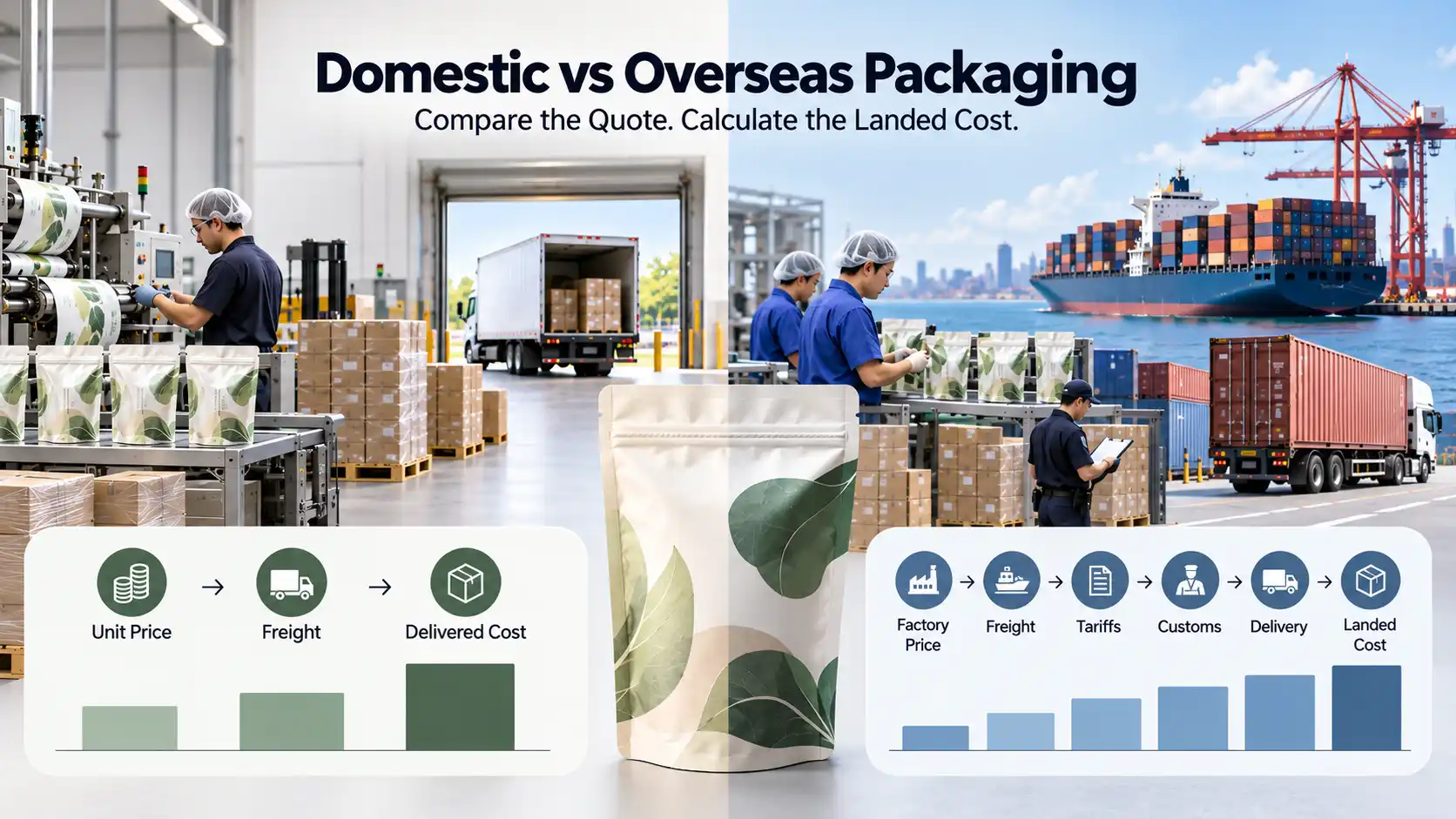
Good news? A little planning can soften the blow. A supplier that prints in the USA, runs digital presses, and lets you tweak the size will always beat one that ships everything in from far away.
Will Paper Products Be Affected by Tariffs?
Yes, and a lot of brands are asking this exact thing right now. Will paper products be affected by tariffs? Short answer, they already are. Mills that lean on imported pulp, recycled fiber, or fancy coatings have been passing that cost down to printers and then to brand owners like you.
The paper tariff story keeps growing every few weeks. Folding cartons, paper labels, printed inserts, all of them are showing price changes. If your packaging uses paperboard boxes or paper-based pouches, do not be shocked when the next quote comes in a bit higher.
Paper items getting squeezed by tariffs on paper:
- Folding cartons and printed boxes
- Kraft paper bags and stand up paper pouches
- Paper labels and stickers
- Coated paperboard for retail packaging
- Recycled paper layers used inside flexible pouches
When paper feels too pricey, many brands switch to mixed-material pouches like flat bottom pouches. These give you a natural look while still keeping the price friendly.
How Tariffs Affect Flexible Packaging Materials
A pouch is not just one thing. It is a stack of layers, and each layer can come from a different country. So when tariffs hit, they can hit several parts of one bag at the same time. Films, foil, zippers, labels, shrink sleeves, all of them are sitting on the price-watch list this year. If you ever feel lost with all the material names, the flexible packaging glossary is a handy thing to keep open in another tab.
Here is a quick table to show how the parts get hit:
| Packaging Part | Common Source | Tariff Impact |
| Plastic films (PET, PE, BOPP) | Imported resin | Medium to High |
| Aluminum foil layers | Imported foil | High |
| Zippers and closures | Imported plastic | Medium |
| Printing inks | Imported chemicals | Medium |
| Labels and shrink sleeves | Mixed sources | Low to Medium |
| Custom pouch structures | Mixed materials | Varies |
Even with all these bumps, flexible packaging is still one of the cheapest ways to package a product. Pouches use less material than jars or cans. They weigh less, ship lighter, and that helps cancel out some of the tariff hit.
Small Package Tariff Impact on Growing Brands
This is where it really stings. Big brands have the buying power to ride out price hikes. A startup running 500 sample pouches does not. The small package tariff is hitting young brands the hardest, and many founders are feeling the pressure on every test batch. Trying out a few mockups and prototypes first is a smart way to lock in your design before placing a bigger order.
Where small brands are getting hit:
- Sample orders cost more because short runs need more setup
- Prototype pouches with foil or fancy coatings cost extra
- Ecommerce mailers and small bags get hit on imported rolls
- Custom labels and stickers cost more when the paper is imported
The fix? Use digital printing for short runs. No plates, no cylinders, no painful setup. Just fast, flexible printing that fits a small budget.
How Brands Can Control Custom Packaging Costs
You cannot stop tariffs. You can plan around them. A little smart thinking goes a long way, and most brands are already doing some of these things without knowing it.
Tips that actually work:
- Stick with flexible pouch shapes, they are lighter than jars and cans
- Skip the extra effects unless your brand really needs them
- Order in smart batches, not too big, not too small
- Get two or three quotes with different film blends
- Plan early, last-minute orders always cost more
- Use digital printing for short runs and seasonal art
- Try recyclable or biodegradable films, many are now made in the USA
Important Note: Always check lead times before approving your final design. A tariff-related delay can push your launch back by weeks if you wait too long to lock things in.
Why Flexible Packaging Can Help Reduce Cost Pressure
When everything is going up, flexible packaging quietly stays one of the most budget-friendly choices around. Less material, less weight, less shelf space. Fewer trucks, smaller storage rooms, cheaper freight. It all adds up.
Loads of brands are now moving to stand up pouches because they look amazing and cost less than rigid options. Coffee, snacks, supplements, pet food, almost any product fits into the pouch family with the right size and shape.
Pouch styles that help save real money:
- Stand Up Pouches — tall, eye-catching, less film than a jar
- Flat Bottom Pouches — box-shaped, premium feel, strong on shelves
- Lay-Flat Pouches — slim and clean, great for single servings
- Custom Printed Rollstock — ideal if you fill in-house
- Custom Sizing — pay only for the size you actually need
- Recyclable and Biodegradable Pouches — kind to the earth, kind to your wallet
Switching to flexible packaging is more than a money move. It keeps your brand fresh, modern, and ready for whatever the market throws next.
Conclusion
Tariffs are shaking up custom packaging costs in the USA, and brands really do need to stay sharp. Paper, films, foils, and inks are all moving, and even small shops are seeing the change in their quotes. Plan early, pick the right pouch, and never skip the part where you compare materials.
With the right team and the right pouch, you can still get packaging that looks great and feels fair on price. Flexible pouches are quietly becoming the go-to choice for brands that want to stay sharp without overspending.
Get Packaging That Fits Your Budget
Want to Lock in Smart Pricing Before Tariffs Climb Again?
This is the time to plan. Tariffs will keep moving, but your packaging plan does not have to fall apart with them. Sit down with a team that gets it. From custom printed rollstock to fully designed pouches, the right partner makes a huge difference.
Get your free quote here and pick the right size, material, and pouch shape for your brand today.
FAQs
1. How are tariffs changing custom packaging costs in the USA?
Tariffs are pushing up the price of imported films, foils, paper, and inks. That pushes suppliers to charge more for pouches, labels, and boxes. Brands are now seeing higher quotes, slower lead times, and more material swaps than last year.
2. Will paper products be affected by tariffs?
Yes, paper items are taking a real hit. Folding cartons, kraft bags, paper labels, and printed inserts are all getting more expensive. If your brand uses paperboard packaging, expect a higher quote on your next round.
3. Do paper tariffs increase packaging prices?
They really do. When tariffs hit imported pulp or coated paperboard, mills raise prices. Then your printer raises theirs. Even a small paper tariff can lift the full price of your packaging in a noticeable way.
4. What is a small package tariff?
A small package tariff is a duty placed on smaller import shipments like samples, prototypes, and ecommerce mailers. It hits startups and young brands harder because they often ship in low volumes or test new designs.
5. How can brands reduce packaging costs in 2025?
Stick with flexible pouches, use digital printing for short runs, skip the extra effects, plan early, and pick local eco-friendly materials. Smart choices and a little pre-planning can save you hundreds, maybe thousands of dollars.
6. Are flexible pouches a cost-effective packaging option?
Yes, they are one of the most budget-friendly styles on the market right now. Less material, less weight, cheaper shipping, and a strong look on the shelf. Many brands are switching to pouches to push back against rising tariff costs.