


















In healthcare, packaging is never just a wrapper. Before a test kit, a tablet, or a sterile swab reaches a patient, it has to survive shipping, storage, and a dozen pairs of hands. One slip, a torn seal, a bit of moisture, a speck of contamination and the product can turn unsafe to use. That’s the quiet, serious job a medical pouch is built to do.
Medical pouches are one of the most trusted flexible packaging formats in healthcare, and for good reason. They keep products clean, protected, and ready for safe use, whether they end up in a hospital, a clinic, a pharmacy, or someone’s home. This guide breaks down why these pouches matter, how they protect what’s inside, and what to look for when choosing the right one.
Medical Pouches Are More Than Simple Packaging
From the outside, a medical pouch looks plain, a thin, sealed bag, nothing fancy. But that simple shape carries real responsibility. It protects the product through manufacturing, storage, shipping, handling, and the moment it’s opened.
Here’s what a good medical pouch is really doing behind the scenes:
- Product quality stays steady from the line to the end user
- Contamination and outside particles are kept at bay
- The product is safer and simpler to handle
- The contents stay usable right up until the seal is broken
- And the buyer gets a clear signal this product is clean and untouched
None of it shows in the price tag, but all of it matters the moment a patient depends on what’s inside.
Why Safe Healthcare Packaging Starts With Product Protection
Before you think about pouch styles or materials, start with one question: what could harm the product before it’s used? In healthcare, the list is long.
Medical products can be surprisingly fragile. Air, moisture, light, dust, bacteria, even pressure can change how a product performs or make it unsafe. Weak packaging doesn’t just look cheap; it can quietly ruin what’s inside before anyone notices.
That’s why healthcare packaging has two jobs at once: protect the product, and protect the person who’ll use it. Get it right at the start, and you cut the risk long before the product reaches a patient.
How Medical Pouches Help Keep Healthcare Products Safe
So how does a thin pouch pull this off? A few key jobs:
They Reduce Contamination Risk
Seal a pouch and you’ve drawn a line. The product on one side; dust, germs, moisture, and stray fingers on the other. Nothing crosses until someone opens it.
They Help Maintain Sterility
Some products have to be sterile, not mostly, not nearly. A good pouch keeps that sterile state locked in until the seal is broken.
They Protect During Storage and Shipping
Shipping is rough drops, stacking, hot trucks, cold warehouses. Strong films, seals, and barrier layers soak up the abuse so the product turns up whole.
They Open Cleanly and Safely
And it has to open right. A good pouch peels apart cleanly, no shredding, no bits of torn film raining onto the product. Clean in, clean out.
The Role of Medical Pouches in Sterile Healthcare Packaging
Sterility is where pouches earn their keep. For surgical tools, wound care, and many single-use items, “mostly clean” isn’t enough; the product must be fully sterile when opened.
A pouch acts as that protective wall as long as the seal holds, contaminants stay out. Which is why the seal matters so much: a weak or broken one breaks the whole system, even when the pouch looks fine.
Clean opening counts too. In a busy clinic or operating room, staff need to reach the product without contaminating it. And the pouch must suit both the product and the sterilization method, or the protection falls apart.
Important Note: A pouch is only as safe as its weakest seal. Always confirm seal strength and sterilization compatibility before a product goes to market. It’s the difference between a sterile pouch and a false sense of security.
Common Healthcare Products That Use Medical Pouches
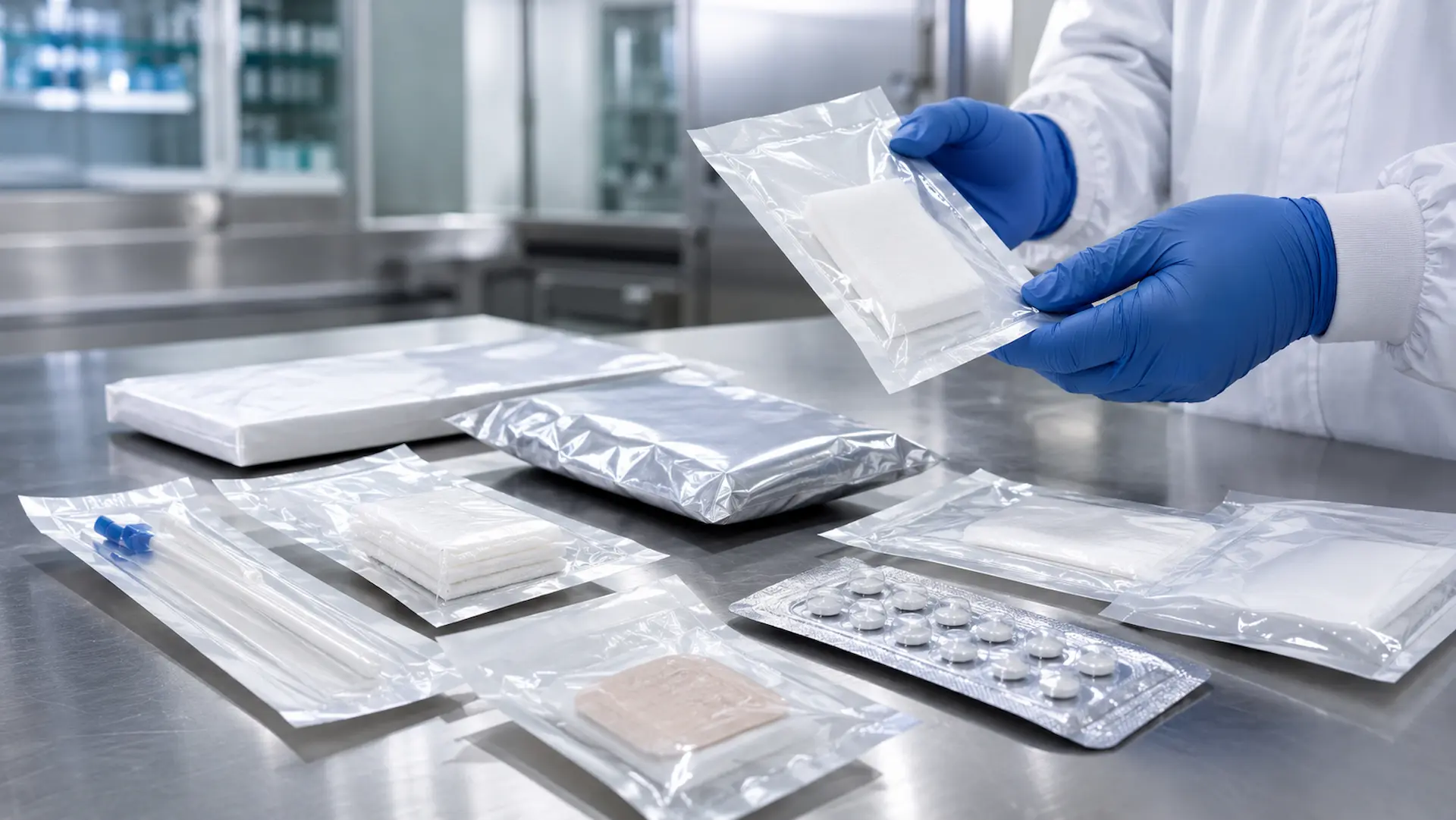
Look around any pharmacy or clinic and medical pouches are everywhere you just don’t clock them. If something needs to stay clean, protected, and grab-ready, odds are it’s in a pouch.
A few everyday examples:
- Medical test kits and diagnostic sample packs
- Swabs, wipes, and bandages
- Medical patches and dressings
- Single-dose medications, tablets, and capsules
- Creams, gels, and ointments
- Small medical tools and disposable items
For single-dose powders or liquids, narrow formats like stick packs work well; bulkier items need a sturdier pouch. The format follows the product, not the other way round.
What Makes a Medical Pouch Safe for Healthcare Use?
This is the heart of it. A pouch can look perfect and still fail where it counts so a genuinely safe one nails these five things:
Strong Barrier Protection
The pouch is a shield. It keeps out moisture, oxygen, dust, and light, and how strong it needs to be comes down to how fussy the product is.
Reliable Seal Strength
Here’s the usual weak spot: the seal. Get it wrong and the pouch leaks, peels early, or quietly lets contamination in. So seal strength gets tested, not assumed.
Puncture and Tear Resistance
Some products fight back. A sharp edge or rigid corner punches straight through thin film, so tougher materials keep the pouch whole from warehouse to point of use.
Compatibility With Sterilization
If the product gets sterilized, so does the pouch and it has to come through that without warping or losing its barrier.
Safe Material Selection
Last one, and it ties the rest together: the material has to fit the product’s sensitivity, shelf life, and rules. The film that’s perfect for a dry tablet will fail a moist gel fast.
Important Materials Used in Medical Pouch Packaging
Films aren’t all created equal. The material is where a lot of the safety actually lives, so it helps to know the main players and where each one shines:
| Material | Best for | Main safety benefit |
| Tyvek® | Sterile medical products | Breathable, tough, strong microbial barrier |
| Medical-grade paper | Sterile pouch packaging | Clean peel and breathability |
| High-barrier film | Sensitive healthcare products | Moisture and oxygen protection |
| Foil laminate | Light- or moisture-sensitive products | Heavy-duty barrier protection |
| Clear film | Visible medical products | See-through plus protection |
Other common choices include polyethylene and polyester films, often combined into laminates, plus rollstock for high-volume lines. If you’re unsure which fits, comparing material options side by side is the best place to start.
Medical Pouches vs Regular Pouches: What Is the Difference?
At a glance, a medical pouch and a regular retail pouch look like cousins. In practice, they’re worlds apart. A snack bag just keeps chips fresh; a medical pouch can be the line between a safe product and a risky one.
| Feature | Medical Pouch | Regular Pouch |
| Material standards | Strict, healthcare-grade | General-purpose |
| Barrier protection | Often high | Basic to moderate |
| Sterilization | May be required | Not needed |
| Seal & opening | Tested, clean-peel | Standard |
| Labelling | Lot, expiry, usage, codes | Mostly branding |
In short, medical pouches carry tighter material rules, stronger barriers, cleaner sealing, and far more printed detail. That extra care is what makes them safe for healthcare instead of just the shelf.
Why Custom Medical Pouches Are Better for Safe Healthcare Packaging
One standard pouch can’t protect every product. A moisture-heavy gel, a sterile swab, and a box of sachets all need different things: sizes, barriers, printing. That’s where custom pouches earn their place.
With a custom approach, you can dial in:
- A custom size that fits the product snugly, with no wasted space
- The right barrier level for how sensitive the contents are
- Custom-printed instructions, dosage, lot numbers, and branding
- Flat pouches for small, light items
- Stand-up pouches for products that need shelf presence
- Rollstock for high-volume, automated filling
- Child-resistant options where safety demands it
- Eco-friendly materials where they make sense
The result is a pouch built around your product, not a compromise.
How Medical Pouches Improve Safety From Factory to Final Use
A medical pouch doesn’t protect at one moment it works across the product’s whole journey:
During Manufacturing
The job starts the second the product is packed. Seal the pouch, and a clean, controlled little space is locked inside everything else stays out.
During Shipping
Then it travels. Crates get dropped, stacked, and rattled for days, and the pouch’s structure and seals take that beating so the product doesn’t.
During Storage
Sitting still has its own risks. Barrier materials hold back moisture, air, and light the slow, quiet things that spoil a product over months on a shelf.
During Use
And right at the end, when it matters most, a clean-peel design lets a nurse, pharmacist, or patient reach the product with no mess and no fresh contamination.
Common Mistakes to Avoid in Medical Pouch Packaging
Most packaging problems trace back to a few avoidable mistakes. If you’re choosing pouches, watch for these:
- Picking a material on price alone, ignoring what the product needs
- Overlooking how sensitive the contents really are
- Settling for weak or untested seals
- Choosing the wrong size, so the product shifts or gets crushed
- Forgetting about shelf life and how long protection must last
- Skipping sterilization needs until it’s too late to change course
- Leaving no room for labels, codes, and instructions
- Designing a pouch that’s a struggle to open
- Ignoring the rough reality of shipping and storage
Catch them early and they cost next to nothing. Catch them late, after a production run, and they get expensive which is why a quick chat with your supplier up front pays off.
How to Choose the Right Medical Pouch for Safe Healthcare Packaging
Choosing a medical pouch gets easier once you work through a few honest questions about your product:
- What exactly are you packing, and how delicate is it?
- Does it need to stay sterile until it’s opened?
- Does it need protection from moisture, oxygen, or light?
- How long does it have to stay safe on the shelf?
- Will it travel long distances to reach the buyer?
- Does it need custom printing for branding and instructions?
- Are child-resistant or eco-friendly features a must?
- Which pouch style actually suits the product best?
Answer those, and the right material, size, and format usually become obvious. When they don’t, lean on a supplier who’s done it before.
Important Note: Always match the pouch to both the product and its sterilization method before you commit. The cheapest pouch that fails a single test costs far more than the right one chosen from the start.
Why Medical Pouches Build Trust in Healthcare Products
Packaging is the first thing anyone touches, and people notice quality. A clean, well-sealed pouch tells a clinic, pharmacy, or patient that the product inside was made with care.
That trust shows up in real ways:
- A stronger first impression, on the shelf or in hand
- Clear, easy-to-read product information
- A professional, credible brand image
- Simpler, safer handling for whoever opens it
- More confidence that the product is clean and safe to use
In healthcare, confidence isn’t a bonus, it’s part of the product, and good pouches help you earn it.
Final Thoughts
Medical pouches matter because they quietly carry a heavy load. They shield healthcare products from contamination, damage, moisture, and handling wear, all before anyone uses them. They help hold sterility, stretch shelf life, and make products simple to open. For a thin sealed bag, that’s a lot of protection riding on every order.
The takeaway is simple: the right pouch protects your product, supports the people who use it, and shows your brand at its best. Choose it with care, match it to your product, and lean on a partner who knows healthcare packaging. Do that, and safety comes built into every pack.
Ready to Package Your Healthcare Products Safely?
At Flexible Pouches, we build custom medical and healthcare pouches designed to protect what matters the right materials, strong seals, low minimums, and fast turnaround. From flat pouches for single doses to stand-up pouches and high-volume rollstock, we match the format to your product. Tell us what you’re packing, and we’ll guide you from idea to finished pouch.
Request a free quote today and give your products the safe packaging they deserve.
FAQs:
1- Why are medical pouches important for healthcare packaging?
They protect healthcare products from contamination, moisture, damage, and outside exposure before use, which keeps them safe, effective, and ready for the patient.
2- What products can be packed in medical pouches?
All sorts of test kits, swabs, bandages, patches, wipes, creams, gels, tablets, capsules, single-dose products, and small medical devices. If it needs to stay clean and protected, a pouch usually fits.
3- What makes a medical pouch safe?
The right barrier protection, strong tested seals, safe materials, good puncture resistance, and a clean, easy opening. Miss one and the whole pouch is weaker.
4- Are medical pouches used for sterile products?
Yes. Many are built to protect sterile products and hold that sterility until the pouch is opened as long as the seal stays intact.
5- What materials are used in medical pouch packaging?
Common ones include Tyvek, medical-grade paper, high-barrier films, foil laminates, polyethylene, and polyester. The best choice depends on the product and how it’s used.
6- Can medical pouches be custom printed?
Definitely. They can carry branding, instructions, expiry dates, lot numbers, barcodes, and QR codes all printed where they’re easy to read.