




















Packaging does three jobs at once and most brands only think about one of them. It protects the product. It sells the product before anybody reads a word. And it quietly decides what you pay in freight on every order you ever ship. Get the format wrong and you keep paying for that mistake, month after month, long after the design conversation is forgotten.
Three formats cover most of food and consumer goods: pouches, boxes and jars. Pouches are flexible packaging. Boxes and jars are rigid. What follows compares the pros and cons of pouch packaging vs boxes vs jars honestly, including the places where the pouch is the wrong answer.
Understanding Flexible vs Rigid Packaging
Almost every difference in this article traces back to one split, so it is worth being clear on it before anything else.
What is Flexible Packaging?
Flexible packaging takes its shape from whatever goes inside it. Films, laminates, foil and paper-based flexible structures all sit here.
Examples include:
- Stand-up pouches
- Flat pouches
- Rollstock packaging
- Vacuum bags
The defining trait is that it is nothing until you fill it. Empty, a thousand pouches fit in a carton you can lift. That single fact drives most of the cost advantages that follow.
What is Rigid Packaging?
Rigid packaging holds its shape whether it is full, half empty, or sitting on a warehouse floor. It protects by being physically strong rather than by wrapping closely around the contents.
Examples include:
- Glass jars
- Plastic containers
- Folding cartons
- Corrugated boxes
Comparing flexible vs rigid packaging, flexible is lighter and far cheaper to ship, while rigid takes impact the contents never feel. Neither of those advantages is small. Which one matters more depends on what you are selling and how it reaches people.
Both rigid and flexible packaging run across the food industry every day, side by side, often within the same brand.
Main Packaging Forms Used in the Food Industry
Here is what each format actually is, and where each one earns its place.
3.1 Pouch Packaging
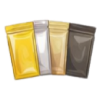
Pouch packaging has taken more ground than any other flexible format over the past decade. Snacks, coffee, spices and powders have all moved this way, and plenty of categories that swore they never would have followed.
Common pouch types include:
- Stand-up pouches: a bottom gusset lets them stand unaided on a shelf
- Flat pouches: single servings, samples and small fills
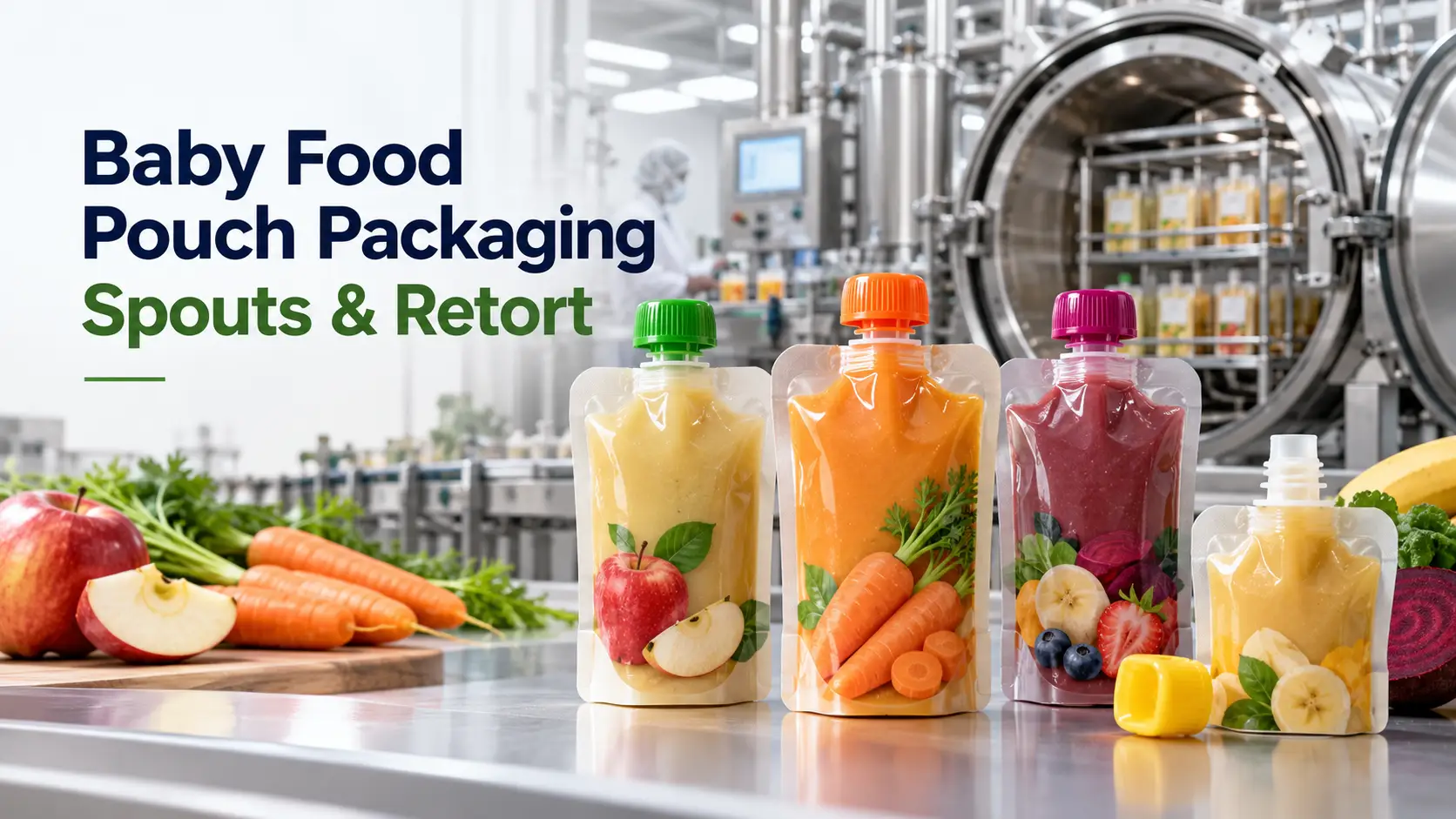
- Retort pouches: built to survive heat processing inside the sealed pack
- Rollstock packaging: film fed straight into automated form-fill-seal machines
Printing goes directly onto the film, across both panels, so you get a large branded surface without a separate label step in production.
3.2 Boxes / Cartons
Boxes are rigid packaging made from paperboard or corrugated board. Cereals, dry goods, frozen meals and packaged snacks all rely on them.
Common box types include:
- Folding cartons
- Corrugated shipping boxes
- Paperboard packaging
Worth knowing: board on its own is not a barrier. Open a cereal box and there is a bag inside doing the actual protection, which means you are paying for two pieces of packaging where a pouch would have been one.
3.3 Jars
Jars are glass or plastic, and they handle sauces, spreads, jams and liquids that need a rigid wall and a proper closure.
Common types include:
- Glass jars
- Plastic jars
Glass gives you something no film can match: a genuinely premium feel in the hand, plus a material that gets recycled almost everywhere without anyone needing to check. The cost is weight and breakage. A 16 oz glass jar can outweigh the product inside it, and parcel networks are unkind to glass.
Pouch Packaging vs Boxes vs Jars: Pros & Cons Comparison
Three formats, eight criteria. The weight and shipping rows are where most decisions are really settled, whatever gets discussed in the design meeting.
| Feature | Pouch Packaging (Flexible) | Boxes / Cartons | Jars |
| Packaging Type | Flexible packaging | Rigid packaging | Rigid packaging |
| Weight | Very lightweight | Medium | Heavy |
| Shipping Cost | Low | Medium | High |
| Product Protection | Good barrier with multilayer films | Good structural protection | Excellent protection |
| Shelf Appeal | Large printable surface | Good branding space | Premium visual look |
| Storage Space | Very efficient | Moderate | Requires more space |
| Sustainability | Uses less material but recycling varies | Paper-based options available | Reusable but heavy |
| Best For | Snacks, coffee, powders, supplements | Dry foods, cereals, boxed product | Sauces, spreads, liquids |
Pouches win on weight and storage. Jars and boxes win on structure. Those two sentences cover most of the table.
Key Factors That Influence Packaging Choice
Format is the last decision, not the first. These factors narrow it down before aesthetics get a say.
Product Type
What you are filling rules out more options than anything else:
- Powders behave well in pouches, and fill cleanly
- Liquids need a jar, a bottle, or a pouch with a spout fitted
- Dry foods run happily in either boxes or pouches
Shelf Life Requirements
Whatever you choose has to hold protection for the full stated shelf life, not for the first month. Set the target first and let it eliminate structures, because working backwards from a format you already liked is how brands end up with a twelve-month date on a four-month pack.
Barrier Protection
Packaging should prevent:
- Oxygen exposure
- Moisture damage
- Light exposure
- Flavor loss
Shipping and Logistics
Carriers bill on dimensional weight as well as actual weight, so bulk costs you even when the product is light. A pouch that ships flat and fills a carton tightly can drop a parcel into a cheaper band. A jar adds weight, adds breakage risk, and usually adds protective packing on top of both.
Retail Display vs E-Commerce
These are different jobs. On a shelf, visibility decides whether the product gets picked up at all, and category managers allocate space by the inch. In a parcel network, nobody sees the pack until it has been paid for, and what matters instead is weight, profile and whether it survives the journey.
Packaging Features & Customization Options That Change the Decision
The container is half the decision. What gets built into it decides whether customers enjoy the product or quietly buy something easier next time.
Some popular packaging features include:
Resealable Zippers
Worth paying for anything opened more than once, and wasted money on a single-serve sachet. The test is simple: how many times does one customer open this pack before it is empty?
Tear Notches
A small notch cut into the seal so the pouch opens cleanly by hand. Nobody praises a tear notch. Everybody remembers the pack they had to fetch scissors for.
Windows
A clear panel showing the product does more for trust than any claim printed next to it, which is why granola and pet treats use them constantly. The trade-off is that every window is a gap in your barrier film, so it suits dry goods far better than anything sensitive.
Spouts
Fitted into the seal for liquids and anything that has to be poured with control. They add cost and a component, and for a sauce or a refill pack they are usually what makes the format work at all.
Hang Holes
A hole or euro slot lets the pack go on a peg hook instead of a shelf. That sounds minor until a buyer tells you the only space they have is a peg wall.
Custom Printing
Brands can choose from finishes such as:
- Matte finish
- Gloss finish
- Metallic effects
- Soft-touch coatings
Finish changes what people assume a product is worth before they read a single word on the front. It costs very little and does more for perceived value than most things that cost more.
How to Choose the Right Food Packaging for Your Product
If you are wondering how to choose the right food packaging for your product, take the questions in order. Answering them out of order is what sends brands back to the start halfway through a quote.
Step 1: Understand Your Product
Dry, liquid, powdered or oily. Each behaves differently against a packaging material, and oily products in particular narrow your film options fast.
Step 2: Consider Shelf Life
Long shelf life means a real barrier behind it. Decide the number you need to print on the pack, then find a structure that genuinely reaches it.
Step 3: Evaluate Shipping Needs
Work out how far the product travels and how often. Lighter packaging takes the cost out of every order rather than saving you once at purchase.
Step 4: Think About Branding
Packaging is usually the first thing anyone notices and often the only evidence they have before buying. Where the product sells decides how hard this has to work.
Step 5: Set a Budget
Costs move with materials, printing method and order quantity. Know your range before you fall for a specification you cannot sustain at volume.
Get all five straight and the format usually announces itself. Push any one of them too hard and another one breaks.
Sustainability in Modern Packaging
Customers ask about this now, and retail buyers ask harder. More businesses are moving toward sustainable packaging as a result, though the honest picture is more mixed than either format’s marketing suggests.
Lightweight Packaging
Flexible packaging uses less material per unit and weighs less in transit, which pulls emissions down across the whole supply chain rather than at one point in it.
Recyclable Materials
Paperboard and certain plastic structures can be recycled, though what your local system accepts matters far more than what the material is technically capable of. Glass is the outlier here, since it gets collected almost everywhere.
Compostable Packaging
Plant-based compostable materials break down in the right conditions. Those conditions usually mean industrial composting, not a garden heap, and saying so plainly on the pack protects you later.
Reducing Carbon Footprint
Lighter packaging and fuller trucks cut the footprint more than most material swaps do. It is the least glamorous lever available and often the most effective one.
Judge sustainability on what actually happens to the pack in your markets, not on how natural it looks.
Common Packaging Mistakes Businesses Should Avoid
Four mistakes account for most of the packaging regret in this industry.
1- Choosing Packaging Based Only on Price
Cheap packaging that fails costs more in damaged product and replacement shipments than it ever saved on the quote. That bill arrives later, which is exactly why it gets ignored.
2- Ignoring Barrier Protection
Plenty of products need protection from moisture, oxygen or light. Get the barrier wrong and quality drops well before the date printed on the pack, and the customer blames the product rather than the film.
3- Overlooking Shipping Costs
Heavy formats like glass add cost to every order you will ever ship. That is a recurring charge dressed up as a one-time decision.
4- Choosing the Wrong Size
Oversized packaging wastes material and ships air, and dimensional weight means you pay for both.
Avoid those four and you have protected the product, the margin, and the customer’s opinion of you in one go.
Conclusion
Choosing between pouches, boxes and jars comes down to your product, your channel and your budget. Pouches are light, cheap to ship and store almost nothing empty. Boxes give structure and stack beautifully. Jars protect best and feel most premium, and you pay for that in freight on every single order.
Comparing rigid vs flexible packaging, the right answer protects the product, keeps shipping sensible, and gives customers a decent experience when they open it. Settle those three and the format stops being a debate.
Ready to Choose Your Packaging?
Get expert help picking the best pouch, box or jar for your product. Share what you are packing, your quantity and your shelf life target, and you will get a packaging recommendation with a quote behind it. Request your packaging recommendation today.
FAQs
- What is the difference between rigid vs flexible packaging?
Rigid packaging holds its own shape and covers glass jars, plastic containers and boxes. Flexible packaging shapes itself around the contents and covers pouches, films and rollstock.
- Is pouch packaging better than jars for food products?
Depends what you are packing. Pouches are lighter and much cheaper to ship. Jars protect liquids better, feel more premium, and get recycled more reliably, which matters for some brands more than freight does.
- Are boxes considered rigid packaging?
Yes. Boxes and cartons hold their shape full or empty. Just remember board alone gives you structure, not a barrier, which is why dry foods in boxes usually have a bag inside.
- What packaging works best for e-commerce shipping?
Pouches usually win here. Lower weight and a slimmer profile cut shipping costs on every order, and there is no shelf for a premium format to impress anyone from.
- What are the most practical sustainable packaging options today?
Lightweight formats, recyclable materials and compostable structures. Which one is realistic depends on your product and on what your local recycling system genuinely accepts, not on what the material could do in theory.