











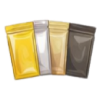







A pack used to have one job and one surface. Hold the product, say what it is. Everything a brand wanted to tell you had to fit on a panel the size of your hand, and whatever did not fit simply never got said. Smart packaging removes that limit. A code on the back of a pouch can open a page with the full sourcing story, a how-to video, a reorder button, or proof that the product is genuine. None of it takes up print space. These features work particularly well on flexible pouches, which already give you a large, clean print surface and the barrier protection the product needs underneath it.
QR codes, NFC tags and temperature indicators are the three technologies doing most of this work today. Here is what each one actually does, where it fits, and what to check before putting one on your pack.
What Is Smart Packaging and Why Does It Matter Today?
Smart packaging is packaging that does something beyond containing the product. It monitors conditions, carries information, or connects the person holding it to something digital.
It matters today because:
- Customers ask questions that will never fit on a label
- Brands need traceability they can prove rather than claim
- Safety and quality expectations keep rising, particularly in food
Intelligent packaging builds trust because it hands people evidence instead of adjectives. That is a different kind of marketing, and it holds up better under scrutiny.
Why Flexible Pouches Are Ideal for Smart Packaging Design
Pouches suit this better than most formats, for three reasons that have nothing to do with technology.
Easy to Customize
The whole front and back panel is printable, so a code goes where you want it rather than where there happens to be room. Zippers, finishes and print areas are all specified per job anyway, which means adding a smart element is just one more line on the same brief.
Strong Product Protection
Barrier materials keep moisture, oxygen and light away from the product. Whatever you add on the outside, the pack still has to do this first.
Lightweight and Efficient
Less material, lower shipping weight, smaller footprint in storage. The smart features ride along without changing any of that.
Put those together and the pouch gives you a marketing surface and a protective pack in the same object.
QR Code Packaging: Connecting Physical Products to Digital Experiences
QR codes are the cheapest smart packaging tool available, and the only one that costs nothing extra to produce. It is ink. The code prints with everything else.
What QR Codes Can Do
Customers can scan QR codes to:
- Learn about the product
- Watch tutorials
- Access offers or promotions
- Check product authenticity
Why Brands Use QR Codes
- Low cost and easy to implement
- Works on all smartphones
- Improves customer engagement
Scanning stopped being a barrier years ago, once phone cameras started reading codes natively without an app. Worth knowing that the wider industry is moving this direction too: GS1 is working toward 2D barcodes appearing on retail packs alongside or instead of the traditional barcode, which will make scanning a normal part of shopping rather than an extra step.
Two practical points decide whether a code works. Leave a clear quiet zone around it, because a code crowded by artwork fails to scan. And keep it off gussets, seal areas and anywhere the film creases, since a folded code is an unreadable one.
NFC Packaging: Creating a Premium and Secure Experience
NFC is the more advanced option and the more expensive one. Instead of printing something, you are embedding a tag into the pack.
How It Works
The customer taps their phone against the pack and the content opens. No camera, no aiming, no app.
Benefits
- Faster and easier than scanning
- Better suited to premium products
- Strong support for anti-counterfeit packaging
Best Use Cases
- Luxury products
- High-value goods
- Brand authentication
One technical point matters enormously for pouches and gets discovered too late surprisingly often. NFC uses a radio field, and metal interferes with it. If your pouch has a foil or metallized barrier layer, a standard tag placed on it will not read properly. On-metal tags with a shielding layer solve this, but they cost more and have to be specified from the start. Check your film structure before you commit to NFC.
Temperature Indicators in Smart Food Packaging
Temperature indicators do something the other two cannot. They record what physically happened to the product on its way to the customer.
What They Do
They change color when the pack has been exposed to temperatures outside its safe range.
Why They Matter
- Give a visible signal that the cold chain held
- Reduce waste by showing which product is genuinely still good
- Increase customer trust, because the evidence is on the pack
Where They Are Used
- Frozen foods
- Dairy products
- Pharmaceuticals
There are two kinds, and the difference is worth knowing before you specify one. A threshold indicator tells you a limit was breached at some point. A time-temperature indicator tracks cumulative exposure, so it reflects both how warm the product got and for how long. The second is more informative and costs more.
Anti-Counterfeit Packaging: Protecting Brands and Customers
Counterfeits damage the customer who bought one and the brand blamed for it. Smart features give you a way to prove which pack is yours.
How Smart Packaging Helps
- QR codes let a buyer verify product details instantly
- NFC tags confirm authenticity by tap
- Unique serialized codes allow tracking down to the individual unit
Benefits
- Protects brand reputation
- Builds customer trust
- Reduces fake products circulating in your market
The serialization is what does the real work here. A generic code printed on every pack can simply be copied onto a fake. A unique code per unit cannot, because the system knows if the same one gets checked from three countries in a week.
Interactive Packaging: Engaging Customers Beyond the Shelf
Interactive packaging turns the pack into a channel you own, with no ad spend attached to it.
Examples
- Loyalty programs
- Product tutorials
- Social media campaigns
- Feedback collection
Why It Matters
- Increases engagement after the sale, not just before it
- Improves brand connection
- Encourages repeat purchases
Packaging is no longer just a container. It is part of the customer journey, and often the only touchpoint you get after somebody takes the product home.
Choosing the Right Smart Packaging Solution
The right choice comes down to your product, your price point and what you actually want the feature to achieve.
Use QR Codes When
- You want a low-cost option with no tooling behind it
- Simple interaction is enough
Use NFC When
- The product justifies a premium experience
- Security and authentication genuinely matter
Use Temperature Indicators When
- Safety depends on the cold chain holding
- Product quality has to be monitored, not assumed
Combining them is common. A high-value chilled product might carry a QR code for content and a temperature indicator for safety, doing two different jobs on the same panel.
Key Considerations Before Adding Smart Features
Four things decide whether a smart feature earns its place or just sits there unused. Work through them before the artwork is approved, because most of these are expensive to fix afterwards.
1- Design and Placement
The feature has to be visible and obvious. A code tucked into a corner below the ingredients panel gets scanned by nobody. Give it space, contrast, and a short line telling people why they should bother.
2- Material Compatibility
Check that your pouch material supports the technology. This is where foil and NFC collide, and it is also where a heavily textured or metallic finish can reduce QR contrast enough to break scanning.
3- Cost and Scalability
Start with a small batch and see whether anyone uses the feature. Scan rates are measurable, and most brands never check them. Scale once you know it works.
4- User Experience
Keep it simple. If the landing page is slow, or the content is a PDF, or the customer cannot tell what tapping will do, the feature adds cost and nothing else.
Working with a Smart Packaging Company
The technology is the easy part. Matching it to a film structure, a print process and a production run is where experience pays for itself.
What They Offer
- Custom pouch design
- Material selection and guidance
- Production and printing support
Additional Benefits
- Prototyping and sampling before you commit to full production
- Help choosing features that suit your product and market rather than the catalog
Ask a potential supplier whether your film will interfere with the feature you want. The answer tells you quickly how much they have actually done.
The Future of Smart Packaging for Pouches
This area is moving quickly, and the direction is fairly clear.
What to Expect
- More connected packaging as scanning becomes routine at checkout
- Better product tracking and traceability down to unit level
- Wider use of smart food packaging as indicator costs fall
Additional Trends
- Multiple smart features combined in a single pouch
- More eco-friendly smart packaging that does not compromise recyclability
- Real-time data collection feeding back into business decisions
The most interesting shift is quieter than any of those. Packaging is starting to send information back, not just carry it outward, and the brands set up for that will know things their competitors are guessing at.
Conclusion
Smart pouch packaging is changing how brands protect, present and promote products. QR codes, NFC and temperature indicators each solve a different problem: information, authentication, and proof of condition. Used well, they improve safety and give customers a reason to trust what they are buying.
Smart packaging is no longer optional in most competitive categories. What separates the brands getting value from it is not the technology, which is available to everyone. It is doing the unglamorous parts properly: checking the film structure, placing the code where people will see it, and measuring whether anybody actually uses it.
Build Smarter Packaging for Your Brand
Create packaging that does more than hold your product. With custom flexible pouches, you can add smart features, improve product safety, and connect directly with your customers.
Get started today and request your custom pouch solution to bring your packaging ideas to life.
FAQs
- What is smart packaging in flexible pouches?
Features like QR codes, NFC tags and temperature indicators that add function beyond holding the product. They let a brand share more information, prove authenticity, or show that the product was stored correctly.
- What is the difference between QR code packaging and NFC packaging?
QR codes are printed and scanned with a camera, so they cost nothing extra to produce. NFC uses an embedded tag and works with a tap, which feels more premium but adds cost per unit and needs checking against your film structure.
- How do temperature indicators work?
They change color when the pack has been exposed to unsafe temperatures. Threshold types show that a limit was crossed. Time-temperature types track how warm the product got and for how long.
- Is smart packaging only used in food products?
No. Cosmetics, pharmaceuticals and high-value consumer goods all use it, usually for traceability, authentication or customer engagement rather than safety.
- Can smart packaging prevent counterfeiting?
It makes counterfeiting considerably harder, particularly with serialized codes unique to each unit. A copied code gets flagged when the same one is verified repeatedly from different places.
- Are smart packaging solutions expensive?
QR codes are effectively free, since they print with your existing artwork. NFC costs more per unit because you are embedding a physical tag, and temperature indicators sit somewhere in between depending on the type.