


















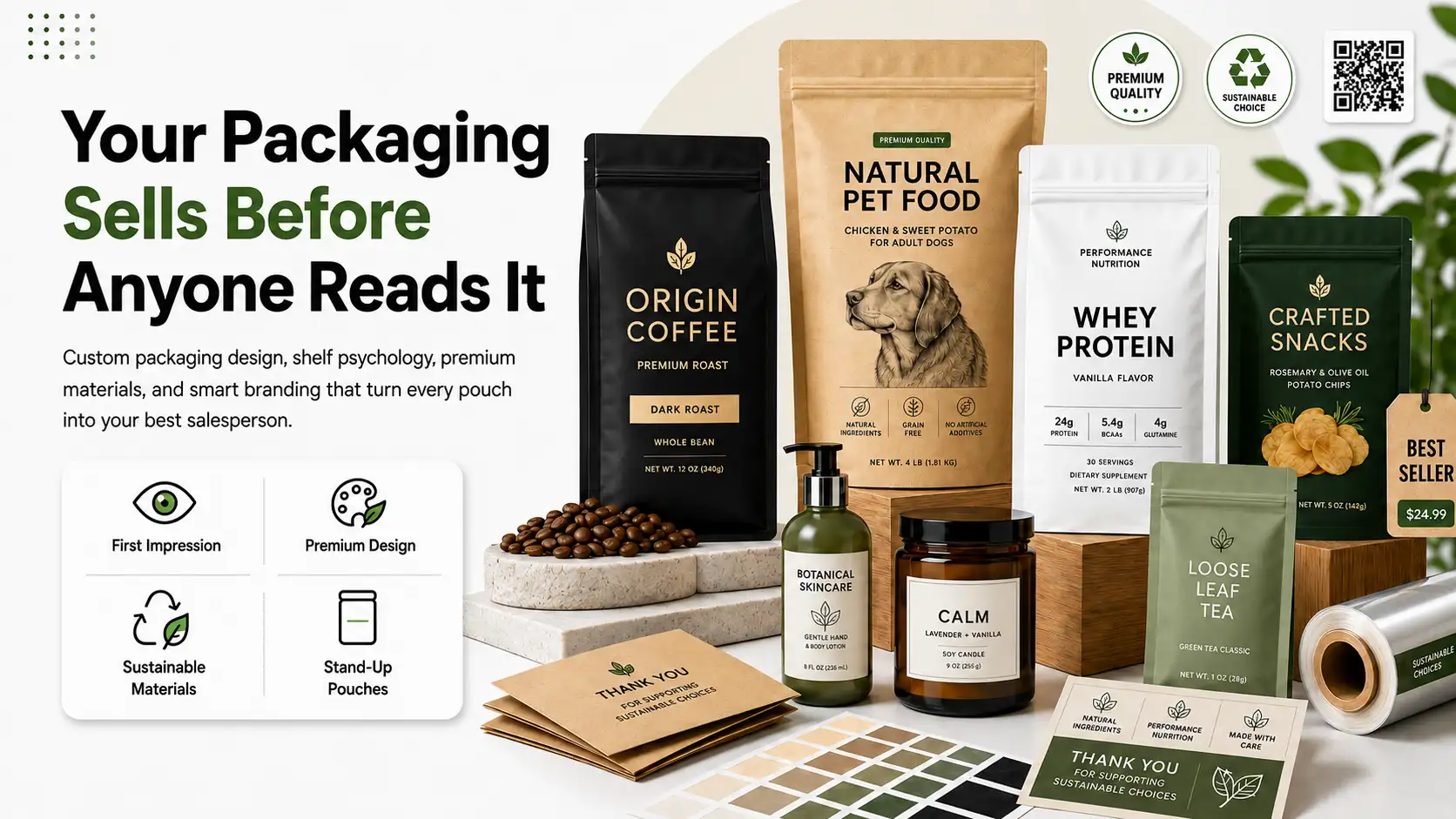
No salesperson stands next to your product on a store shelf. Nobody’s there to explain what’s inside, why it costs what it costs, or why it beats the five other bags sitting right next to it. The pouch has maybe three to seven seconds to make that entire case on its own. Then the shopper’s hand moves.
We’ve watched brands spend months getting a recipe exactly right and then hand off the packaging decision as an afterthought, almost as a formality. That’s a mistake. If you’re selling in a flexible or stand-up pouch, custom packaging design carries the whole sales conversation. There’s no cashier standing there to close the deal for you.
Why Packaging Became the New Retail Salesperson
Grocery stores used to have people walking the aisles. Someone pointing out a new arrival, answering a quick question about an ingredient, nudging a shopper toward a product they’d never have noticed otherwise. That’s largely gone.
A few things pushed packaging into that role:
- Self-checkout lanes and warehouse-style stores run on a fraction of the staff they used to
- Online shopping cut out the human layer completely, leaving a photo and a pouch to do all the talking
- Retailers now stock more SKUs per category than they did ten years ago, so each product gets less shelf time and less attention
- Store staff who remain are usually stocking shelves or working registers, not walking customers through a category
A coffee brand launching today is competing against roughly twice the shelf neighbors it would have faced a decade ago, and none of them have a person standing there to make the case for them either.
First Impressions Happen in Seconds, Not Minutes
Eye-tracking research on shopper behavior keeps landing on the same finding. People scan shelves. They don’t read them. Eyes move across a section, catch on a color or shape for a beat, then keep moving. There’s no second attempt at that glance once it’s gone.
Emotional Decisions Start Before the Label Gets Read
A shopper feels something about a product before they’ve thought anything about it. That feeling usually starts with what’s sitting in front of them. Warm colors, a clean layout, a design that matches what people expect from the category, this is what builds a little trust before anyone reads a word.
The Shelf Is a Battleground, and Your Pouch Is the Weapon
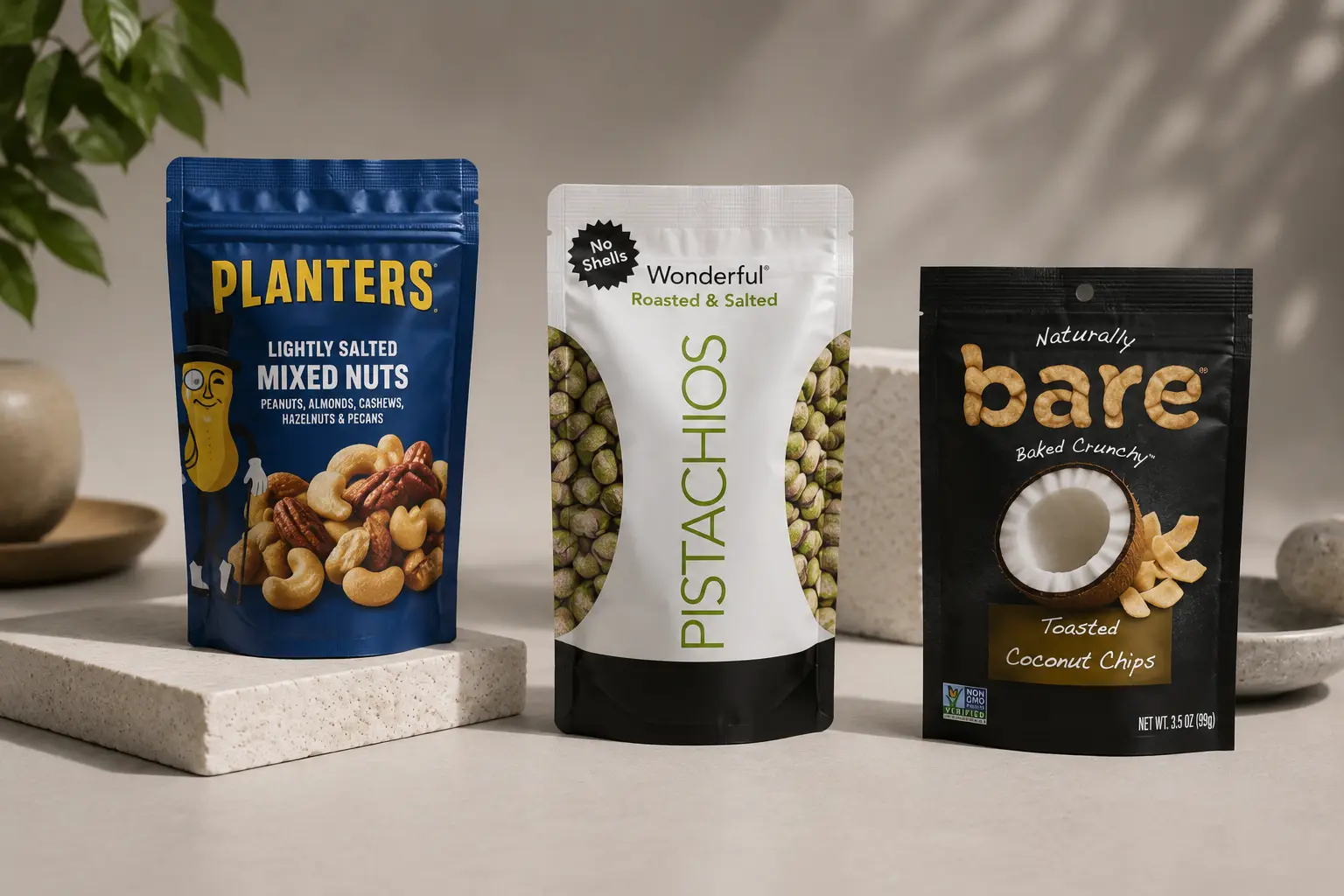
Walk down almost any snack aisle and count how many bags look nearly identical. Same size, same color family, the same three claims printed across the front. Natural. Family owned. Small batch. That sameness is the real competition, and it’s a tougher opponent than any single rival, because you’re not fighting one company, you’re fighting an entire category that all decided to look the same way.
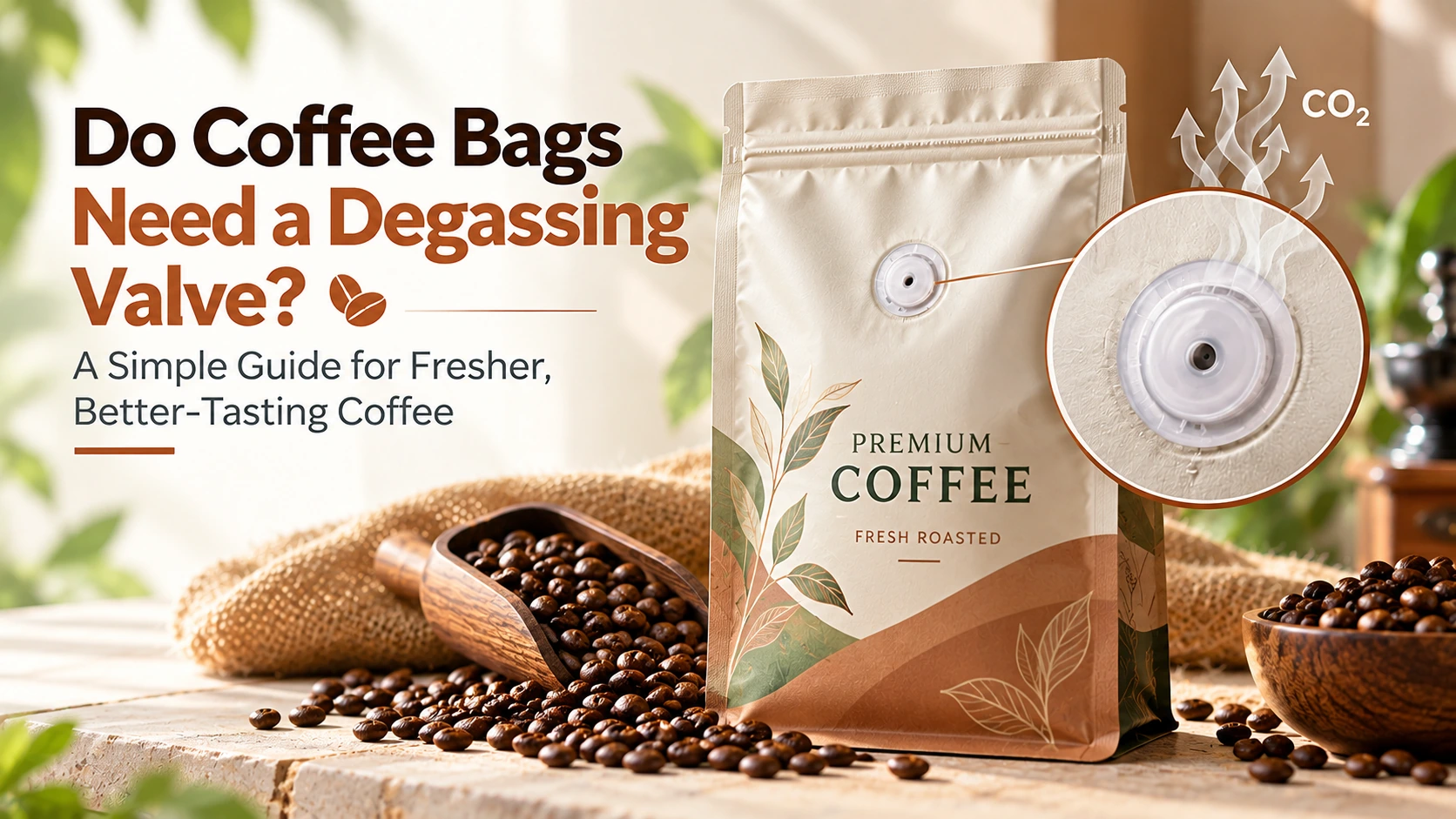
A stand-up pouch gives you a few advantages a flat bag or a plain carton just doesn’t have:
- It holds its shape and faces forward, so the design sits on a stable surface instead of something that wrinkles unpredictably
- That structure reads as quality before anyone even checks the ingredient list
- It leaves room to commit to one strong visual idea rather than cramming ten smaller ones onto six square inches
- It photographs better for online listings, which matters more every year as more of the shopping happens on a screen first
There’s a real difference between a pouch that looks premium and one that just looks loud. Standing out isn’t luck. Usually it’s the decision to say one thing clearly instead of trying to say everything at once.
Color, Shape, and Finish: The Silent Language Shoppers Read
Long before anyone reads a word on your pouch, their eyes are processing color, shape, and texture. This is where custom packaging design does most of its actual work, and almost none of it happens at a conscious level.
Color usually gets named as the single biggest thing shoppers notice on packaging, ahead of the brand name and often ahead of the price tag. Bright, saturated colors read as energetic. Muted, earthy tones read as natural or premium. Mismatch the two, neon on something trying to feel organic and simple, and people register that something’s a little off, even without being able to say exactly what.
Shape carries its own message too:
| Pouch Style | Shelf Perception | Works Well For |
| Stand-Up Pouch | Bold, structured, faces forward | Snacks, pet food, coffee |
| Flat-Bottom Pouch | Substantial, box-like, premium | Cereal, baking mixes, bulk goods |
| Lay-Flat Pouch | Sleek, compact, minimal | Travel sizes, samples, sachets |
Finish is the quieter signal, but shoppers pick up on it fast. Matte reads calm and modern. Gloss feels brighter and a little more playful. Spot-UV, foil accents, soft-touch coatings, these add a texture people notice the second they pick the bag up, no one had to print the word “premium” anywhere for that to land.
What a Truly Selling Pouch Says Without Words
A pouch that actually sells is doing a few jobs at the same time. Telling the shopper what’s inside. Earning a small amount of trust. Quietly answering a question nobody said out loud.
Try this on your own design: show it to someone who’s never seen your brand, give them three seconds, then ask them to describe the product. If they can’t, no amount of clever copy on the back panel is going to save it. Real product photography instead of an illustration standing in for the item usually fixes this fastest, along with a product name that has enough contrast to not fight the background, and one obvious category cue, a paw print, a coffee bean, something wordless and instant.
Trust also comes through touch. A zipper that seals properly, a tear notch that tears clean the first try, small mechanical details like these say more than a headline ever could. A clear window showing the actual product answers a question every shopper is quietly asking anyway: does it really look like the photo on the front?
Important note: a pouch can look perfect in a design file and still fall apart on the shelf if the physical build doesn’t hold up. Get a physical prototype before the full production run goes out. Zippers and seals need to be tested by hand, not approved on a screen and left at that.
Sustainability Sells: Eco-Friendly Packaging as a Silent Pitch
Sustainability stopped being a footnote a while back. It’s turned into an actual reason people buy or skip a product, and food packaging design especially is being asked to prove it, not just claim it.
More shoppers check packaging claims before buying than they did a few years back, particularly in food, personal care, and pet categories. Recyclable and compostable pouches used to be box brands checked to look responsible. For a good number of buyers now, especially younger ones, it’s closer to a baseline they expect.
Skip this entirely and you’re not just missing a trend. You’re losing shoppers who never even pick the product up long enough to compare it against anything else on the shelf.
What actually builds trust here tends to be small and specific. A recycling symbol. A short line naming the material. A kraft-paper texture that visually says “less plastic” before anyone reads a word. Printing “eco-friendly” in green letters with nothing backing it up tends to do the opposite of what most brands hope for.
Sustainable materials have also gotten a lot cheaper to work with. Recyclable mono-material films and plant-based compostable options are far more accessible than they were even three or four years ago, and digital printing keeps run costs sane even at smaller volumes. The right material choice comes down to shelf life and barrier needs, which is worth an actual conversation with a packaging design firm instead of a guess based on what looked good on a competitor’s bag.
Small Brands, Big Shelf Presence: How Digital Printing Levels the Field
For a long time, only the big CPG names could afford packaging that actually looked custom. Digital printing changed that math.
| Factor | Traditional Rotogravure Printing | Digital Printing |
| Minimum Order | Tens of thousands of units | As low as roughly 1,000 units |
| Setup Cost | Plates and cylinders required | No tooling needed |
| Multi-SKU Runs | Slow and expensive | Fast and affordable |
| Typical Turnaround | Several weeks | Around 10 business days |
That one shift means a small food brand, or a supplement company barely two years old, can print packaging that looks as sharp as a national competitor’s. Seasonal flavors, limited runs, a quick reaction to a retailer’s request, none of it wrecks the budget the way it would under the old plate-and-cylinder setup.
From Pantry to Unboxing: Packaging Sells Even After the Purchase
The job doesn’t end at checkout. A pouch with a zipper that reseals well keeps getting reused, which means the brand sits visibly on a kitchen counter for weeks after someone bought it. Every glance at that bag is a small, free reminder to buy it again.
An ad disappears the second someone scrolls past it. Packaging doesn’t work that way. It sits in the house, doing its job quietly, without costing the brand another cent. For e-commerce and subscription brands, there’s a second layer to this. Unboxing has turned into its own kind of marketing content. A pouch with a clean tear and a finish that photographs well gives a customer a reason to post about it, and nobody had to ask them to.
The Role of Research in Building a Pouch That Sells
Good packaging design isn’t a guessing game, even though plenty of brands moving fast end up treating it like one. There’s real packaging design research behind most of what’s covered here.
Package design consumer research keeps landing on the same handful of findings. Color gets processed before text does. Shape changes how valuable something feels in the hand. Shoppers form snap judgments within seconds of laying eyes on a product. None of that needs a university lab to test, either.
A five-second recall test works fine for most brands: show the design briefly, then ask what people remember a minute later. A side-by-side comparison against two competitor pouches, just asking which one someone would grab first, tells you almost as much. So does a blind description test, where you ask a stranger to describe the brand’s personality from the pouch alone, nothing else in the room to help them.
Package design market research only earns its keep if it changes something. If a packaging design research paper, or honestly just a quick internal test, keeps showing that shoppers misread your category, that’s worth acting on before the full print runs, not after it lands in the warehouse.
Important note: low minimum orders make it realistic to test more than one design before committing. A short test batch built around real feedback costs a fraction of what it costs to reprint thousands of units after a launch falls flat.
Box Packaging vs. Pouch Packaging: Which Sells Better?
Not everything belongs in a stand-up pouch. Comparing box packaging design against flexible pouch design honestly, rather than defaulting to whatever a brand already knows, usually pays off.
| Factor | Box / Carton | Flexible Pouch |
| Shipping Cost | Higher, bulkier | Lower, flatter footprint |
| Shelf Rigidity | Strong, stacks well | Varies by style |
| Resealability | Rare without add-ons | Usually built in |
| Gifting Feel | Strong | Decent with the right finish |
| Print Cost, Low Volume | Higher for short runs | Lower with digital printing |
Boxes and folding cartons still make sense for gift sets, anything that needs to stack rigidly, or categories like pharmaceuticals where shoppers just expect a box on the shelf. Pouches tend to win on shipping cost, storage space, and resealability, which is a big reason they dominate food, pet food, and personal care. The real answer usually comes down to how a product gets bought and reused day to day, not which one renders nicer in a mockup.
The Silent Salesman Checklist: How to Audit Your Own Packaging
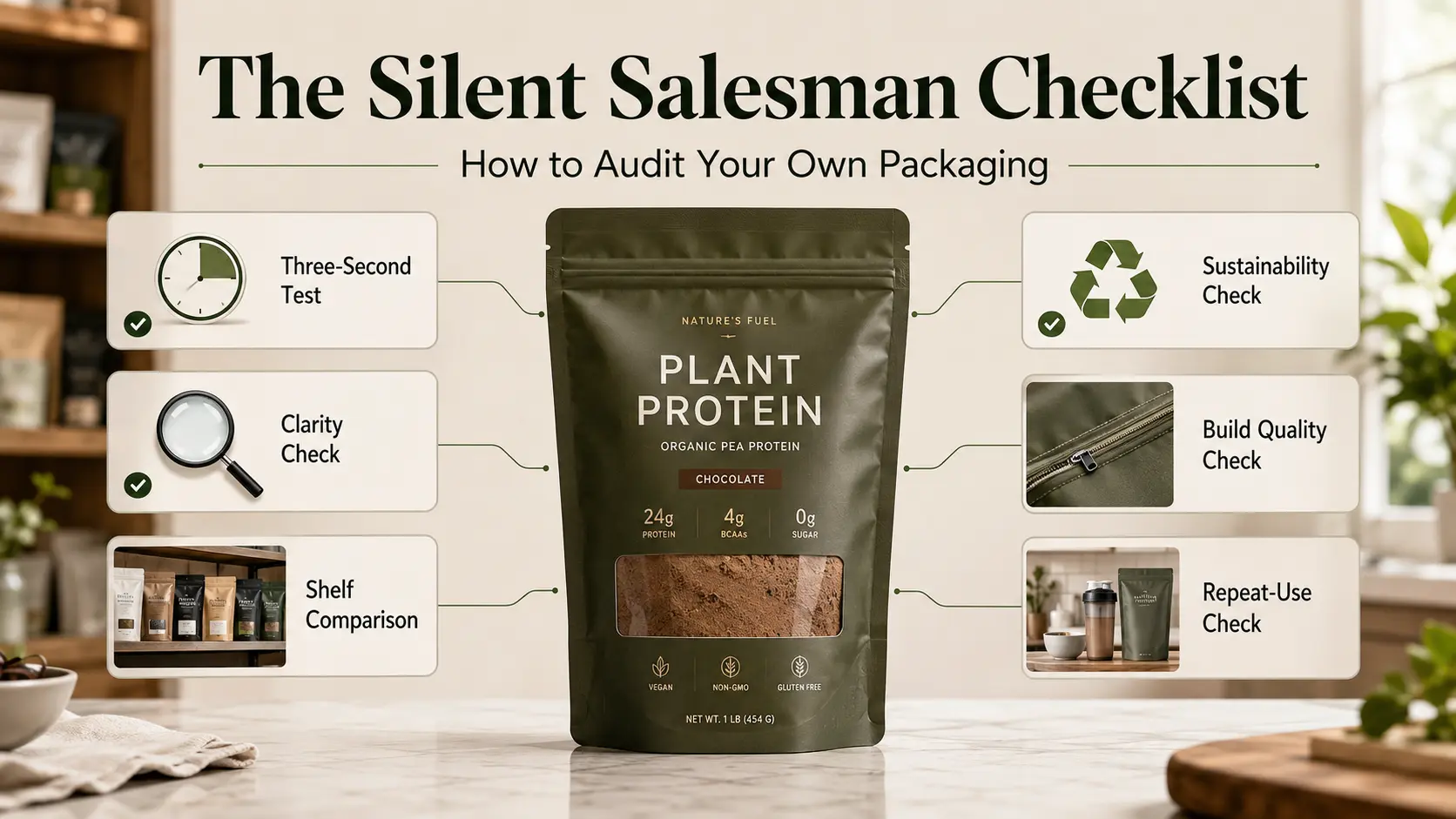
Most brands never sit down and audit their own packaging the way they’d audit a website or a paid ad campaign. Worth running through before the next print order goes out:
- Three-second test. Show it to a stranger for three seconds. Can they name the category?
- Clarity check. Cover the brand name. Does the rest of the pouch still say what the product is?
- Shelf comparison. Set it beside two direct competitors. Does it stand out, or does it disappear?
- Sustainability check. Is any eco claim specific and true, or just a word printed in green?
- Build quality check. Does the zipper or seal work as well as the design looks?
- Repeat-use check. Would someone actually leave this out on their kitchen counter?
Common Packaging Mistakes That Cost You the Sale
Even a genuinely good product loses sales to packaging problems that are usually fixable without touching the whole design.
| Mistake | Why It Costs You Sales | Quick Fix |
| Cluttered design, every claim shouting at once | Nothing stands out when everything’s emphasized equally | Pick one or two lead benefits, push the rest smaller |
| Weak film that wrinkles or lies flat | Loses visibility next to taller, sturdier bags nearby | Match the pouch style and film to the category |
| Skipping a shelf comparison before launch | Looks fine alone, disappears next to real competitors | Test it beside actual rival pouches, not on its own |
| Vague sustainability claims | Reads as marketing spin instead of a real promise | Print the actual material and disposal info |
The gap between a pouch that gets picked up and one that gets passed over rarely has much to do with what’s inside. Almost always, it’s about which one earned that second look.
Conclusion
Packaging is the only salesperson working every shelf, in every store, around the clock, without pay and without ever calling in sick. It earns that three-second glance or it doesn’t, and once a shopper’s eyes move on, there’s usually no second try. Most brands spend far more time perfecting what’s inside the pouch than what’s printed on it, and that’s exactly where sales quietly slip away.
Treating the pouch like a real sales tool, tested and refined before launch rather than guessed at, tends to be one of the better returns a brand gets from a single decision, and it doesn’t take a massive budget or a slow production cycle to get there. A sharper design, a clearer message, and the right material choice can be in your hands and on shelves in a matter of weeks.
Ready to Turn Your Packaging Into Your Best Salesperson?
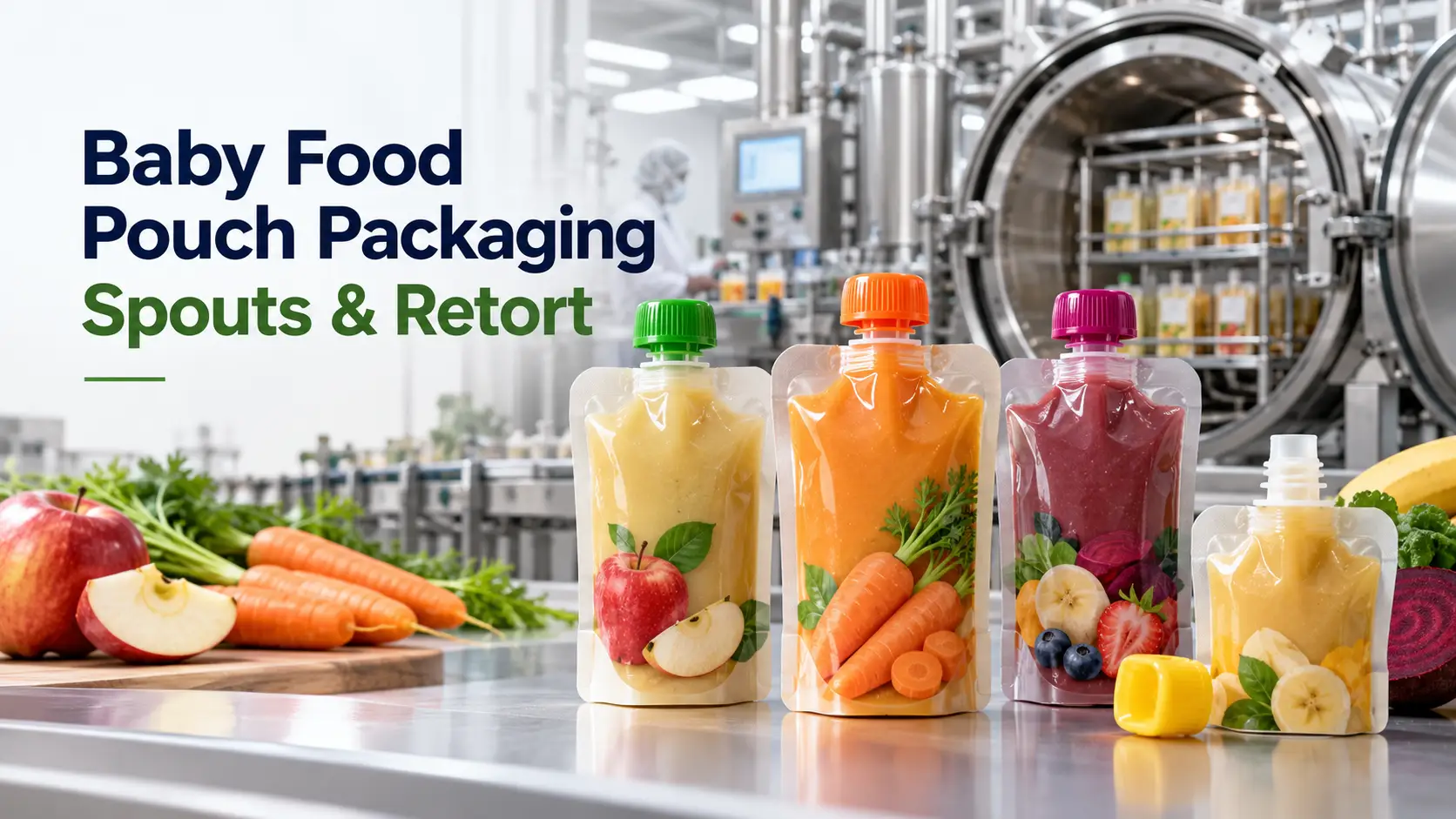
If your current pouch isn’t pulling its weight on the shelf, fixing that doesn’t have to mean a slow, expensive process. Flexible Pouches runs custom digital printing with low minimums, fast turnaround, and full eco-friendly material options, so a new design can be tested, refined, and shipped without the old plate-and-cylinder costs getting in the way.
Request a free quote today and see what your packaging could actually be doing for you.
FAQs
1- Does packaging really affect sales, or is it just design preference?
It has a real, measurable effect, not just an aesthetic one. Shoppers make snap judgments within seconds, and color, shape, and clarity all shape whether a pouch gets picked up or walked past.
2- What makes a pouch design sell better than a box or a plain bag?
It tells the shopper what’s inside instantly, feels sturdy in the hand, and stands apart from whatever’s sitting next to it. Stand-up pouches especially hold their shape and give a clean, forward-facing surface a flat bag can’t match.
3- Are eco-friendly pouches more expensive to produce?
Not the way they used to be. Recyclable mono-material films and compostable options have gotten a lot more affordable, and digital printing keeps costs sane even at smaller volumes.
4- What’s the minimum order quantity for custom printed pouches?
Digital printing has pushed minimums down to around 1,000 units for a lot of pouch styles, putting fully custom packaging within reach of small and early-stage brands.
5- How long does custom pouch production typically take?
Most digitally printed orders ship in about 10 business days from final art approval.
6- Can I test multiple packaging designs before committing to a large order?
Yes, and it’s worth doing. Low minimums mean a brand can run a couple of small test batches, get real feedback from actual shoppers, and pick the stronger design before locking in a full production run.