



























Food safety is not just about clean kitchens or fresh ingredients. The pouch holding your product matters just as much. One small slip in packaging can cost you a recall, a retailer deal, or your brand name. Most owners find this out when a buyer asks for papers they don’t have on file. Feels like a small thing until the day it isn’t. By then the damage is done.
You have likely seen PCQI and FSMA in supplier emails and just nodded along. Most people do. Both terms sound technical, but they are not that hard once you cut through the noise. This blog breaks both down in plain words. You will know what to ask suppliers and what to skip. By the end you should feel ready to pick a safer partner.
PCQI Meaning: What the Acronym Really Stands For
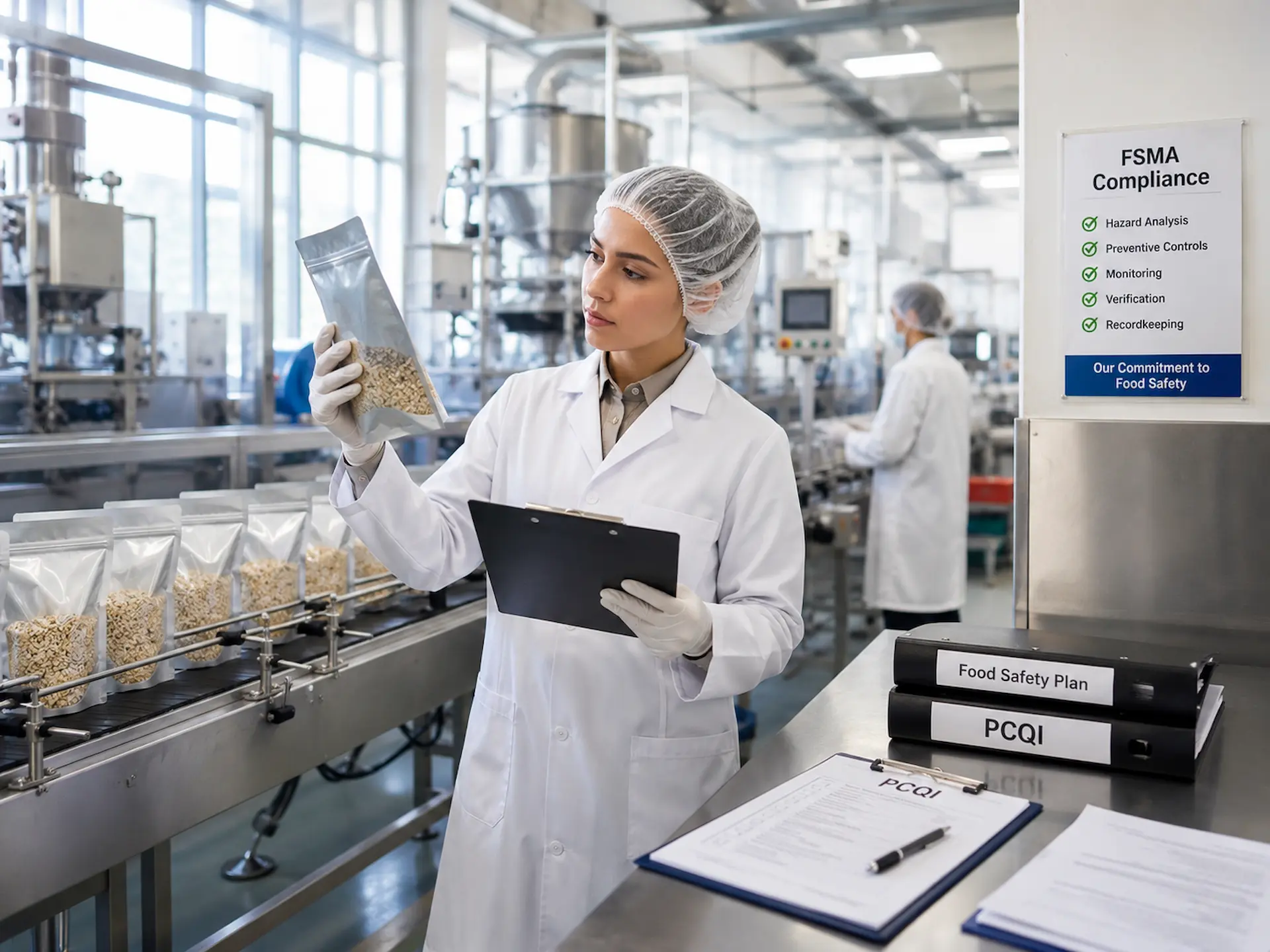
PCQI stands for Preventive Controls Qualified Individual. In plain words, it is the person in a food or packaging plant who runs the food safety plan. They spot risks early, set the rules, and keep the records.
The word “qualified” is the key part. You become a PCQI by finishing an approved course or by years of hands-on food safety work. Both paths work.
Here is what a PCQI handles:
- Writes and updates the food safety plan.
- Runs hazard checks on every product line.
- Makes sure controls work in real life, not just on paper.
- Reviews records and signs off on fixes.
- Re-checks the plan when something changes.
Important Note: A PCQI is not just a title. Without one, a facility can’t run a full food safety plan under FSMA.
What Is a PCQI Certification?
Here is something most suppliers won’t tell you. The FDA does not give out PCQI certifications. When a supplier says “PCQI certified,” it means someone on their team finished an FSPCA course and got a completion certificate. Normal stuff, not a government license.
So when a packaging company waves the PCQI flag, ask for proof. A serious supplier will hand it over. If they dodge, that says everything.
When checking PCQI claims, look for:
- An FSPCA-recognized training certificate.
- A named PCQI inside the food safety plan.
- Up-to-date training records.
- A clear chain of command on safety calls.
FSMA Explained: The Law Behind Food Safety
FSMA stands for the Food Safety Modernization Act, signed into U.S. law in 2011. Biggest food safety update in almost 70 years. The old system reacted after people got sick. FSMA flipped it and put prevention first.
The law gave the FDA real power. Faster inspections, required records, and the right to stop bad products before they hit shelves. Companies now need food safety plans, trained staff, and verified suppliers. Packaging plays a big part because it is the last thing touching your food. For where packaging risks hide, this guide on overlooked health risks in food packaging is worth a read.
A few things FSMA changed:
- Moved focus from reacting to preventing.
- Made written food safety plans a must.
- Brought in supplier verification rules.
- Gave the FDA power to order recalls.
- Tightened rules on imported food.
The 5 Core FSMA Preventive Controls
FSMA preventive controls work as five steps. Every covered facility follows them, and a good packaging supplier knows them too. They work as one system, not five separate boxes.
Skip one and the whole thing gets weak.
| Step | What It Means | Why It Matters |
| 1. Hazard Analysis | Find every risk biological, chemical, or physical. | Can’t fix what you don’t see. |
| 2. Preventive Controls | Set rules and controls to stop those risks. | Catches problems early. |
| 3. Monitoring | Watch the process regularly (daily or as required). | Spots small issues fast. |
| 4. Corrective Actions | Fix problems when they occur and record actions. | Limits damage and waste. |
| 5. Verification | Check, review, and prove the system works (audits). | Keeps you audit-ready. |
It looks simple. Takes real training, real records, and daily effort to make it stick.
Where Packaging Fits Into FSMA Compliance
A lot of brand owners think FSMA only covers the food inside. It doesn’t. The FDA looks at the full chain, and packaging is part of that chain. A pouch that leaks, hides allergens, or splits in shipping is a food safety problem.
That is why food packaging compliance is on every smart brand’s checklist now. Your supplier should share material details, allergen info, and FDA food contact packaging documents without being chased. No paperwork, no protection.
Common packaging-related FSMA risks:
- Chemicals leaching from cheap films into food.
- Allergen cross-contact during multi-product print runs.
- Seal failures during shipping.
- Missing supplier docs when the FDA shows up.
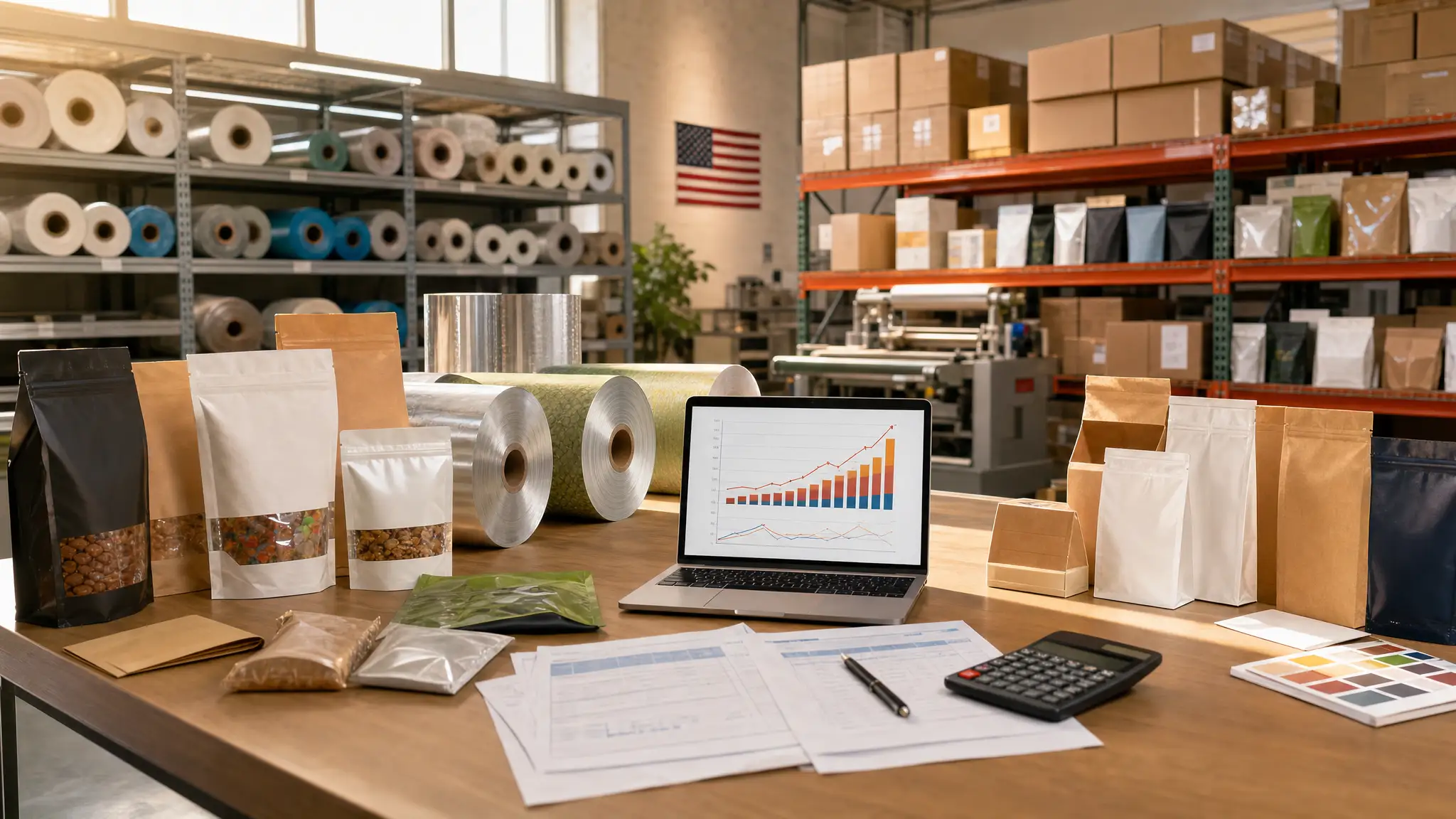
Formats like custom printed stand up pouches use food-grade films that meet FDA rules, which is why big U.S. retail brands stick with them.
Food Grade vs. Food Safe Packaging: The Real Difference
People use “food grade” and “food safe” like they mean the same thing. They don’t. Mixing them up will hurt your brand during an audit.
Easy way to think about it food grade is about the material. Food safe is about the right use of that material. Both have to line up.
- Food grade packaging the material is cleared for direct food contact and meets FDA rules.
- Food safe packaging the material is food grade and used the right way for the right product.
- A food grade film can turn unsafe if used wrong, like a heat-sensitive film holding hot-fill juice.
- The right packaging material options must match your product, filling method, and shelf life.
Short version: every food safe pouch is food grade, but not every food grade material stays food safe.
What PCQI Certified Packaging Actually Means
When a packaging company calls itself PCQI certified, the claim should hold up to checks. Not just a line on the website. Real PCQI food safety shows in daily habits and paperwork on file.
A real PCQI-aligned partner has your back from raw film to final pouch.
What a true PCQI certified packaging supplier looks like:
- A trained PCQI running the food safety plan.
- GMP followed on the floor every day.
- BRCGS or SQF packaging certification.
- Material specs, migration reports, and allergen statements ready to share.
- Full batch traceability from raw film to finished pouch.
This matters more for high-heat or shelf-stable foods. Retort pouches must survive sterilization without leaking into the food, and that only works under proper PCQI-controlled production.
The Hidden Cost of a Non-Compliant Packaging Supplier
Cutting corners on packaging looks cheap on the quote. In real life, it gets expensive fast. One bad batch can wipe out months of profit and burn your name with big retailers.
What is really on the line when you pick the wrong supplier:
- Product recalls that drain millions in lost stock.
- FDA warning letters that go public and hurt buyer trust.
- Failed audits at chains like Walmart, Whole Foods, and Costco.
- Lost contracts with distributors who won’t carry compliance risk.
- Long-term brand damage that takes years to fix.
Important Note: New U.S. rules on recycling and producer responsibility keep raising the bar. The guide on U.S. EPR for packaging that brands need to know shows where this is heading.
How to Choose the Right Packaging Partner: A Quick Checklist
Before signing any contract, run your supplier through a few checks. A few minutes here saves months of pain later. A real partner answers every question. A weak one makes excuses.
Run every new supplier through this checklist:
- Trained PCQI on staff with a valid certificate.
- BRCGS or SQF packaging certification.
- FDA food contact letters for every material.
- Migration and allergen testing reports on hand.
- GMP-controlled, traceable production floor.
- Ready to back you up during your own FSMA audit.
The format does not change the rules. Retail-style bags or custom printed food pouches, the safety standards stay the same.
How Flexible Pouches Keeps Your Brand FSMA-Ready
At Flexible Pouches, food safety is not bolted on later. It is built into how every order is made. The plant runs on BRCGS-certified manufacturing, food-grade materials, and full batch traceability. Every step is documented, so brand owners can walk into any audit with their head up.
Same standards across every format. Stand up pouches, lay-flat bags, retort pouches, or rollstock packaging every order moves through the same process.
What a real PCQI-aware partner does for you:
- Has the paperwork ready before you ask.
- Gives straight answers about materials and testing.
- Keeps production records for full traceability.
- Shows up fast when audits or buyer questions hit.
For brands selling in mixed retail formats like folding cartons, the same mindset keeps the whole product line audit-ready.
Conclusion
PCQI and FSMA are not buzzwords anymore. They are the real backbone of how food brands stay legal, safe, and trusted today. Buyers ask for this stuff now. Retailers ask too. Brands that have answers ready move faster than the ones still scrambling.
Pick a supplier that takes food safety seriously and you get fewer recalls. Easier audits. Happier buyers. Your brand grows faster when the packaging story is clean from day one. Skip these checks and you pay for it later, usually at the worst time.
Ready to Upgrade to Safer, Smarter Packaging?
Protect your product, your brand, and your peace of mind with packaging built on real food safety standards. Get a free quote from Flexible Pouches today and work with a team that takes compliance as seriously as you do.
FAQs
1. Is PCQI certification mandatory under FSMA?
Yes. FSMA requires every covered food facility to have a trained PCQI. The FDA doesn’t issue the certificate itself approved providers like FSPCA do.
2. What is the difference between PCQI and HACCP?
HACCP is the older system, focused on critical control points only. PCQI is a newer FSMA role that covers HACCP plus wider preventive controls and recordkeeping.
3. Does the FDA issue PCQI certificates?
No. The FDA only recognizes the training. The actual certificate comes from approved bodies like FSPCA once a person finishes the course.
4. Is food grade packaging the same as FDA approved?
Close, but not the same. Food grade means the material meets FDA rules for food contact. “FDA approved” is slang the FDA doesn’t pre-approve packaging, it sets the rules materials must follow.
5. Does FSMA apply to packaging manufacturers?
Indirectly, yes. FSMA mainly covers food makers, but brand owners need packaging that fits their FSMA plan, so suppliers have to stay compliant to keep food clients.
6. What documents should I request from my packaging supplier?
Ask for FDA food contact letters, migration test reports, allergen statements, GMP certificates, and proof of BRCGS or similar packaging certifications.