







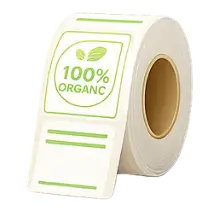




















Every brand eventually hits the same wall. Sales are climbing, the product is working, and the packaging line cannot keep up. Somebody is standing there opening bags by hand while the filler waits. That is usually the moment roll stock packaging enters the conversation, because it removes the step that is slowing everything down. Rollstock runs across food, pharmaceutical, cosmetic and consumer product manufacturing. Rather than buying finished bags, you buy a roll of printed film and the machine builds each package as it fills it. Cheaper per unit, faster on the line, and far less warehouse space taken up by empty packaging waiting to be used. That combination is why rollstock film packaging sits at the center of most high-volume operations.
What follows covers what rollstock actually is, how the process works, where the savings come from, and how to tell whether your operation is ready for it. Packaging still has to do its original job of protecting products and selling them, and rollstock does not change that. It changes how the package gets made.
What Is Rollstock Packaging?
Rollstock is flexible packaging film supplied on large continuous rolls instead of as finished bags. The roll goes onto an automated machine, and the package is formed, filled, sealed, and cut right there on the line.
So instead of receiving 50,000 empty pouches on a pallet, you receive a few rolls of printed film. The pouch doesn’t exist until the moment your product goes into it.
The film itself is rarely a single material. Most structures are laminated from several layers, each doing a job:
- Outer print layer carrying your graphics and branding
- Barrier layers such as foil or metallized film, blocking oxygen and light
- Sealant layer on the inside, which bonds under heat to close the package
That layered build is what lets one roll protect coffee from oxygen, chips from moisture, and a supplement powder from both.
How Does Rollstock Packaging Work?
Everything happens on a form fill seal machine. The film goes in flat at one end and finished packages come out the other, usually at a rate no manual process can touch.
The Form-Fill-Seal Process
- Film unwinding. The machine draws film off the roll at a controlled tension. Too loose and the print wanders; too tight and the web stretches.
- Registration and alignment. Sensors read printed eye marks on the film so every cut lands in the same place. This is what keeps your logo centered instead of half on one pack and half on the next.
- Package forming. A forming collar or shoulder folds the flat web into a tube or pouch shape.
- Product filling. An auger, weigher, or pump drops in a measured quantity. Accuracy here is where you stop giving product away through overfill.
- Heat sealing. Jaws apply heat and pressure to bond the sealant layer. Temperature, dwell time, and pressure all have to be dialed in for the specific film.
- Cutting and discharge. A knife separates the finished pack and it moves off to boxing.
Once it’s set up, the cycle repeats without anyone touching it.
Vertical vs Horizontal Form Fill Seal
VFFS machines form the package vertically and fill from the top. They suit anything that pours: snacks, granola, coffee, powders, grains, frozen vegetables.
HFFS machines form packages lying flat and are better for items you place rather than pour. Think biscuits, medical devices, wipes, and small retail goods.
There are also thermoform fill seal systems, which draw the film down into a molded cavity. These come up most in medical packaging and portioned fresh food.
Common Rollstock Packaging Formats
One roll of film can become quite a few different package styles, depending entirely on the tooling fitted to your machine. The format list below covers what most lines are producing:
- Sachets and single-serve portions
- Stick packs
- Pillow packs
- Fin-seal bags
- Lay-flat and three-side-seal pouches
- Vacuum bags
- Stand-up pouches on machines fitted with a gusset former
Benefits of Rollstock Packaging: Cost, Speed and Efficiency
The case for rollstock rests on four things: it runs faster, costs less per unit, takes up less space, and produces a more consistent pack. Here’s how each of those plays out on a real production floor.
Faster production speeds
The gain comes from removing a step. With pre-made pouches, someone has to pick up each bag, open it, and present it to the filler. With rollstock, the web never stops moving.
Fewer manual touches means fewer stoppages, less operator intervention, and higher throughput on the same footprint.
Lower material and labor costs
Rollstock film costs less per unit than a finished pouch because you’re not paying for the conversion. You’re buying the material and doing the forming yourself.
Automation cuts the labor side too. A line that needed several people to feed and handle bags can often run with one operator watching the machine.
Less waste and lower freight costs
Two savings that get overlooked until you see them on an invoice. Modern machines index film precisely and generate limited scrap, and a few rolls hold what would otherwise be several pallets of empty bags:
- Tighter material use: precise indexing means less scrap per run
- Fewer rejected packs: consistent forming and sealing cuts end-of-line waste
- Compact storage: rolls free up warehouse space that pallets of pouches eat
- Cheaper freight: you stop paying to ship air inside empty bags
If waste reduction is a wider priority, it’s worth reading how flexible packaging helps reduce food waste across the supply chain.
Consistent quality
Machine-formed packages come out the same every time. Same dimensions, same seal, same print position. That consistency matters when a retail buyer is looking at your product next to a competitor’s on the shelf.
Custom printing, branding, and barrier performance
Rollstock is printed before it ever reaches your line, so the branding and the protection are built into the same roll. Custom printed rollstock can carry:
- Logos, product names, and promotional graphics
- Nutritional panels and ingredient declarations
- Barcodes and QR codes
- Matte, gloss, metallic, or spot varnish finishes
- Clear windows for product visibility
On the protection side, the right film structure guards against moisture, oxygen, light, contamination, and aroma loss. Get the barrier right and you extend shelf life. Get it wrong and no amount of line speed will save the product.
Important Note
Rollstock’s per-unit savings only outrun the equipment investment above a certain daily run rate. Before switching, work out your actual break-even. For many brands that threshold sits somewhere in the tens of thousands of units per week. Below it, pre-made pouches usually win on total landed cost once you factor in machinery, setup, and training.
Rollstock Packaging vs Pre-Made Pouches
Neither format is universally better. They fit different businesses at different stages, and plenty of brands run both.
| Factor | Rollstock | Pre-Made Pouches |
| Production speed | Excellent for high-volume automation | Suits lower to moderate volumes |
| Initial equipment | Higher investment | Often minimal |
| Cost per unit | Lower at scale | Higher, but predictable |
| Storage requirements | Compact rolls | Bulky, needs pallet space |
| Format flexibility | Set by machine tooling | Change styles freely |
| Small-run practicality | Limited | Strong |
| Best use | High-volume automated lines | Startups, test launches, varied SKUs |
The deciding factors are usually production volume, existing machinery, and how often you change formats.
When Should You Use Rollstock Packaging?
There’s no single volume number that makes rollstock correct, but there are six situations where it consistently pays off. If two or three of these describe your operation, it’s worth pricing out.
1- When you have high-volume production. The economics improve the more units you run. Consistent daily output is the strongest signal.
2- When you already run automated lines. If you have FFS equipment sitting there, rollstock is what it was built for.
3- When cost per package matters. Cutting a few cents per unit sounds small. At 20,000 units a day, that’s real money over a year.
4- When speed is the constraint. If packaging is the bottleneck holding back your production capacity, continuous film flow is the fix.
5- When you need custom printed packaging. Print quality on rollstock is excellent and the cost is spread across the whole roll.
6- When you’re scaling into retail. Growing brands entering larger chains need output they can increase without renegotiating their packaging every quarter. Rollstock scales cleanly.
Industries and Products That Use Rollstock
Rollstock turns up across most consumer categories, and the pattern is consistent. Anything produced in volume, needing a barrier and a fast fill, is a candidate:
- Food and snacks: chips, granola, nuts, candy, frozen vegetables, pasta, spices
- Coffee and tea: whole bean, ground, single-serve sachets, drink powders
- Health and wellness: protein powders, vitamins, supplements
- Pet food and treats: dry food, jerky, training treats
- Pharmaceutical and medical: test strips, sterile devices, kits, tablets
- Personal care: sample sachets, face creams, shampoos, lotions
- Household and industrial: detergent powders, cleaning products, specialty chemicals
How to Choose the Right Rollstock Film
Film selection is where most rollstock projects succeed or fail. Work through these five checks in order, because each one narrows the options for the next.
Start with your barrier requirements
Different products fail in different ways. Coffee loses aroma to oxygen. Crackers go soft from moisture. Fats go rancid under light. Match the barrier to the actual failure mode, not to a general idea of protection.
Choose the film structure
Structure follows the barrier needs and the product’s physical demands. A powder that flows freely needs something different from a sharp-edged snack that can puncture a thin web. Our material options guide covers the common structures.
Check machine compatibility
This trips up more brands than anything else. Confirm film thickness, sealing temperature range, machine speed, and web dimensions against your equipment spec before ordering.
Determine web width and repeat length
Web width is how wide the roll is. Repeat length is the distance between one printed pack image and the next. Both are set by your machine and package size, and both have to be right before the print file is finalized. Our guide to standard pouch sizes explains why sizing decisions cascade.
Pick printing and finish
Decide on branding elements, finish, and whether you need a clear window before print, not after.
Important Note
Confirm film width, core diameter, and unwind direction against your FFS machine specification before you place the order. A roll wound the wrong way or sized to the wrong core physically will not run, and printed film is not returnable. This single check prevents the most expensive mistake in rollstock ordering.
Sustainable Rollstock Packaging Options
Rollstock has a structural advantage on sustainability. Because the package is formed on demand, material use is tighter and transport is more efficient than shipping pre-formed bags full of air.
Options worth discussing with your supplier:
- Recyclable mono-material structures
- Lightweight films that reduce material without losing barrier
- Reduced-plastic constructions
- Compostable films where the product and shelf life allow
Recyclable packaging has improved considerably, though recyclability still depends on local collection infrastructure. Check what’s realistic in your markets before making a claim on the pack.
Common Rollstock Packaging Challenges
Rollstock isn’t a drop-in upgrade, and it’s better to know the friction points before you commit than to find them during a production run. These six come up most often:
- Initial machinery investment. FFS equipment is a real capital decision.
- Film compatibility. The wrong structure causes sealing failures and product loss.
- Sealing temperature. Too cold gives weak seals, too hot burns through the web.
- Film tracking and registration. Poor calibration puts your print off-center.
- Minimum order quantities. Film is ordered in rolls, so MOQs are typically higher than pre-made pouches.
- Changeover time. Switching sizes or formats means machine adjustment.
Most of these come down to two things: correct film specification and proper machine setup. A supplier who asks about your equipment before quoting is worth more than one who just quotes.
Is Rollstock Packaging Right for Your Business?
Rollstock is likely a strong fit if you need high production volumes, run or plan to run automated packaging, want a lower cost per unit, are limited by packaging speed, and need consistent custom printed packaging.
It’s probably not the right move yet if you run small batches, change formats frequently, are still testing product-market fit, or don’t have FFS equipment and can’t justify buying it. In those cases, pre-made pouches remain the better commercial decision. Our overview of the advantages of flexible packaging covers what both formats share.
Conclusion
Rollstock suits businesses that need speed, automation, lower unit costs and consistent output at scale. It removes a conversion step from your supply chain, cuts storage and freight, and gives you packaging that comes off the line ready for retail. What it asks in return is equipment, setup discipline to keep sealing and registration dialed in, and a film specification matched to both your product and your machine. Skip any one of those and the savings disappear into rework.
The decision also isn’t all-or-nothing. Plenty of brands keep pre-made pouches for smaller SKUs and seasonal launches while moving their highest-volume lines onto rollstock. If you are somewhere near that threshold, run a real cost comparison using your own numbers: weekly volume, current pouch price, labor hours on the line, and storage cost against a rollstock quote. The gap is usually clearer than people expect.
Need Custom Printed Rollstock for Your Packaging Line?
Flexible Pouches produces custom rollstock matched to your product, barrier requirements, print specification, and machine setup. Low minimums, fast turnaround, and free worldwide shipping to most destinations.
Tell us what you are packaging and which machine you are running, and we will spec a film that fits.
FAQs:
- What is rollstock packaging?
Rollstock is flexible packaging film supplied on continuous rolls rather than as finished bags. The film is loaded onto a form fill seal machine that shapes, fills, seals, and cuts each package during production.
- What is the difference between rollstock and pre-made pouches?
With pre-made pouches, you receive finished bags and fill them. With rollstock, the package is created on your line from a roll of film. Rollstock is faster and cheaper per unit at volume, while pre-made pouches need no forming equipment and suit smaller or more varied runs.
- Is rollstock packaging more cost-effective than pre-made packaging?
At scale, yes. Material, labor, storage, and freight costs are all lower per unit. But the machinery investment means the savings only make sense above a certain daily volume, so work out your break-even before switching.
- What type of packaging machine is needed for rollstock?
A form fill seal machine. Vertical (VFFS) systems suit pourable products like snacks and powders. Horizontal (HFFS) systems suit items placed flat, such as biscuits and medical products. Thermoform fill seal is used for molded cavities.
- Can rollstock packaging be custom printed?
Yes. Rollstock is printed before it reaches your line and can carry logos, nutritional panels, barcodes, and QR codes, with matte, gloss, metallic, spot varnish, and clear window finishes.
- How do I choose the right rollstock film?
Start with what your product needs protection from, then match the film structure to it. After that, confirm compatibility with your machine: thickness, sealing temperature, web width, and repeat length. Getting the machine spec confirmed before ordering avoids the most common and costly mistake.