




















Some orders you’d rather not have announced. A neighbour signs for the parcel, a flatmate carries it inside, and a private purchase stops being private. That’s the whole reason discreet packaging exists. Not secrecy exactly. Just the simple idea that what someone bought is their business.
Plenty of brands think discretion means peeling the logo off a brown box. That’s the easy half. Opacity, label wording, package shape, seal strength and the shipping format itself all leak information. And when privacy genuinely matters, flexible pouches handle several of these jobs more efficiently than a rigid box does.
What Is Discreet Packaging and What Does It Look Like?
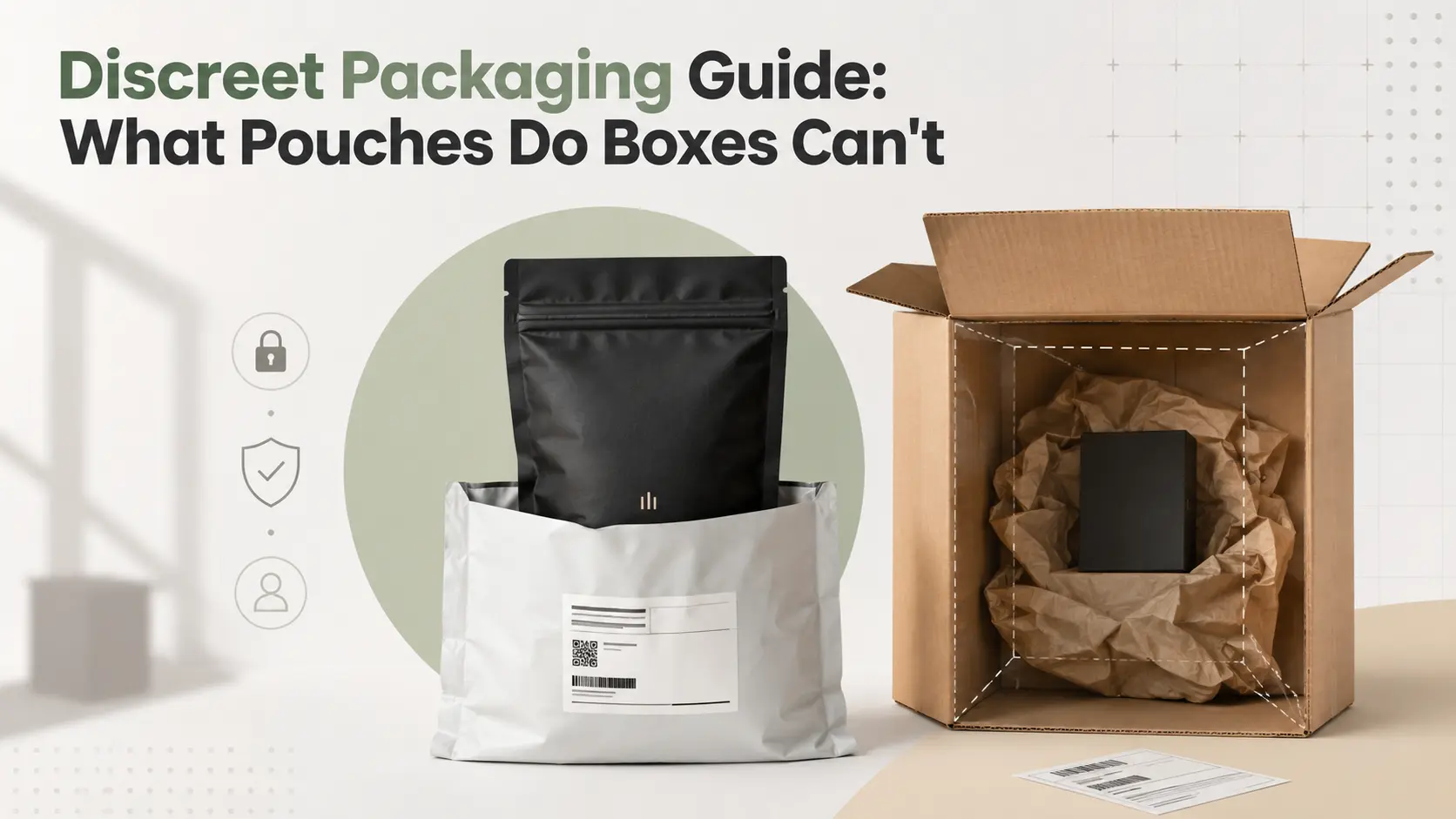
Discreet packaging is packaging designed so nobody can work out what’s inside without opening it. No product photos. No descriptive text. No brand name that gives the game away. Just a plain exterior that looks like every other parcel on the delivery van.
You’ll also hear it called stealth packaging, which means the same thing. Some fulfilment teams say private packaging or non-descript packaging. Different words, one goal: the outside tells you nothing useful.
So what does the package look like when it lands on the doorstep?
What a discreet package typically looks like:
- A plain exterior in a neutral shade. Brown, white, black or grey.
- No product imagery, illustration or descriptive wording anywhere on the outside.
- Opaque material, so nothing shows through under a porch light or a phone torch.
- A shipping label with the recipient’s details and a generic or fulfilment-centre return address.
- No branded tape, stickers or promotional flyers stuck to the outside.
- No clear window. None at all, if privacy is the point.
- A clean, secure seal that hasn’t gaped open in transit.
Worth saying clearly: discreet packaging isn’t one format. A pouch can be discreet. So can a mailer, a padded envelope, or a plain corrugated box. Format is a choice you make after you’ve decided how much privacy the product actually needs.
How Does Discreet Shipping Work From Checkout to Delivery?
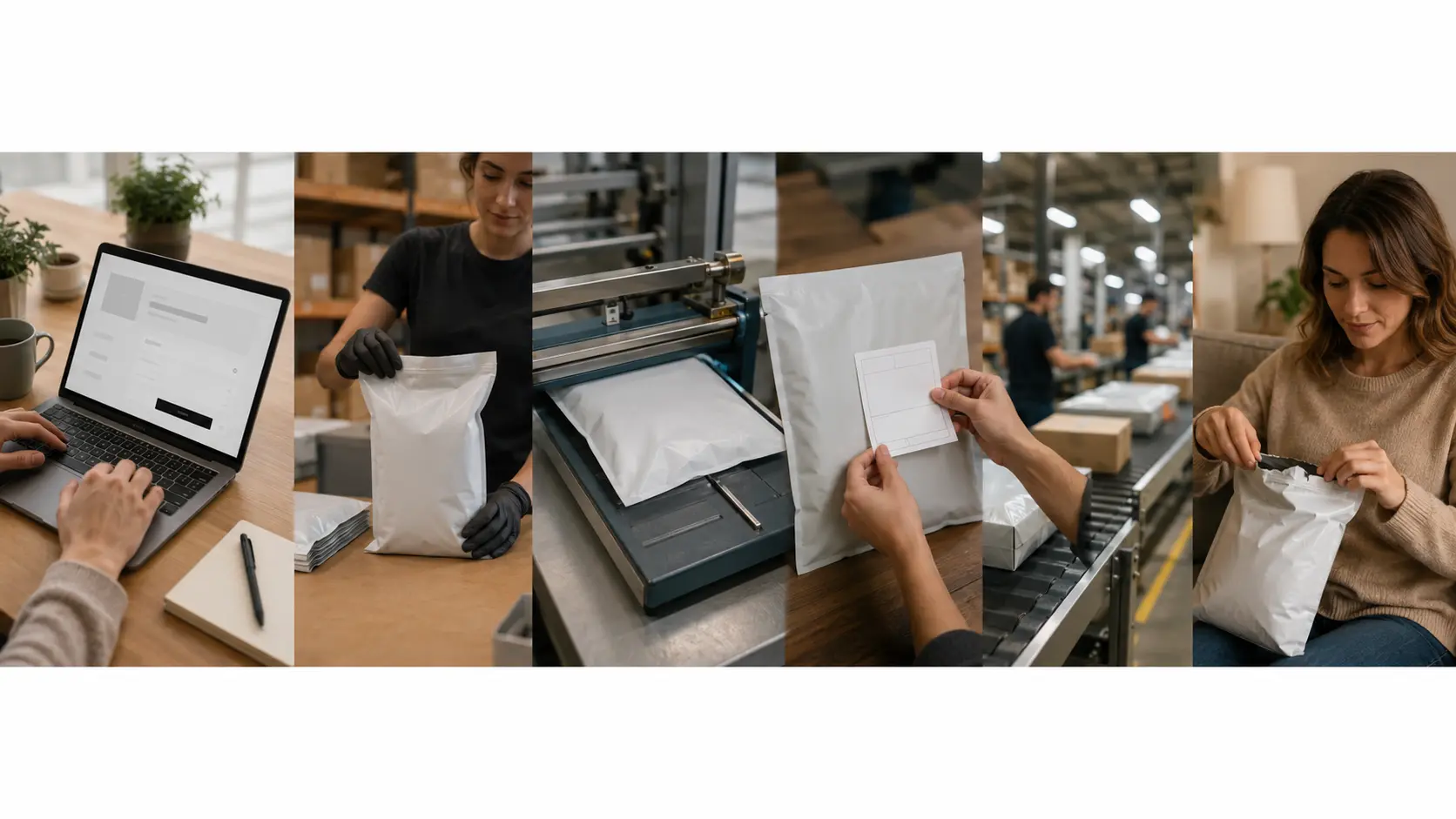
The packaging is only one piece of it. Discreet shipping is a process, and it starts well before anything gets sealed. Here’s how the chain runs in practice.
- The customer chooses it, or you promise it. Some brands offer a checkbox at checkout. Others ship every order this way by default because of what they sell. Either way, say so on the product page, because shoppers hesitate when they aren’t sure.
- The right opaque outer packaging gets picked. Whatever you use, it needs to hide the contents completely and survive the trip without tearing.
- Product details stay off the exterior. No item names, no SKU descriptions, no graphics. This includes packing slips visible through a pouch or window.
- Labels stay compliant but quiet. The shipping label carries what the carrier and the law require, and nothing extra. Many brands use a fulfilment centre address rather than their own company name in the return field.
- The parcel is sealed properly. A weak seal is a privacy failure waiting to happen. Heat seals and tamper-evident closures both help here.
- It travels like any other parcel. Carriers don’t run a separate discreet network. Your parcel moves through the normal system, which is exactly the point. It blends in.
- The customer opens it. Whatever brand experience you’ve built lives on the inside, not the outside.
Important Note: Discreet does not mean stripping off information you’re legally required to include. Customs declarations must be accurate on international shipments. Hazardous goods still need proper hazard labelling. Age-restricted and regulated products still follow their own rules. You can keep the outside quiet, but you cannot hide facts the carrier or the regulator needs.
What Pouches Can Do That Boxes Can’t as Efficiently
Boxes can absolutely be discreet. A plain corrugated box with a blank label hides a product perfectly well. So the honest framing isn’t that boxes fail. It’s that flexible pouches combine several privacy jobs into one component, and they do it with less material and less wasted space.
Here’s where the difference actually shows up.
Provide Full Opacity Without a Bulky Rigid Structure
Film can be engineered to be completely opaque. Not “mostly” opaque, not “hard to see through in good light.” Fully opaque, with nothing visible from any angle.
Structures that deliver this include:
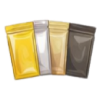
- Metalized films, which use a vacuum-metalized polyester layer sandwiched in the middle
- Aluminium foil laminates, the highest-barrier option and completely light-blocking
- Opaque kraft structures, which look plain and unremarkable by design
Flexible Pouches offer fully opaque Metalized Poly and Poly Aluminium Foil structures, plus metalized kraft. All of them conceal contents without a rigid outer shell wrapped around them.
Colour choice matters more than people assume, too. A very dark film hides shapes better than a pale one when a parcel sits under a bright porch light. Black and deep brown structures are common in privacy-focused packaging for exactly that reason.
One rule to hold onto: skip the window. Clear panels are great when you want shoppers to see the product on a shelf. For discreet packaging, a window undoes the entire purpose.
Fit the Product With Less Empty Space
Boxes come in fixed dimensions. Your product almost never matches those dimensions exactly, so you end up filling the gap with air, paper or foam.
Pouches size to the product instead. Custom width, height and gusset mean the pack ends up close to the shape of what’s inside, which brings a few useful side effects:
- Less void space to fill, so fewer packing materials to buy
- Smaller overall parcel, which draws less attention on a doorstep
- Flat storage before filling, since empty pouches stack in a fraction of the space empty boxes need
- Potentially better dimensional-weight numbers, because UPS and FedEx both price on size as well as weight
That last point has real money attached to it. An oversized parcel costs more to ship and looks more interesting to anyone walking past.
Add Privacy and Barrier Protection in the Same Package
Here’s the part most articles on this topic miss entirely. Concealment isn’t only visual.
Some products give themselves away through smell. Others degrade when light or moisture reaches them, which turns into a different kind of problem when the customer opens the pack. A properly built pouch handles both jobs at once, protecting against:
- Light, including UV, which opaque and foil structures block outright
- Moisture, controlled by the barrier layers in the laminate
- Oxygen, which matters for anything that oxidises or loses potency
- Odour, contained by high-barrier structures with a foil or metalized layer
A poly-aluminium foil laminate with a seven-micron foil layer blocks close to one hundred percent of oxygen, water vapour and light. A plain cardboard box does none of that on its own. To get there, you’d need a barrier liner inside the box, which means two components instead of one.
Support Secure Sealing and Reclosure
A discreet package has to stay closed. Obvious, but it’s where a surprising number of shipments fail.
Pouches offer closure options that work with the format rather than bolted onto it:
- Heat seals that fuse the film shut, so opening leaves visible evidence
- Tear notches giving the customer a clean opening point without scissors
- Zippers for products used over several sittings
- Resealable closures that keep the pack tidy after first opening
- Child-resistant closures where the product calls for controlled access
Flexible Pouches supplies zip closures across its pouch range and offers a dedicated child-resistant pouch option for products needing that extra layer.
Reduce Packaging Weight and Shipping Volume
Film weighs less than board. That’s not a sustainability argument here, it’s a fulfilment one.
For discreet ecommerce shipping, lighter and smaller means:
- Lower parcel weight going onto the carrier invoice
- Flat storage before filling, freeing up warehouse space
- Less unused cube inside the parcel
- A smaller, less conspicuous package arriving at the door
Small parcels also fit through more letterboxes and into more parcel lockers, which quietly solves the “left on the porch in full view” problem before it starts.
Pouches vs. Boxes: How Each Format Protects Privacy
Neither format wins across the board. This table lays out where each one is genuinely strong.
| Factor | Flexible Pouch | Rigid Box |
| Visual concealment | Excellent with opaque films | Excellent with opaque board |
| Empty package volume | Very low | Higher |
| Fit around product | Highly customizable | Fixed rigid dimensions |
| Moisture barrier | Can be engineered very high | Usually needs a liner or coating |
| Light barrier | Excellent with opaque and foil structures | Good with opaque board |
| Odor barrier | High-barrier structures available | Often requires inner packaging |
| Reclosure | Zippers available | Requires separate closure design |
| Tamper and security options | Heat seals and specialized closures | Tape, seals and inserts available |
| Crush protection | Moderate | Strong |
| Fragile-product protection | Often needs support | Usually better |
| Shipping and storage efficiency | Strong | Depends heavily on box sizing |
| Best use | Soft, compact or barrier-sensitive products | Fragile, heavy or crush-sensitive products |
Read the two crush-protection rows carefully. That’s the honest trade-off, and it’s the reason the next section exists.
When a Box Is Still the Better Choice
Any packaging guide that claims one format solves everything is selling something. Boxes remain the right call in plenty of situations.
Stick with a box when you’re shipping:
- Highly fragile products such as glass, ceramics or delicate electronics
- Anything that needs real crush resistance under a stack of other parcels
- Heavy items where film strength becomes the limiting factor
- Sharp or irregular objects that could puncture flexible film from the inside
- Multi-component products needing rigid inserts to hold parts in place
- Products where structural protection matters more than trimming package volume
The point of discreet packaging is to protect privacy and the product. A pouch that arrives torn open has failed at both. Match the format to what you’re actually shipping, not to what sounds more modern.
Which Pouch Styles Work Best for Discreet Packaging?
If a pouch is the right call, the next question is which style. Four cover most privacy-focused applications.
| Pouch Style | Best Use for Discreet Packaging |
| Lay-Flat Pouch | Compact ecommerce shipments, samples, personal-care items and lightweight products |
| Stand-Up Pouch | Products needing more capacity, resealability or a gusseted format |
| Flat-Bottom Pouch | Products needing extra structure while keeping flexible-packaging advantages |
| Child-Resistant Pouch | Products requiring controlled access or an added safety feature |
Lay-flat pouches are the default for slim, low-volume shipments. Stand-up styles make more sense once volume or reclosure comes into play. Flat-bottom pouches sit in between, adding rigidity without going back to a box.
Materials and Features That Make a Pouch Truly Discreet
Choosing a pouch style is only half the specification. The material and the features decide whether the pack is actually discreet or just plain-looking.
| Feature | Why It Matters |
| Opacity | Contents must not be visible through the film under any lighting. Metalized and foil structures are fully opaque. |
| Barrier level | Match the barrier to the product’s sensitivity to moisture, oxygen, light and odour. Over-specifying wastes money, under-specifying causes complaints. |
| Film strength | The pouch has to survive picking, packing and the carrier network without tearing and exposing what’s inside. |
| Closure | Heat seals, zippers and child-resistant options all serve different needs. Pick the one that matches how the product is used. |
| Finish | Matte and soft-touch finishes read as understated. High gloss draws the eye, which works against you here. |
| Sizing | A close fit reduces bulk, but not so close that the outline of the product shows through the film. |
| No window | Clear panels are excellent for retail shelves and completely wrong for privacy-focused packaging. |
Two of these get overlooked most often. Finish, because people assume any plain pack is discreet when a glossy one still catches attention. And sizing, because a pouch pulled tight against an unusual shape reveals more than a slightly roomier one would.
Discreet Packaging Mistakes That Can Reveal What’s Inside
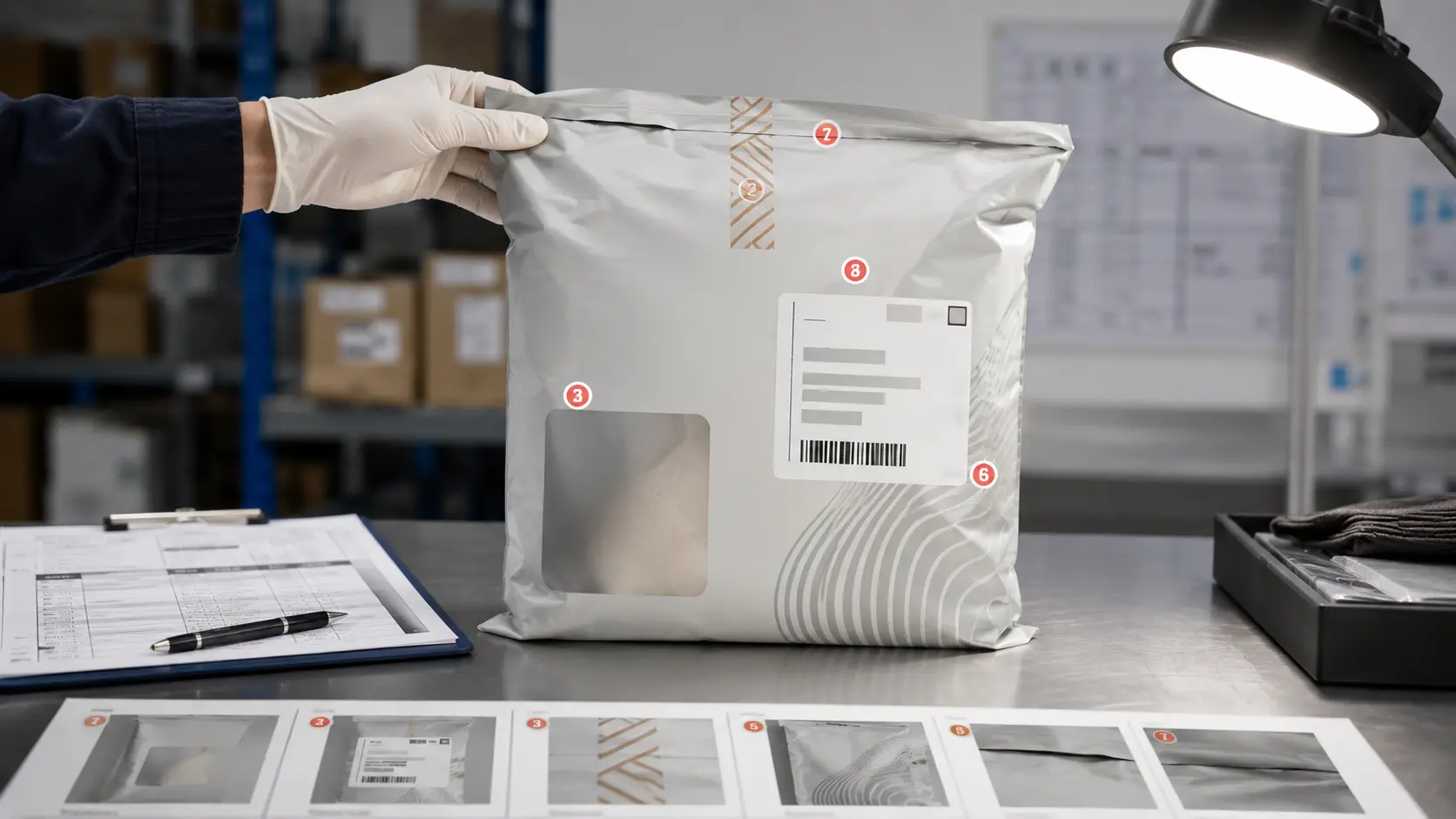
Indiscreet packaging is rarely the result of a bad decision. It’s usually one small oversight that nobody caught. A package tips into that territory the moment its design, label, transparency, shape or branding gives away something the customer expected to stay private.
Run through this list before you finalise anything:
- A transparent panel or window. The fastest way to undo everything else.
- Product names printed on the shipping label. Check what your fulfilment software auto-populates.
- A well-known brand name on the outside, especially if the brand is associated with one product category.
- Branded tape or stickers. Distinctive tape identifies the sender from ten feet away.
- Product-specific graphics, including subtle icons people recognise.
- An oversized parcel. Big packages get noticed and get talked about.
- The film is so thin it shows the product’s outline. Opacity isn’t only about colour.
- Loose contents that rattle or shift. Sound identifies things too.
- A weak seal. Anything that pops open in transit is a privacy failure, not just a damage claim.
- A packing slip listing item names, sitting visible in a clear pocket.
- Stripping out legally required information to look plainer. Never do this. Compliance beats aesthetics.
Important Note: Test your discreet packaging the way a stranger would see it. Put a real product inside, seal it, then look at it under bright light, in dim light, and from a couple of feet away. Give it a shake. Most privacy leaks show up in thirty seconds of handling, long before anyone runs a formal production trial.
Which Products Benefit Most From Discreet Pouches?
Some categories need discretion by default. Others only need it for certain orders. These are the ones where it comes up most.
- Pharmaceuticals and medical products, where confidentiality is expected rather than requested
- Personal hygiene products, often bought privately for obvious reasons
- Health and wellness products, including supplements and therapy-related items
- Cosmetics and personal-care products, particularly treatment-focused ranges
- Small high-value products, where the goal is deterring theft rather than avoiding embarrassment
- Subscription products, where a plain outer keeps the contents a surprise
- Gifts, since a recognisable parcel ruins the moment before it happens
- Other privacy-sensitive ecommerce products where customers simply prefer not to advertise a purchase
Notice the two different motives sitting in that list. Some customers want privacy from the people around them. Others want the parcel to look boring so nobody lifts it off the step. Same packaging solves both, which is convenient, because you rarely know which motive a given customer has.
If you sell across several of these categories, it’s usually simpler to make discreet packaging your default than to run two separate packing workflows. Fewer decisions at the packing bench means fewer mistakes.
How to Choose the Right Discreet Pouch for Your Product
Work through these in order. Skipping the early steps is how brands end up specifying an expensive foil structure for a product that never needed one.
- Decide how much visual privacy the product genuinely requires. Full concealment, or just a neutral exterior?
- Identify your barrier needs. Moisture, oxygen, light, odour. Be specific about which ones apply.
- Assess physical risk. Weight, sharp edges, puncture potential, how it behaves in a stack.
- Pick the pouch structure. Lay-flat, stand-up, flat-bottom, or something else entirely.
- Select the film and opacity level. Metalized, foil, kraft, or a combination.
- Choose your closure. Heat seal only, tear notch, zipper, or child-resistant.
- Size it properly. Close enough to cut bulk, loose enough not to outline the product.
- Confirm regulatory and carrier requirements before artwork goes anywhere near production.
- Prototype and test. Fill it, seal it, ship a few, and see what arrives.
Step nine is the one people skip when they’re in a hurry. It’s also the one that catches problems while they’re still cheap to fix.
Can Discreet Packaging Still Look Premium?
Discreet and cheap are not the same thing, though a lot of packaging manages to be both by accident. The principle worth holding onto is simple: quiet on the outside, intentional on the inside.
A plain exterior doesn’t stop you building something considered. Neutral colours and a good matte or soft-touch finish already feel more expensive than a shiny generic mailer. Restrained branding, a small mark rather than a full logo lockup, can look confident instead of anonymous. The material itself does work too, since a well-made pouch feels different in the hand from a flimsy one.
Then the reveal happens after opening. Branded inner components, a printed insert, a card, a properly designed primary pack inside the shipper. The customer gets the brand experience at the moment they’re actually alone with the product, which is arguably a better moment for it anyway.
Plenty of premium brands already work this way. Luxury goods often ship in deliberately dull outer packaging precisely because announcing a valuable delivery is a bad idea. Restraint reads as expensive far more often than people expect.
Pouches or Boxes: Which Is Better for Discreet Packaging?
Time for a straight answer rather than more prose. Find your priority in the left column and the format picks itself.
| If your priority is… | Best format | Why |
| Maximum privacy with minimum bulk | Pouch | Opaque film conceals without a rigid shell around it |
| Light, moisture, oxygen or odour protection | Pouch | Barrier layers are built into the film itself |
| A close fit with little void space | Pouch | Custom width, height and gusset instead of fixed dimensions |
| Reclosure after first opening | Pouch | Zippers and resealable closures integrate into the pack |
| Lower parcel weight and smaller cube | Pouch | Film weighs less and stores flat before filling |
| Crush resistance in a stacked load | Box | Rigid board holds its shape under pressure |
| Protecting fragile or breakable items | Box | Structural walls absorb impact that film cannot |
| Shipping heavy contents | Box | Weight becomes the limiting factor for flexible film |
| Sharp or irregular shapes | Box | Film punctures from the inside; board does not |
| Organising multi-part products | Box | Inserts and dividers need a rigid frame |
| Barrier protection and transport protection | Both | High-barrier pouch inside a plain outer shipper |
That last row deserves attention. A high-barrier pouch sitting inside a plain corrugated box is a very common setup, and it isn’t a compromise. For products that need real barrier performance and real crush protection, it’s simply the correct answer.
Conclusion:
Removing a logo is where discretion starts, not where it ends. Real privacy comes from opacity, careful labelling, a sensible package size, a seal that holds, and a format that suits what’s actually inside. Boxes still earn their place, particularly when the product is fragile, heavy or awkwardly shaped. Nothing here suggests otherwise.
But flexible pouches bring opacity, barrier protection, secure closures, close sizing and shipping efficiency together in a single component, which is something rigid packaging struggles to match as efficiently. For a lot of privacy-sensitive products, that combination is hard to beat. The right format always depends on the product. Start there, and the packaging decision usually makes itself.
Build a Pouch Around Your Product
Need packaging designed around your product’s privacy, barrier and shipping requirements? Flexible Pouches offers custom sizing, opaque film structures, matte and soft-touch finishes, zip and child-resistant closures, and several pouch configurations.
Explore the material and pouch options, or request a free quote to talk through the right specification for your product.
FAQs
1. What is discreet packaging?
Discreet packaging is packaging designed so nobody can identify the contents from the outside. It uses plain, opaque materials with no product names, images or recognisable branding. The shipping label carries only what’s required, often with a generic return address.
2. What does discreet packaging look like?
Plain and forgettable. Neutral colours like brown, white or black, no product graphics or descriptive text, no branded tape, and no clear window. It should look like every other parcel on the delivery van, which is exactly the point.
3. How does discreet shipping work?
The order is packed in opaque, unbranded packaging, the label is kept minimal but compliant, and the parcel travels through the normal carrier network. There’s no separate discreet service. Brands often use a fulfilment centre return address instead of their own company name.
4. Are pouches more discreet than boxes?
Both can be fully discreet. Pouches usually manage it with less material and less empty space, and they add light, moisture and odour barrier protection in the same component. Boxes still win on crush resistance for fragile or heavy products.
5. Can discreet pouches block light, moisture, and odors?
Yes, with the right film structure. Metalized and aluminium foil laminates block light completely and provide strong moisture, oxygen and odour barriers. A foil layer roughly seven microns thick blocks close to one hundred percent of oxygen, water vapour and light.
6. Is a “discrete package” the same as a discreet package?
They’re different words. Discreet means private and unobtrusive, which is what packaging buyers usually mean. Discrete means separate or distinct, as in individual units. People search both spellings, but discreet is the correct one here.