
























Gummy vitamins may look like candy, but packaging them takes more thought than filling a bag or bottle. Too much moisture can leave gummies sticky, while poor storage can affect their texture, appearance, and quality. Even a well-made supplement can disappoint customers if the packaging fails to protect it.
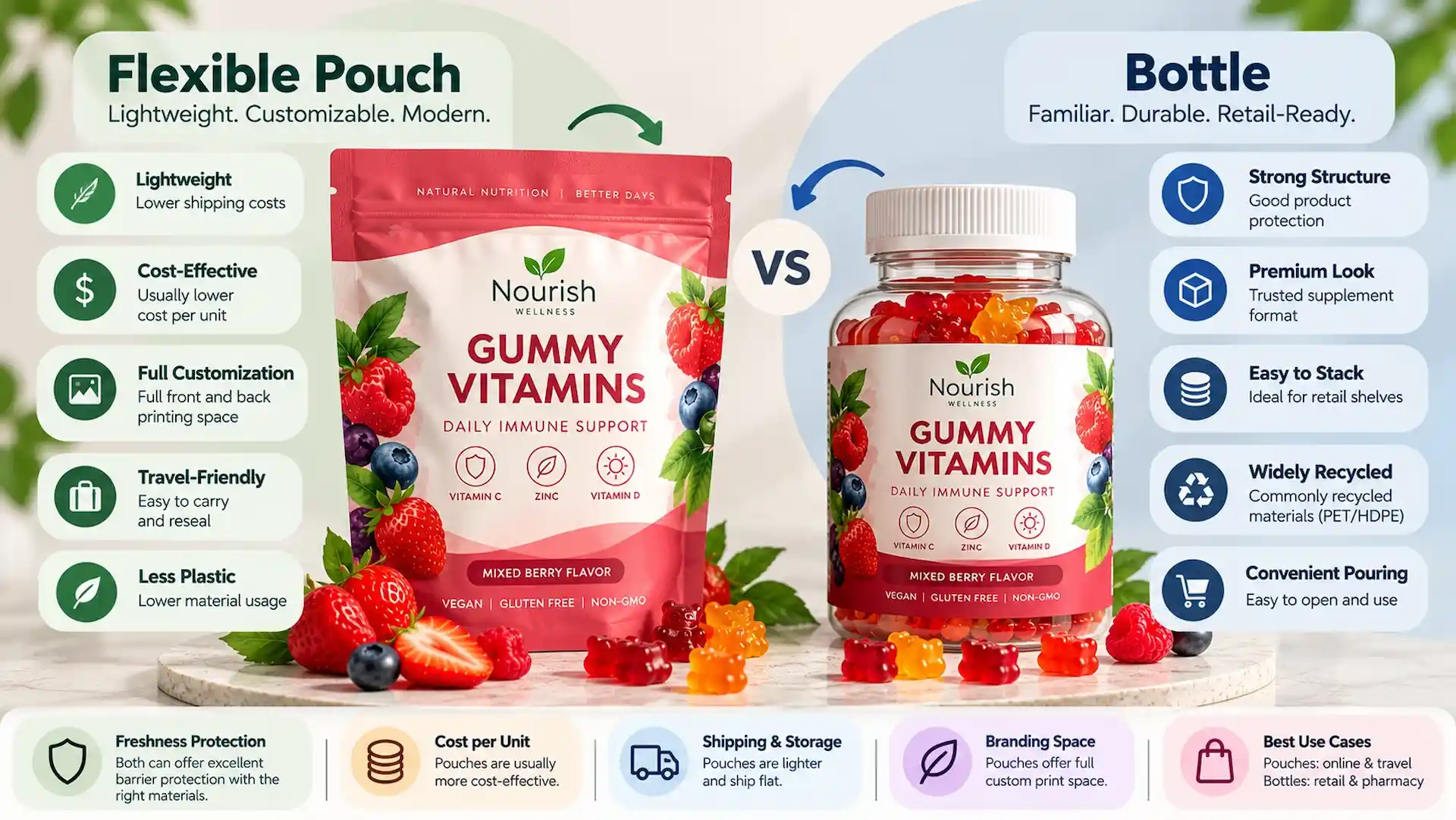
That’s why choosing between pouches and bottles matters. Both can work well for gummy vitamin packaging, but they offer different benefits. Pouches are lightweight, flexible, and easy to customize. Bottles provide a firm structure and familiar storage experience. This guide compares both options to help you choose the right packaging for your product.
Why Gummies Need Smarter Packaging Than Pills
A capsule is dry and hard, so a warm cupboard rarely hurts it. Gummies hold water, sugar and a gel base, so they soften, sweat or go rock hard depending on what’s around them. Good vitamin gummy packaging has to deal with all of that.
Heat, Humidity and Oxygen: What Ruins Gummies
Almost every complaint we hear comes down to one of these:
- Heat. Gummies go soft and stick to each other. Hot days and cool nights, back and forth, make it worse.
- Humidity. The surface turns tacky and the pieces clump.
- Oxygen. It slowly breaks down some vitamins. The taste can also go flat.
Gelatin vs Pectin: How Your Recipe Shapes Your Packaging
- Gelatin gummies usually soften sooner when it’s warm.
- Pectin gummies often keep their shape better, though moisture can bother them more.
- Sugar-free gummies act differently again, so test them separately.
Whatever you make, tell your packaging supplier the full recipe before you choose a film or a bottle.
Pouch vs Bottle at a Glance
Before the details, here’s a quick table to compare the two formats. It covers the basics most brands ask about first when looking at packaging for gummies.
| Factor | Pouch | Bottle |
| Barrier | Good to excellent, depends on film layers | Strong, depends on material and seal |
| Cost per unit | Usually lower | Usually higher |
| Minimum order | Low with digital printing | Often higher for custom work |
| Weight | Very light, ships flat | Heavier and bulky |
| Branding space | Full front and back print | Label area only |
| Convenience | Easy to carry | Easy to stack and pour |
| Sustainability | Less plastic per pack | More plastic, widely recycled |
| Best for | Online sales, travel packs | Retail shelves, pharmacy look |
Stand-Up Pouches for Gummies: Where They Shine
Pouches are the favorite for many online gummy brands, and for good reason. Here’s what goes into one and what to look for when you order.
How Multi-Layer Barrier Films Lock In Freshness
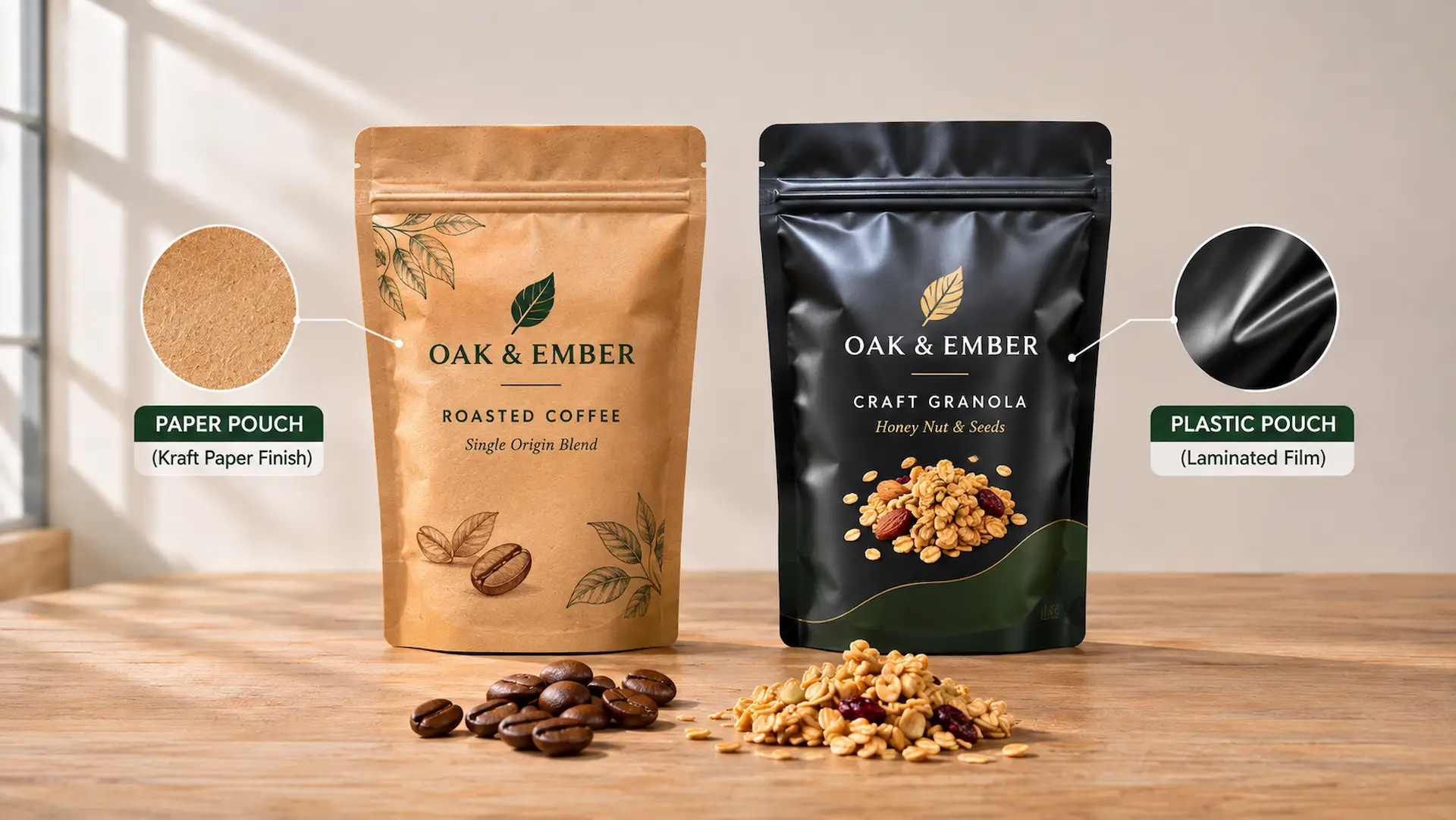
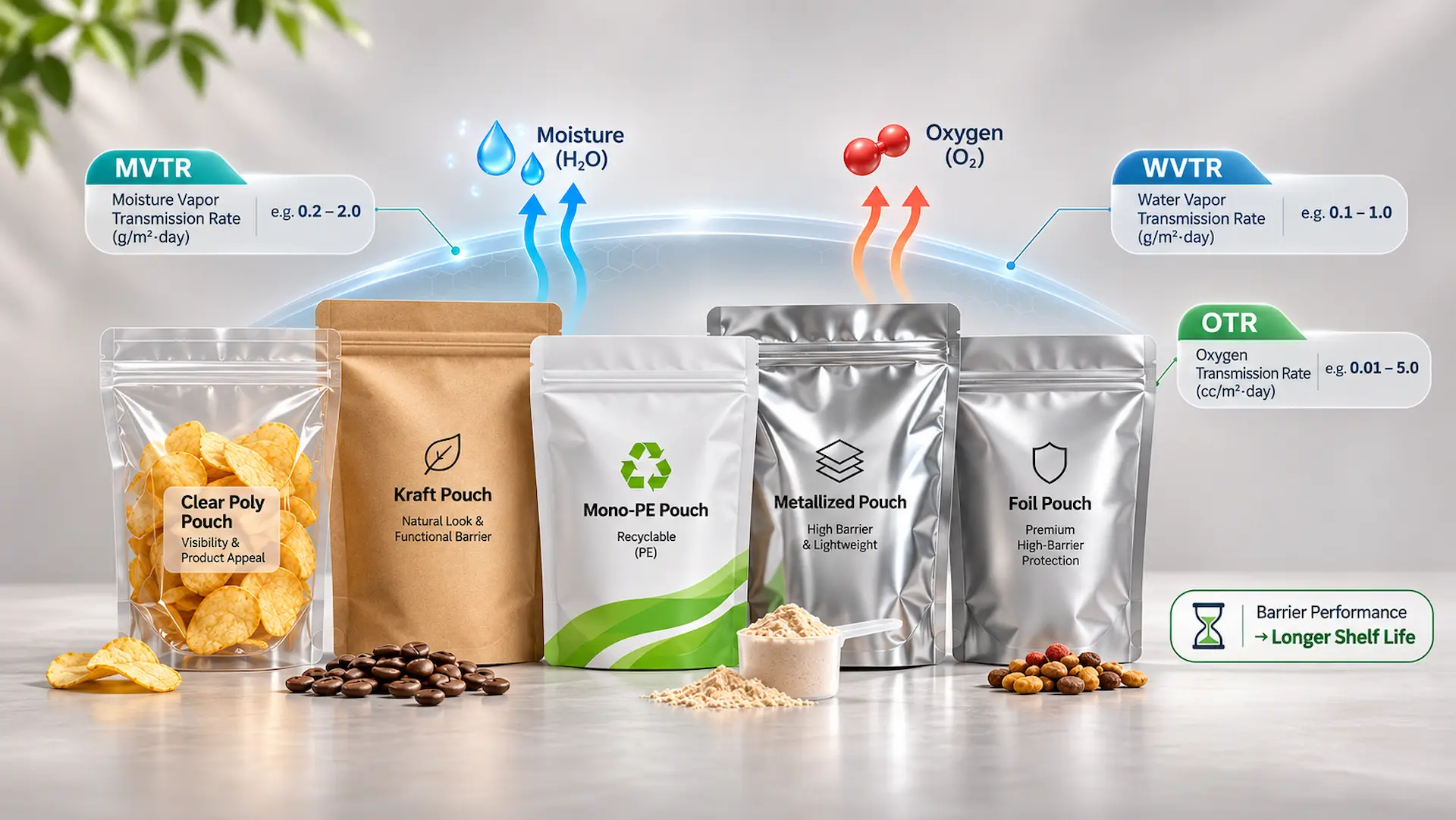
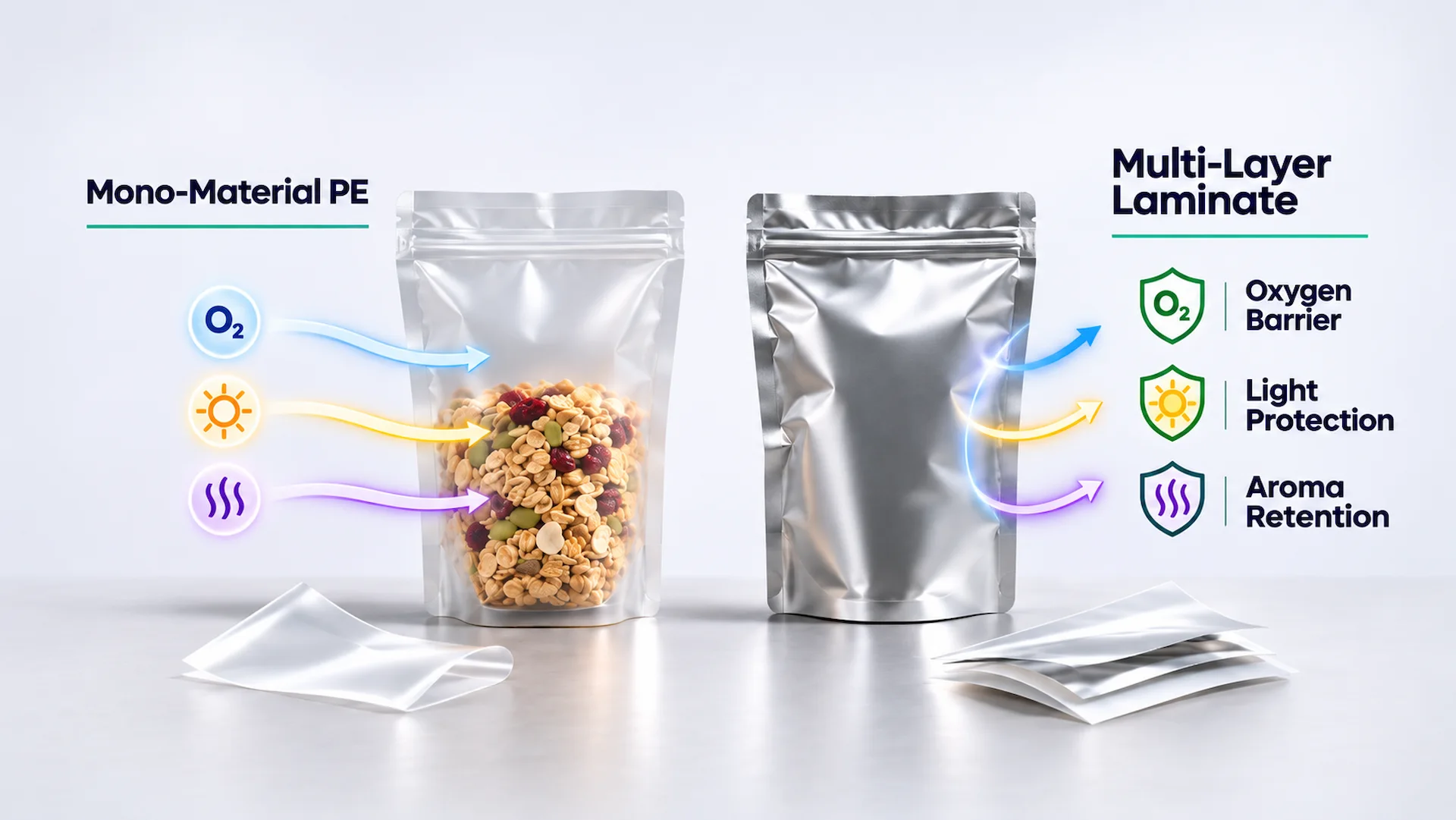
A gummy pouch looks like a single sheet of plastic, but it isn’t. It’s a laminate, meaning a few thin layers bonded into one film. You’ll usually find a printed outer layer, a metallized or foil layer that stops moisture, oxygen and light, and a sealable layer on the inside. Thicker doesn’t always mean better. If mils and microns confuse you, our guide to pouch thickness sorts it out.
Pouch Styles That Suit Gummies
- Stand-up pouch: Stands on its own and gives you lots of print room. The base matters here. A skirt seal, for example, changes how well the pouch holds up.
- Flat bottom pouch: A boxy shape with extra print space. It looks premium on a shelf.
- Lay-flat pouch: Slim and cheap to ship, so it works well for samples. Many are made with a three-side seal.
- Stick pack: One serving each. Good for travel and trial offers.
Must-Have Features: Zippers, Tear Notches, Windows and Finishes
- Zipper: Let people close the bag again after each serving.
- Tear notch: Makes the first opening clean and easy.
- Window: Shows the gummies. It helps if your colors look good.
- Finish: Matte feels premium. Gloss makes colors pop.
Where Pouches Fall Short
- They can’t stop crushing, so a squeezed bag may squash soft gummies.
- A zipper doesn’t feel as firm as a screw cap.
- Some shoppers still see bottles as the “real” supplement look.
Bottles for Gummy Vitamins: Where They Still Win
Bottles are still the default on most pharmacy shelves, and they’ve earned that spot. They come with trade-offs too, so let’s look at both sides.
PET vs HDPE: Clarity or Moisture Protection?
- HDPE is opaque and holds out moisture better. It suits gummies that hate humidity.
- PET is clear, so bright colors show. It blocks oxygen well but lets in more moisture.
So which one? Whichever problem worries you more.
Induction Seals, Desiccants and Closures
If a bottle fails, it’s usually the closure. An induction seal bonds a foil liner to the rim. It shows tampering and adds a barrier. A desiccant packet then soaks up any moisture trapped during filling. One more thing: buy your bottle and cap as a matched set, or the fit won’t be tight.
Where Bottles Fall Short
- They’re heavy and bulky, so freight costs more.
- They use more plastic for each pack.
- A plain label limits your design. A shrink sleeve gives you more space, but it adds cost.
Pouch vs Bottle: The Head-to-Head Breakdown
We scored the six factors that matter most when you choose. The table shows the winner for each one, with a short reason.
| Factor | Pouch | Bottle | Winner |
| Freshness and shelf life | Strong with foil or metallized film. Depends on the zipper and heat seal. | Strong with an induction seal and desiccant. Closes firmly after many openings. | Bottle (slightly) |
| Cost and minimums | Lower unit cost. Digital printing starts from about 1,000 units at Flexible Pouches. | Higher unit cost. Custom runs often need much bigger orders. | Pouch |
| Shipping and storage | Ships flat and weighs less when filled. | Heavy and bulky, so freight costs more. | Pouch |
| Branding and shelf appeal | Front and back print. Photographs well online. | Label area only. Looks neat and familiar in stores. | Pouch |
| Everyday use and portability | Slips into a gym bag or handbag. | Sits well on a counter but takes more space when traveling. | Pouch |
| Sustainability | Uses less material, but many laminates are hard to recycle. | Easier to recycle in many areas, but uses more plastic. | Pouch, with a recyclable film |
Why the Bottle Still Wins on Freshness
Both formats can protect gummies for months in sensible storage. The bottle gets the edge because a cap re-closes tightly after many openings, while a zipper can wear over time. A foil pouch with a good seal closes most of that gap.
Sustainability Depends on the Film
Many laminated pouches can’t go in curbside recycling. Recyclable and compostable films are growing, and our guide to compostable certification helps you read the labels. Bottles recycle easily in many areas, but they use more plastic to begin with.
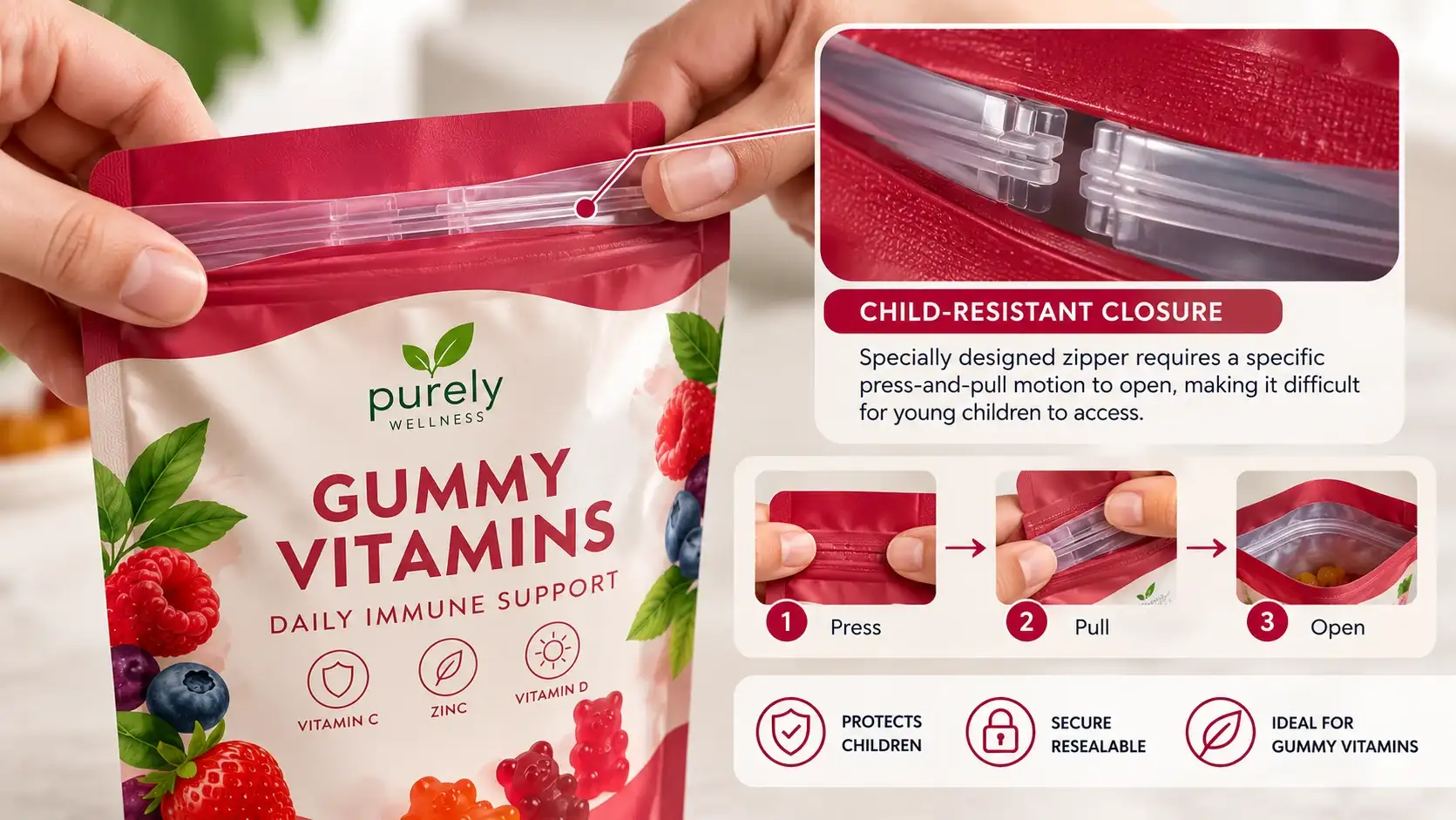
Child-Resistant Rules for Gummy Packaging
Gummies look like candy, so safety rules matter more here than they do with pills. Here’s what to know before you print a single pouch.
Important note: Rules change by product type and by state. This article is general guidance, not legal advice. Please check with a regulatory expert before you launch.
When Vitamin Gummies Need Child-Resistant Packaging
No general U.S. law forces child-resistant packaging on every gummy vitamin. There’s one clear exception. The Poison Prevention Packaging Act requires it for products with 250 mg or more of elemental iron per package. Industry groups, including the Council for Responsible Nutrition, also recommend child-deterrent closures for gummies, because they look so much like candy. If you’re not sure, add the protection.
CBD and THC Gummy Packaging: What Regulators Expect
Rules differ from state to state. Still, many places ask for:
- Child-resistant packaging, often opaque
- Clear warning labels
- Designs that don’t appeal to kids
The same thinking applies to most edibles packaging. Read your state’s rules before you start on the design.
How a Child-Resistant Pouch Earns Its Certification
A child-resistant pouch isn’t just a pouch with a stiffer zipper. It goes through lab tests where young children try to open it, while adults must still be able to. Fail on either side and it isn’t certified. Ask your supplier for the test proof, and have a look at our child-resistant pouches range.
Choosing the Best Packaging for Gummies by Sales Channel
Where you sell should guide your choice more than anything else. Use this list as a quick starting point.
- DTC and Amazon: Go with pouches. They’re light and flat, and they look good in photos.
- Retail shelves: Bottles stack and scan cleanly. Pouches can work if they have a hang hole or sit in a carton.
- Dispensaries: Child-resistant pouches or jars, depending on your state.
- Sampling and travel: Stick packs or small lay-flat pouches.
Pick a pouch if…
- You sell mostly online.
- You want low minimums and a few flavors.
- Shipping is eating into your margin.
Pick a bottle if…
- You’re aiming at pharmacies or big retail chains.
- You want the classic supplement look.
- Your gummies are fragile and need a hard shell.
Use both if…
- You sell a bottle first, then offer refill pouches. It can cut plastic and cost.
How to Package Gummies Step by Step
These seven steps cover most gummy lines. Your own process may add or swap a step, depending on your equipment.
- Cure: Let the gummies dry until they feel firm enough.
- Coat: A light coating keeps pieces from sticking together.
- Choose the barrier film: Match it to your recipe and your climate.
- Fill: If your line can do it, flush with nitrogen to push out oxygen.
- Add a desiccant: One small packet soaks up leftover moisture.
- Heat seal: Check the seal is even and has no wrinkles.
- Label and lot-code: Add the facts panel, batch number and best-before date.
How to Ship Gummies Without Melting
Heat is your biggest enemy once an order leaves the warehouse. The good news is that a few small choices help a lot.
Packaging Choices That Reduce Heat Damage
- Choose a foil-based pouch or a tightly sealed bottle.
- Put it inside a padded or insulated mailer.
- Wrap a pouch in a small box so nobody can squeeze it.
- Add a desiccant for the condensation that forms when temperatures swing.
Shipping Habits for Hot Months
- Ship early in the week so parcels don’t sit in a warehouse all weekend.
- Pay for faster delivery to hot regions.
- Use insulation or melt protection on summer orders.
Important note: Test your pack in a real summer shipment before you order thousands of units. A spec sheet can’t copy a hot delivery truck.
Designing Custom Gummy Packaging That Sells
Good design helps gummies sell, but only if it prints right. Here’s how to avoid the costly mistakes.
Digital Printing for Low Minimums and Multiple Flavors
Digital printing needs no plates or cylinders. So you can print several flavors in one run, whether it’s gummy candy packaging or a whole vitamin line. Most digitally printed orders at Flexible Pouches ship within about 10 business days.
Test with Mockups Before the Full Run
Ask for a mockup first, and check three things:
- Your brand colors
- Your text size
- How the zipper feels in your hand
Fixing one sample costs far less than fixing 5,000 finished pouches.
Pouch or Bottle: The Final Verdict
No single format wins for every brand. Pouches suit online sellers, travel-friendly gummies and anyone who wants low minimums and strong branding. Bottles still make sense for pharmacy-style retail and fragile gummies. Start with your sales channel and your recipe, and the answer usually shows itself.
Ready to Pack Your Gummies in a Pouch That Works?
Tell us your gummy size, your sales channel and the quantity you need. Flexible Pouches will help you pick the size, film and finish, with low minimums and quick turnaround.
Get a quote today and see your gummies in packaging that sells.
FAQs
1. Are pouches good for gummy vitamins?
Yes, as long as the film has a strong barrier and the zipper closes well. For moisture-sensitive gummies, ask for a foil or metallized structure.
2. Do gummies stay fresher in a bottle or a pouch?
Either can work. A bottle with an induction seal and a desiccant does well, and so does a well-sealed high-barrier pouch. Build quality matters more than the shape.
3. What is the cheapest way to package gummies?
Usually a stand-up pouch, since material and freight costs are lower. Check minimums and filling costs before you decide.
4. Do vitamin gummies need child-resistant packaging?
Not always. It’s required for products with 250 mg or more of elemental iron per package, and it’s recommended for gummies in general. Ask your regulatory advisor.
5. What packaging do CBD and THC gummies require?
Usually child-resistant packaging, often opaque, with warning labels. Rules differ by state, so check yours.
6. Can gummy pouches be recycled?
Some can. Mono-material recyclable pouches exist, but they depend on local drop-off or acceptance. Compostable films are another route. Check your local rules first.