


















Think about the last snack you opened. The wrapper came off in two seconds, went in a bin, and it’ll outlive you. That’s the awkward bit about food packaging. It does its job well, protects the product, carries the brand, gets everything from a factory to your kitchen in one piece, then becomes rubbish almost immediately. Sachets and small wrappers are the worst offenders. Too light, too small, covered in food, so most recycling systems just refuse them.
Edible packaging comes at this from a completely different direction. Instead of asking how to make waste disappear faster, it asks whether there needs to be waste at all. You eat the pack, or it breaks down on its own if you don’t. This article covers how it works, what it’s made from, the formats that exist, where it’s already being used, and honestly, where it still doesn’t work.
What Is Edible Packaging?
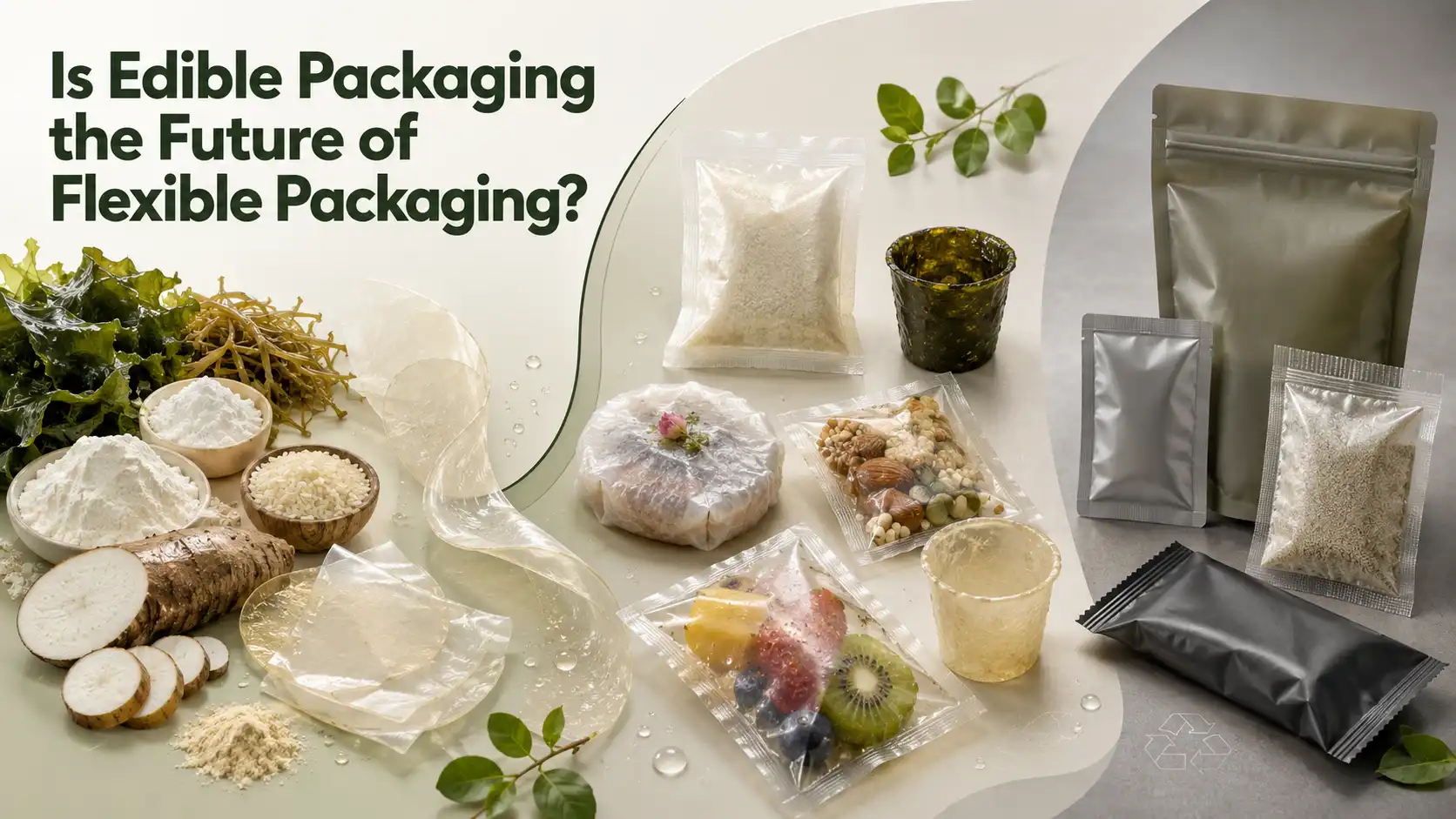
Edible packaging is packaging you can eat. It’s made from food-safe materials seaweed, starch, plant or milk proteins, edible waxes and shows up as thin films, surface coatings, wrappers, sachets, and moulded shapes like cups.
Two things set it apart from a normal pack. One, it’s designed either to be eaten with the product or to act as a protective layer on the food itself. Two, because someone might swallow it, it has to clear food safety rules from the very first step, not just food-contact rules. That means edible food packaging gets treated as an ingredient, not a container.
Edible Films vs. Edible Coatings
People use these two terms as if they mean the same thing. They don’t. A film is made separately, dried, cut, then wrapped around whatever it’s protecting. You can hold it in your hand.
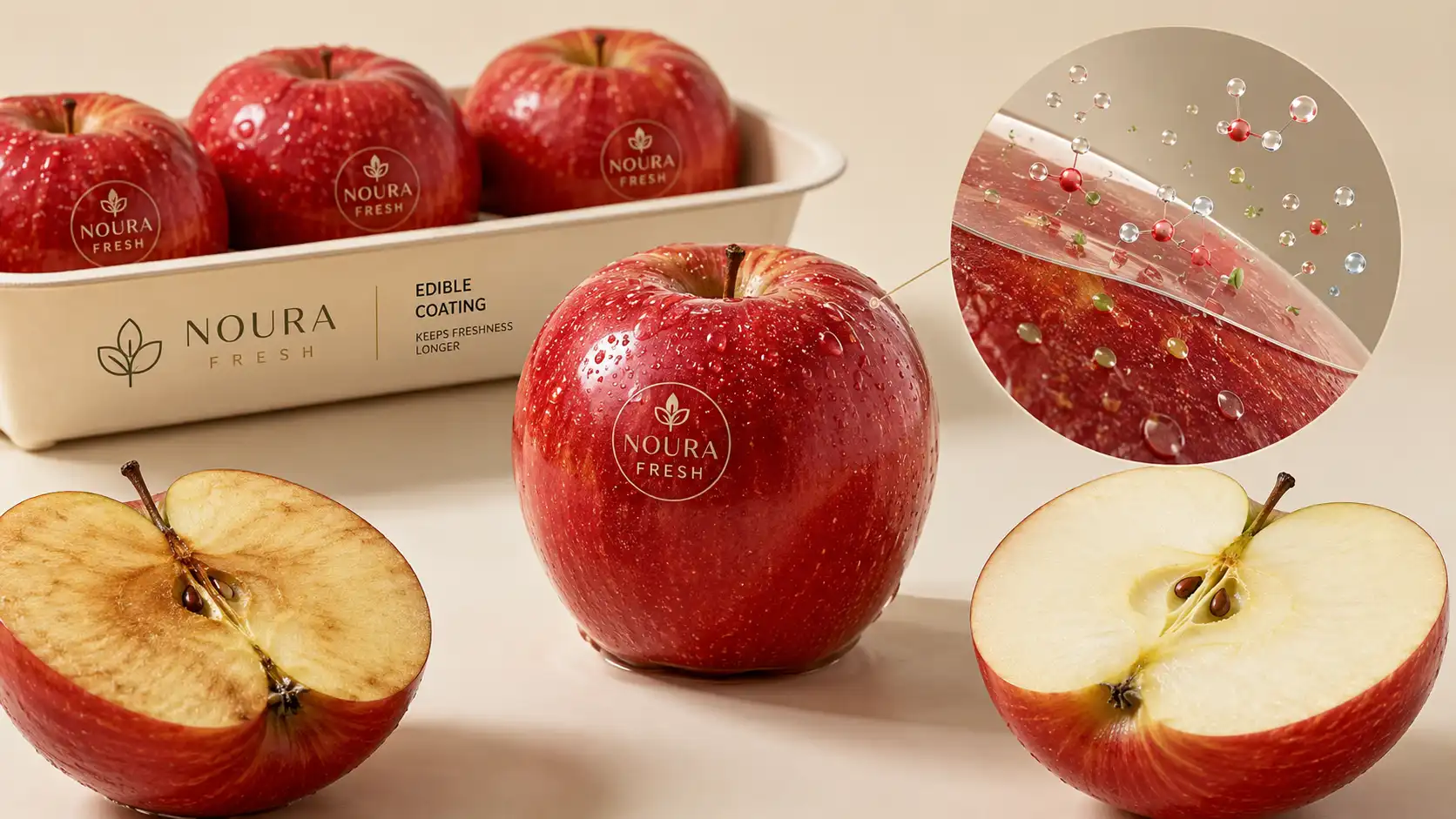
A coating never exists apart from the food. It goes on wet, by dipping or spraying, and dries directly onto the surface. Most shoppers never notice it. Rice paper around a sweet? Film. The layer keeping an apple firm? Coating.
| Feature | Edible Films | Edible Coatings |
| How applied | Made separately, then wrapped | Applied straight onto the food |
| Form | Thin film, wrapper, sachet or pouch | Thin layer on the product surface |
| Common uses | Portions, sweets, powders | Fruit, vegetables, meat, cheese |
| Main purpose | Protection + possible consumption | Protection + preservation |
Why does the difference matter? They solve different problems. A film replaces a piece of packaging. A coating adds freshness to a product without replacing anything, which is why coatings have hit real commercial use much faster.
One more thing worth clearing up. Edible packaging isn’t automatically the same as biodegradable packaging for food or compostable packaging. Everything edible breaks down naturally, but it doesn’t work the other way round. Plenty of biodegradable and compostable films are safe against food and completely unsuitable to eat.
Why Edible Packaging Matters for the Future
Single-use packaging is the part of the waste problem nobody’s cracked. Sachets, packets, coffee pods, straws, sample films. Seconds of use, then gone. They’re small, light, food-soiled, and outside what ordinary recycling can handle. Edible packaging goes right at that gap.
So why now? The pack itself can vanish, which means no landfill for that piece. The raw materials come back every season seaweed needs no farmland, and starch and proteins come from crops already grown at scale, so plant based food packaging is far easier to replenish than anything petroleum-based. Shoppers have got sharper about waste, packaging rules keep tightening, and because the film is made from food, it can carry things a plastic film can’t: nutrients, flavours, preservatives.
That’s the promise. The reality is edible packaging is still developing and doesn’t suit every application. Whether it gets anywhere depends on four things landing together: real-world performance, food safety at scale, cost, and manufacturing capacity.
How Does Edible Packaging Work?
The mechanism is simple. A film or coating sits between the food and the air, and even though it’s very thin, it slows moisture, oxygen, and gases moving in either direction. Same job any packaging film does, just done by something you could eat.
It also affects things you can’t see. Less oxygen at the surface means slower oxidation, which is what turns fats rancid and browns cut fruit. Aroma stays in. On some products the layer also limits surface contamination during handling and display.
Protecting Freshness and Food Quality
Fruit and vegetables keep breathing after harvest. That respiration drives ripening and softening, and a coating slows the gas exchange enough to make a real difference. Three or four extra days of quality often decides whether something sells or gets binned.
Because the material is food to begin with, useful ingredients can go straight into it during production. That opens up moisture control (waxes and lipids), oxygen protection (proteins and polysaccharides), aroma retention, and the more active work antioxidants that slow browning, and plant-based antimicrobials that fight surface spoilage. The pack ends up doing more than covering the product. It extends usable shelf life, which a plastic film simply can’t do.
What Is Edible Packaging Made From?
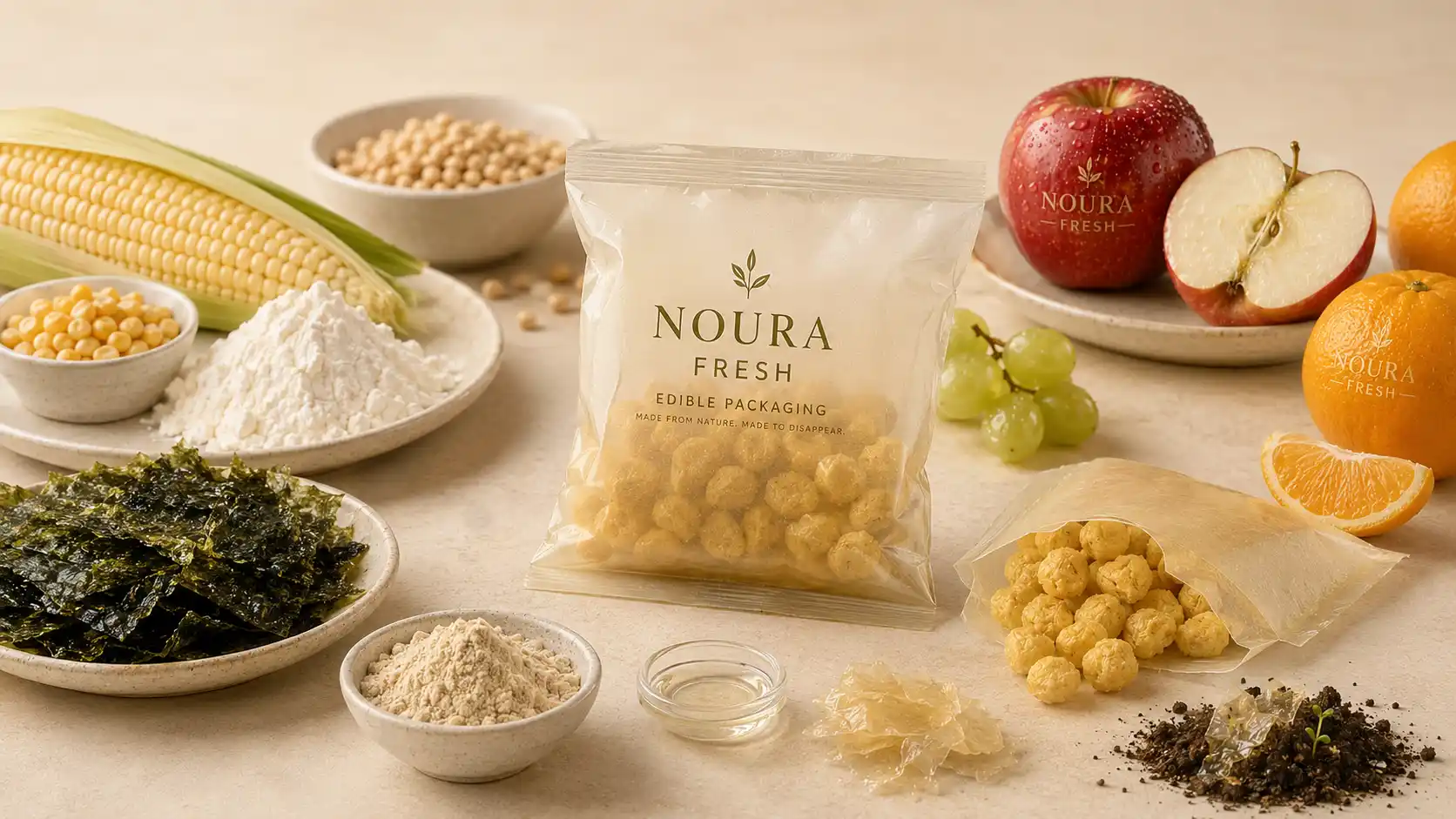
Natural polymers and food-compatible ingredients, not petroleum based resins. No single recipe either. Each group of materials fixes one problem well and falls down somewhere else.
| Material Group | Common Sources | Main Strength | Main Limitation |
| Seaweed-based | Alginate, agar, carrageenan | Strong film-forming, renewable | Moisture sensitivity |
| Starch-based | Corn, potato, cassava, rice | Abundant and affordable | Limited water resistance |
| Protein-based | Milk, whey, gelatin, soy | Good film-forming ability | Allergens, performance concerns |
| Lipid-based | Waxes and fats | Moisture protection | Weak mechanically |
| Composite | Combined materials | Better overall performance | More complex to formulate |
Seaweed, Starch and Polysaccharide-Based Materials
Alginate from brown seaweed makes clear, flexible films and can be shaped into pods that hold liquid. Agar and carrageenan come from red seaweed and are firmer, so they suit moulded formats better. Seaweed’s appeal is obvious: it grows fast without farmland or fresh water.
Starch is the cheap workhorse. Corn, potato, cassava, and rice are all easy to source and easy to process, and rice paper has been doing this job for centuries. Pectin, cellulose derivatives, and chitosan round things out, with chitosan bringing natural antimicrobial activity along with it.
The catch runs through everything here though. Water. These films weaken as humidity climbs, and that single weakness is the biggest technical barrier in the whole field.
Protein, Lipid and Composite Edible Materials
Casein and whey from milk make smooth, strong films with an oxygen barrier that beats plastic of the same thickness in some tests. Gelatin is flexible and already used in capsules and sweets. Soy, pea, and wheat proteins do similar work without animal ingredients. The problem across this group is allergens.
Waxes and lipids work the opposite way. Beeswax, carnauba, shellac, vegetable oils are excellent at holding moisture, which is why they’ve been used on fruit and cheese forever. Alone though, they’re fragile and can affect taste.
Which is how you end up with composites. Pair a polysaccharide for oxygen with a lipid for moisture, add a protein for strength, and you get a pack that’s actually usable. Nearly all serious development work now happens here.
What Are the Main Types of Edible Packaging?
A handful of formats cover most of what exists. Edible films and wrappers are thin layers around sweets, bars, and single portions. Edible coatings go straight onto fruit, vegetables, meat, cheese, and bakery goods. Edible sachets are portion packs for seasonings, powders, oats, and coffee that go into the pan whole. Edible cups and containers are wafer, grain, or dough cups for coffee, ice cream, and snacks. Dissolvable packaging is film built to dissolve in water not always meant to be eaten.
Coatings suit anything with a natural surface. Films and wrappers suit dry portions. Sachets and cups suit whatever gets consumed straight away, which is why the strongest interest sits in food service and eco-friendly fast food packaging.
Edible Packaging vs. Dissolvable Packaging
These two get mixed up more than any other pair. Dissolvable packaging has one requirement: break apart in water. That’s it. Loads of dissolvable films are made from materials that are fine to rinse down a drain and were never meant for anyone to swallow. Detergent pods, the obvious example.
Edible packaging has a much higher bar. Food-grade ingredients only, food hygiene rules in the factory, allergens declared, and taste and texture that people will actually accept.
Important Note: Dissolvable doesn’t mean edible. A film that disappears in water isn’t automatically safe to eat. Always confirm the material is made to food-grade standards before treating it as edible packaging.
Where Is Edible Packaging Being Used?
It works best where portions are small, shelf life is short, and the product gets eaten soon after opening. That pattern shows up across most of the food categories already using edible formats commercially or trialling them today.
- Fresh fruit and vegetables: coatings manage moisture loss and slow surface deterioration on avocados, citrus, apples, berries, and cucumbers. This is by far the biggest commercial use.
- Snacks and confectionery: films and wrappers give convenient portion packaging for sweets, chocolate, and bars eaten in one go.
- Bakery: coatings slow moisture loss in bread and pastries, and edible glazes have been standard for decades.
- Meat, seafood, and dairy: coatings carrying natural antimicrobials slow spoilage and hold colour on display, and cheese has been waxed for a very long time.
- Beverages: edible pods can wipe out single-use packaging for one-mouthful servings of water, juice, or sports drinks at events.
- Sauces and seasonings: single-portion sachets are the obvious target, since they’re almost impossible to recycle through normal collection.
Real-World Examples of Edible Packaging
None of these are lab curiosities. Each one is either on sale somewhere or has been tested in real conditions.
- Seaweed-Based Sachets and Pods. Small alginate capsules holding a single serving of liquid or powder. You swallow the pod or throw it away, and nothing plastic is left behind.
- Rice-Paper Wrappers. Rice starch and water, used in Asian cooking for centuries. Proof that edible packaging isn’t a new idea at all.
- Starch-Based Films. Corn and cassava starch films for wrapping sweets. Cheap and easy to make in volume, which makes them the likely route to affordable edible packages at scale.
- Milk-Protein Films. Casein films developed as wrappers for cheese portions. Their oxygen barrier beats plenty of plastic films at the same thickness.
- Coatings for Fresh Produce. Very thin plant-based coatings already applied commercially to fruit and vegetables in a few markets. They add days to the selling window without changing the product.
- Edible Cups. Wafer and grain cups for coffee and ice cream, running in small commercial batches at cafés and events.
What Makes Edible Packaging a More Sustainable Option?
Sustainability is never about one material on its own. It depends on the whole system how the material is grown, how it’s processed, how far it travels, how long it protects the product, and whether you need a second pack around it anyway.
Environmental and Functional Benefits
With that caveat in place, edible packaging still offers some clear wins. The gains come from what happens at the end of life, from the raw materials themselves, and from the way food-grade ingredients can carry extra function inside the film. In practical terms:
- Less disposable packaging. Eaten packs need no collection or disposal. Waste gone, not redirected.
- Renewable feedstocks. Seaweed, starch, and proteins regrow every season. Fossil-based film doesn’t.
- Little left over. What isn’t eaten breaks down naturally rather than sticking around for decades.
- Food-preservation potential. Coatings slow spoilage, and cutting food waste delivers a bigger environmental saving than the packaging itself will.
- Portion convenience. No opening, no tearing, no scraps of film left behind.
- Active ingredients. Antioxidants, antimicrobials, nutrients, and flavours can ride inside the film.
That said, none of it makes edible packaging automatically greener. If the material needs chilled transport or a protective outer pack, a big chunk of the benefit disappears before the product hits a shelf. Honest sustainable food packaging design compares the whole system, not just what a pack is made of.
What Challenges Are Holding Edible Packaging Back?
This is the section that matters most, because the obstacles are real and mostly unsolved. They’re the reason this technology has stayed niche despite decades of research.
Performance and Shelf-Life Challenges
The performance issues sit at the front of the queue. Most of them come back to one thing — these films weren’t originally built to survive real distribution and each one blocks a different set of products from ever using edible packaging in the first place.
- Moisture sensitivity. Most edible films soften or dissolve in humid air.
- Mechanical strength. They tear far more easily than plastic during filling and stacking.
- Barrier properties. What blocks oxygen well usually handles moisture badly. Very few materials handle both.
- Transportation. Vibration, compression, temperature swings, humidity. Distribution is brutal.
- Long shelf life. Anything needing six or twelve months of protection is out of reach today.
Safety, Cost and Consumer Acceptance
The commercial side is just as hard, and honestly it’s where more edible packaging projects actually die. You can solve the material problems in a lab, but the pack still has to reach a customer clean, meet a price point, and get eaten willingly three things that fall outside the film itself.
- Contamination and hygiene. A wrapper you’ll eat has to stay clean through shipping, warehousing, and shelf display.
- Allergens. Milk, whey, soy, wheat, and gelatin films rule out large groups of people and several dietary categories.
- Taste and texture. Change the flavour or leave something odd in the mouth and customers walk away.
- Willingness to eat packaging. Plenty of people just aren’t comfortable with the idea.
- Cost and scalability. Volumes are small and existing packing lines weren’t built for materials that behave like food.
The technologies that solve these challenges will largely determine how far edible packaging can move into mainstream markets.
Is Edible Packaging Safe to Eat?
It can be, provided the ingredients, the manufacturing process, and the handling all meet the requirements that apply. It isn’t safe just because someone printed “edible” on the front.
Food Safety, Allergens and Regulations
Every ingredient has to be approved for consumption. Production runs to food manufacturing standards, since the material is food. Allergens like milk, soy, wheat, and gelatin have to be declared. And regulatory compliance is layered edible materials get assessed under both food-additive and food-contact frameworks, with testing for contaminants and unwanted chemicals. Requirements also differ between markets, so a material cleared in one country may need a fresh assessment somewhere else.
Important Note: Edible doesn’t mean suitable for every consumer or every food. Allergies, vegan and vegetarian diets, religious rules, and medical restrictions all still apply, and clear labelling is essential.
Edible Packaging vs. Biodegradable, Compostable and Recyclable Packaging
These four terms get thrown around interchangeably in sustainability marketing, and they describe four genuinely different things.
How These Sustainable Packaging Options Differ
| Type | Main Purpose | Intended to Be Eaten? | End-of-Life | Key Consideration |
| Edible | Pack may become part of consumption | Yes, when designed for it | Consumption or breakdown | Food safety |
| Biodegradable | Break down biologically | No | Biological degradation | Conditions vary |
| Compostable | Break down in composting conditions | No | Composting | Facility matters |
| Recyclable | Recover material for reuse | No | Recycling stream | Infrastructure matters |
There’s no automatic winner. The right choice depends on the product, the shelf life, the barrier it needs, how it’s distributed, and what disposal infrastructure exists where it’s sold. For most brands the sensible move is to match the format to the product, with recyclable pouches and compostable pouches handling the main range while edible formats cover single-serve pieces around it.
Can Edible Packaging Really Replace Conventional Plastic Packaging?
Short answer, no. Not across the board and not soon. But the better question is which applications it can take over, and there the answer is more encouraging.
Where Edible Packaging Has the Most Potential
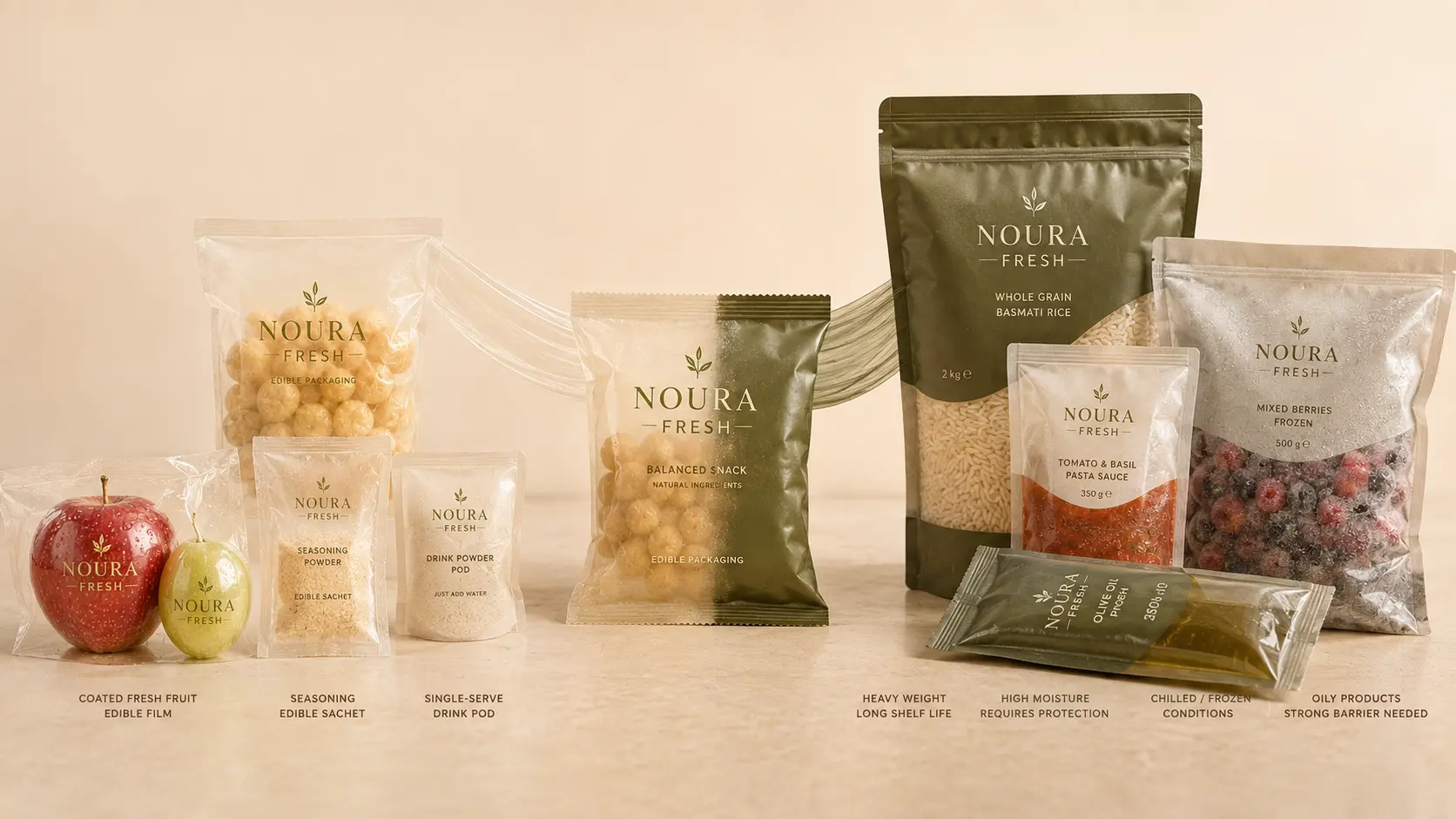
Coatings on fresh produce. Wrappers for sweets and small confectionery. Single portions eaten straight away. Small sachets for sauces, seasonings, and drink powders. What links them is short handling time and quick consumption, which keeps the material away from the humidity and rough treatment that destroy it. Those same formats are the ones recycling handles worst, so the environmental payoff is biggest exactly where the technology performs best.
Where Conventional Packaging Is Still Needed
Long shelf lives, demanding distribution, high moisture content, or serious weight, and you’re back to conventional high-barrier film. Frozen and chilled goods deal with condensation. Oily products attack most edible materials. And mechanical protection is the other sticking point — seals have to hold and films have to resist punctures, which edible materials aren’t close to plastic laminates on yet.
| Strong Potential for Edible | Conventional Still Stronger |
| Single portions | Long-distance distribution |
| Edible coatings | High-moisture products |
| Small sachets | Heavy products |
| Selected wrappers | Long shelf-life goods |
| Immediate consumption | Mechanical protection |
Packaging is a protection job before it’s anything else. When a pack fails the product spoils, and spoiled food carries a bigger environmental cost than the film that was meant to protect it.
What Does the Future of Edible Packaging Look Like?
Two things need to be improved together: the materials themselves, and the commercial machinery around making and selling them.
Better Materials and Packaging Performance
Cross-linking and reinforcement work aims to close the durability gap. Moisture resistance is the single biggest goal, since humidity defeats most edible materials in practice. Seaweed and plant-based polymers are getting more consistent through better cultivation. And composite formulations layering materials with complementary strengths remain the most practical route to decent moisture and oxygen protection in one pack.
Smarter Production and Wider Commercial Adoption
Active and antimicrobial packaging is where the commercial case gets easier, because a film that slows spoilage justifies its cost by cutting waste. Food and agricultural byproducts of fruit peel, pulp, and spent grain can all become film. Lower costs and scalable manufacturing will decide adoption speed more than any lab breakthrough will. And a better consumer experience turns a curiosity into something people actually buy a second time.
Could Edible Packaging Become a Mainstream Sustainable Packaging Solution?
There’s a genuine case in specific categories. Fresh produce coatings are already commercial. Single-serve sachets, food service items, and confectionery wrappers all suit what the technology does well. In those areas, edible formats could become ordinary within a decade.
What blocks anything wider is the number of problems that have to be solved simultaneously. Edible films would need to match plastic on barrier, durability, cost, and shelf life while clearing allergen, hygiene, labelling, and consumer acceptance hurdles that conventional film never faces.
Edible packaging will most likely become one part of a broader sustainable packaging ecosystem rather than a replacement for it. It’ll sit alongside recyclable, compostable, reusable, and lightweight formats, getting picked wherever its strengths fit the product.
Conclusion
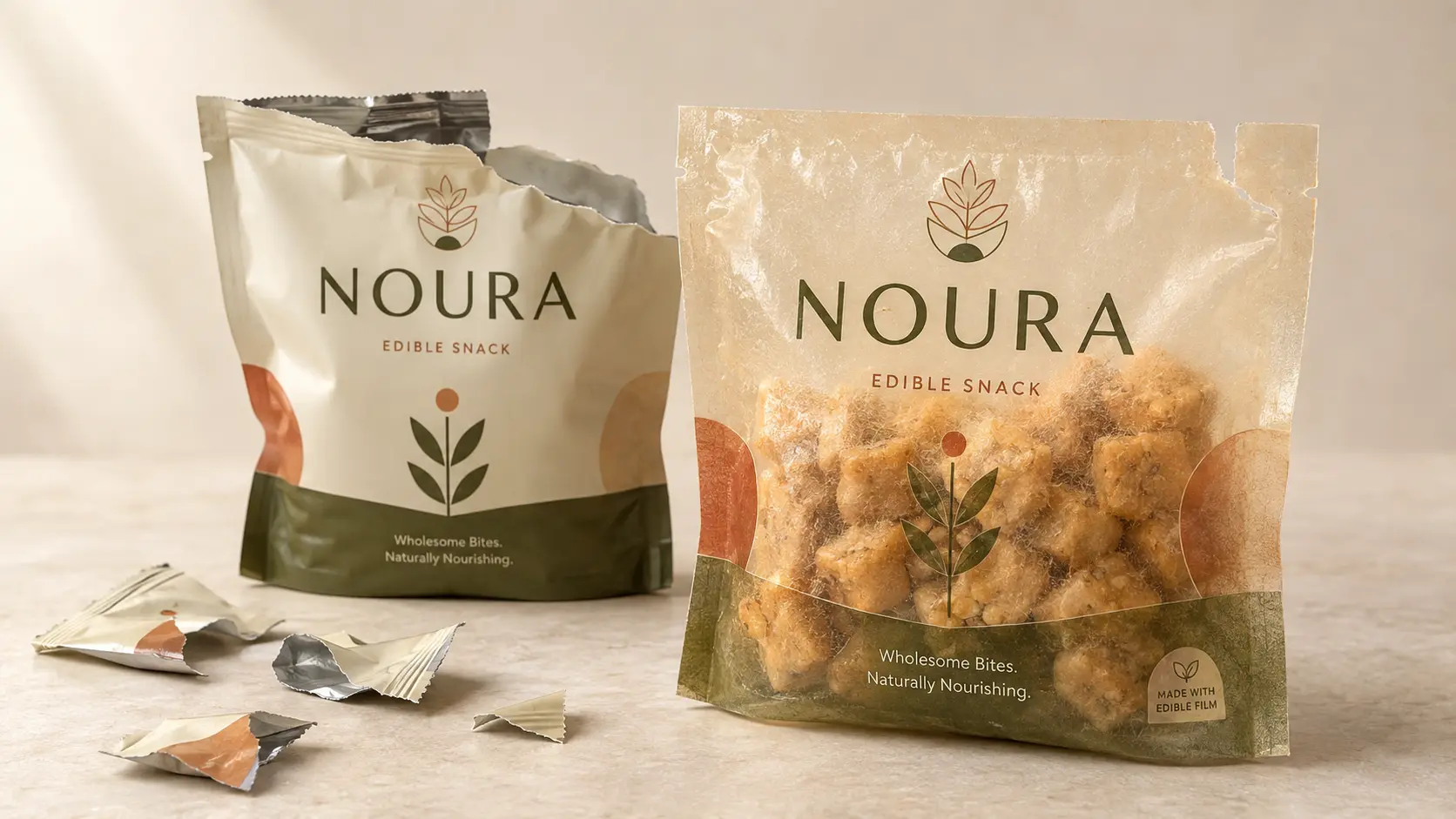
Edible packaging matters because it challenges something the industry has assumed for about a century that packaging has to end up as waste. When a pack can be eaten or safely broken down, the problem gets removed at the source rather than managed afterwards.
The opportunity is real, and so are the limits. Moisture, durability, hygiene, allergens, cost, and shelf life aren’t minor engineering details, they’re the reasons this has stayed niche. Get the balance between sustainability, safety, food protection, affordability, and consumer acceptance right in the categories where it fits, and edible packaging earns a permanent place in flexible packaging.
Let’s Build Packaging Your Product Actually Needs
Edible packaging is worth watching, but your product needs a pack that protects, ships, and sells today. At Flexible Pouches, every pouch, rollstock, and carton is made to order in 100% recyclable or plastic-free biodegradable and compostable materials with runs from 1,000 units, free worldwide shipping, and orders shipping in about 10 business days.
Tell us what you’re packaging and we’ll help you land on the right structure. Get your free quote.
FAQs
1. What is edible packaging made from?
It’s made from food-grade natural materials like seaweed extracts (alginate, agar), starches from corn or cassava, milk or plant proteins, and edible waxes. Most real products blend two or more of these because no single material handles both moisture and oxygen well on its own.
2. Is edible packaging safe to eat?
It can be, provided it’s made from approved food-grade ingredients under proper food manufacturing conditions and handled hygienically all the way to the consumer. Allergens have to be declared, since the material counts as food rather than as a container.
3. Is edible packaging biodegradable?
Yes, because it’s made from natural food materials it breaks down easily if nobody eats it. The reverse isn’t true though most biodegradable packaging for food is only built to degrade and isn’t safe to consume.
4. What are the main benefits of edible packaging?
The biggest one is that it removes packaging waste at the source instead of shifting it into a disposal system. Ingredients are renewable, coatings can extend freshness, and the film can carry nutrients or antimicrobials a plastic film never could.
5. What are the biggest challenges of edible packaging?
Moisture is the main one, since most edible films weaken as humidity rises. Beyond that, limited durability, hygiene risk, allergen restrictions, taste acceptance, and higher production costs all slow adoption.
6. Can edible packaging replace plastic packaging?
Not completely, and probably not for a long time. It suits coatings, wrappers, small sachets, and single-serve items that get eaten quickly, but anything needing long shelf life or strong moisture barriers still relies on conventional high-barrier packaging.