





















Ask most people what pet food packaging does and they’ll say “holds the food.” True, but that’s the smallest part of the job. A pouch keeps kibble fresh, traps the smell that would otherwise fill a cupboard, and sells the product before a customer reads a single word. Pick the wrong one and you’re not saving money. You’re losing sales.
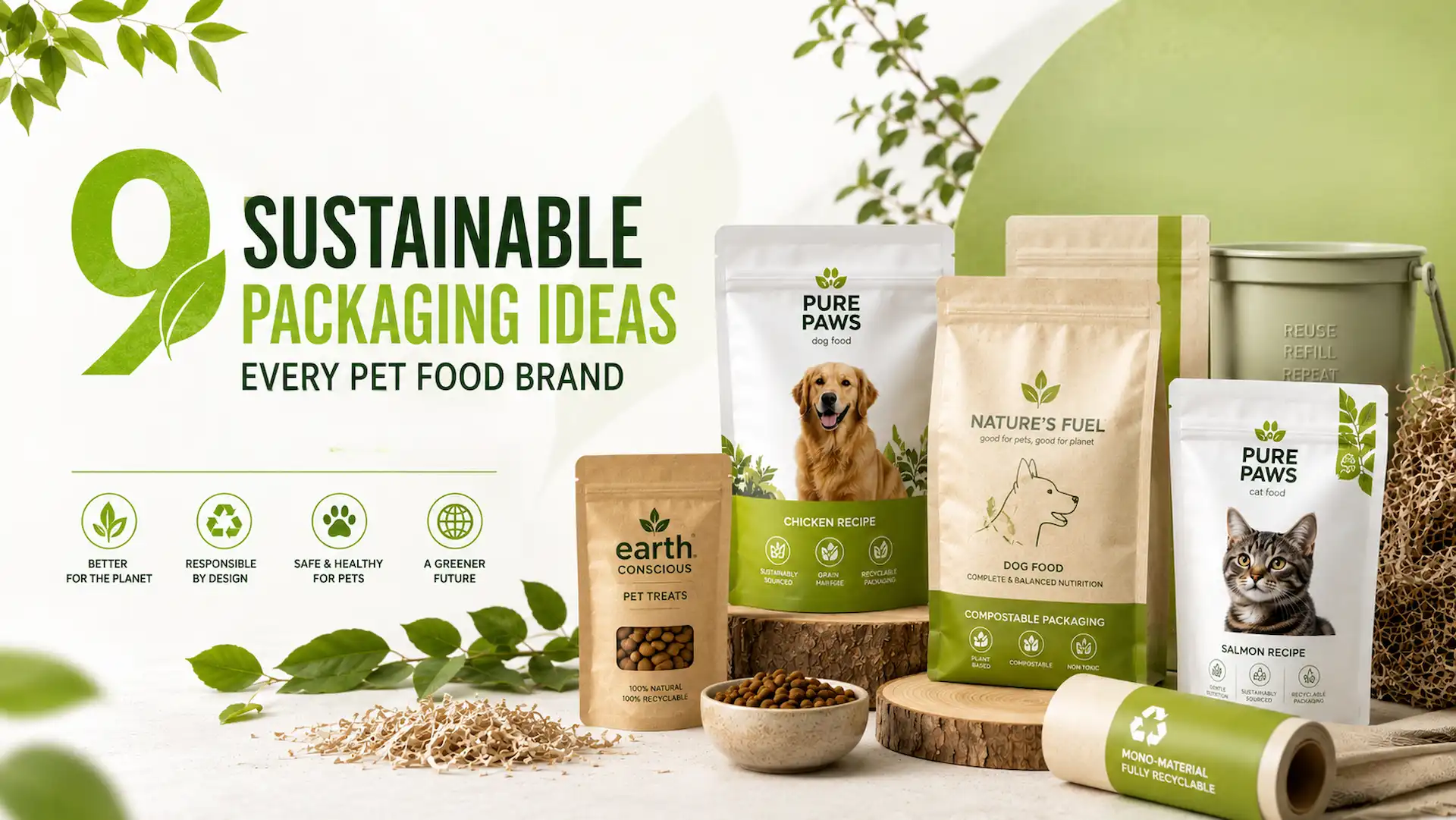
Most brands already know they want something greener. The harder question is which greener option won’t wreck the product inside. A pouch that suits crunchy biscuits can be a disaster for oily salmon treats, and switching materials without thinking it through is how good food goes stale early. What follows are nine sustainable pet food packaging ideas that actually hold up for dry food, treats, supplements, and premium lines.
Why Is Sustainable Pet Food Packaging Important for Pet Brands Today?
Something shifted in how people shop for their pets. They read the back of the bag now. They look up ingredients on their phones mid-aisle, and they form opinions about the company long before the pet ever tastes the food. To a lot of owners the dog or cat is family, and family food shouldn’t turn up in something flimsy or wasteful.
Green packaging signals that you thought past the price sticker, and shoppers notice that. What it can’t do is paper over a pouch that doesn’t work. Split a seam, spring a leak, or let the kibble go soft, and no amount of recycled content will save you. You’ve just handed the customer a reason to try someone else.
What Should Pet Food Brands Check Before Choosing Sustainable Packaging?
Fall for an eco material too early and you’ll regret it. The smarter move is to look hard at your own product first, because the right pet food sustainable packaging is decided by what’s going inside the pouch, not by whatever’s trending. Run through this list before you shortlist anything:
- What’s the product? Dry food, treats, supplements, freeze-dried, wet food. They don’t behave the same.
- Shelf life. How long does it have to stay good?
- Moisture and oxygen. Serious protection, or only a little?
- Odor, which fishy and meaty recipes throw off in spades.
- Grease. Oily treats bleed straight through the wrong film.
- Weight. A full bag can’t be allowed to sag or split.
- Print quality on that exact surface, since a sharp design can look muddy on the wrong material.
- Your green route: recyclable, compostable, or biodegradable.
- The disposal message you’ll print for customers.
Tick these off and the harder decisions more or less make themselves.
1. Choose Recyclable Mono-Material Pouches
A standard pouch hides a problem: it’s usually several plastics laminated into one film. That combination guards the food beautifully. It also makes the thing nearly impossible to recycle, since the layers refuse to separate, so it heads straight for landfill. Mono-material pouches were built to fix exactly that. Made from a single plastic family, they’re something a recycling plant can actually take.
For a brand that wants a greener footprint without redrawing its whole design, this is the gentlest place to start, and probably the best sustainable pet food packaging switch if change makes you nervous. The shape stays the same. So does the zipper. So does the shelf presence your buyers already know. Only the film underneath changes.
2. Use Biodegradable or Compostable Packaging for Selected Products
This is the option people get most excited about, and also the one they most often misuse. Biodegradable and compostable pouches genuinely break down instead of sitting in a landfill for fifty years, which is a real story to tell. This kind of biodegradable sustainable pet food packaging shines on small treats, trial packs, light snacks, and natural brands that want their values right there on the front.
The limit is barrier strength. Compostable films often can’t protect heavier or oilier products the way a long shelf life demands, so a treat pack might be fine while a fatty meat recipe isn’t. Test it properly before you order a pallet of the stuff.
Important Note: Compostable is not the same as “bin it anywhere.” Most of these pouches only break down in a commercial composting facility, never a backyard heap. Say which type yours is on the pack, or you’ll baffle the exact shoppers you set out to impress.
3. Pick High-Barrier Films to Keep Pet Food Fresh
Most eco-packaging advice glosses over this section. That’s a costly habit. Ask yourself a simple question: what’s the point of a recyclable pouch if the food inside goes off? You haven’t saved anything. You’ve created twice the waste. Pet food is delicate, and air, moisture, oil, light, and odor are all lining up to spoil it.
Freshness has to come first, and that’s non-negotiable for products like:
- Dog treats and chews
- Cat snacks
- Dry kibble
- Freeze-dried meals
- Supplements and powders
Run the scenario forward. A flimsy pouch lets the food turn, the customer throws out food and packaging together, and next month they buy the competitor. Recyclable or not, there’s nothing sustainable about that outcome.
4. Add Resealable Zippers to Reduce Waste After Opening
A pouch does its hardest work after it’s been opened. Miss the seal, and air gets in, the food dries out, and whatever’s left at the bottom gets tossed. A resealable zipper shuts that door. Seal it after every use and the food holds up from the first handful to the last.
Anything a customer opens daily benefits, dog treats, cat snacks, dry food, supplements, you name it. The bag lasts longer, waste drops, and people feel better about the brand. Even the zippers come in recyclable and compostable versions these days, so convenience and your green goals don’t have to fight.
5. Reduce Extra Packaging Size and Empty Space
We’ve all bought the bag that turned out to be two-thirds air. It’s annoying. It also wastes film, drives up shipping costs, and quietly tells the shopper you’re padding the product.
The fix borders on obvious: match the pouch to what’s actually inside. Trim the empty space and you trim the material. Flexible pouches are already light on resources next to rigid tins and cartons, so a smaller footprint pushes that advantage further still. Just don’t go so lean that the bag can’t survive filling, shipping, and a few knocks on the shelf. Handled well, right-sizing is one of the least glamorous but most reliable sustainable packaging pet food wins around.
6. Use Kraft or Natural-Look Pouches for a More Eco-Friendly Brand Feel
Looks do heavy lifting on a shelf, and kraft nails a particular one: earthy, honest, unfussy. That matte brown, paper-like surface reads as natural before a customer has processed a single word. It’s a natural fit for premium, health-led, and eco-minded ranges, which is why so many sustainable pet food packaging brands reach for it.
Kraft has one weakness worth flagging. On its own it makes nothing greener. If the outside says natural and the material inside doesn’t back it up, sharp buyers spot the mismatch fast. Pair the honest look with genuinely recyclable or compostable film and the story finally rings true.
7. Add Clear Recycling or Disposal Instructions on the Pack
Tiny detail, outsized results. The greenest pouch on the market still fails if the buyer has no idea what to do with the empty. People want to dispose of things properly, most of them do, but without guidance the pouch just lands in general waste.
Do the thinking for them. A handful of plain lines on the pack goes a long way:
- “Recycle where facilities exist”
- Where to take soft plastics for drop-off
- Composting steps, if it’s a compostable pouch
- A prompt to check local rules, which vary more than people think
- Separate notes for the zipper or label when they’re handled differently
Important Note: Keep it short and specific. Vague lines like “eco-friendly, please recycle” leave people guessing and change nothing. Tell them precisely how and where, and a much bigger share of your packaging ends up recycled rather than binned.
8. Offer Refill Packs or Larger Pouch Sizes for Repeat Buyers
Loyal customers buy the same thing over and over, and that habit is easy to turn into a packaging saving. A single large pouch uses less material per serving than five small ones. For subscription models and bulk buyers, the numbers add up in a hurry.
There’s a bit of engineering to get right. More weight means the seams and film have to handle filling, storage, a rough journey, and standing upright on a shelf without buckling. Sort that out, and the refill or bulk size becomes an eco-friendly upsell your best customers are actually glad you offer.
9. Work With Sustainable Pet Food Packaging Suppliers
If I could move one idea to the top of this list, it’d be this one, because the supplier sits underneath every point above. Too many of them stamp “eco-friendly” and “green” all over a website and offer nothing to prove it. Words are cheap. Evidence isn’t.
So before you buy sustainable pet food packaging, ask them to prove it. Any of the good sustainable pet food packaging suppliers will hand these over without hesitation:
- The full material breakdown and structure
- Food-contact safety paperwork
- Real barrier test results, not marketing lines
- Certificates that the film is recyclable or compostable
- Print options and finishes
- Minimum order quantity
- Honest lead times
- Physical samples you can handle
- Support testing the pouch on your own product
Then watch the response. Dodge the questions, and they’ve answered you anyway. Meet them head-on, and you’ve probably found a keeper.
Which Sustainable Packaging Idea Is Best for Your Pet Food Product?
There’s no universal pouch, no single right answer that covers every product. It hangs on what you sell and who buys it. Treat the table below as a compass, not a commandment:
| Pet Food Product | Best Packaging Idea | Why It Works |
| Dry kibble | Recyclable high-barrier pouch | Locks in freshness and still recycles cleanly |
| Dog treats | Resealable stand-up pouch | Reseals easily and keeps treats good for longer |
| Cat treats | Small recyclable pouch | Light, handy, next to no waste |
| Pet supplements | High-barrier pouch | Shields active ingredients from air and damp |
| Trial packs | Small lightweight pouch | Least material for a one-off taster |
| Premium pet food | Kraft or matte pouch | Delivers the natural, upmarket shelf look |
| Subscription pet food | Refill or bulk pouch | Spreads far less packaging over repeat orders |
Start here, then adjust for your own shelf life, budget, and how your customers actually shop.
How Can Pet Food Brands Avoid Greenwashing in Packaging?
Greenwashing is packaging that looks the part without earning it. A splash of green ink, a leaf symbol, one bold claim, and nothing underneath to support it. Shoppers have caught on, and the second they smell a bluff, your credibility drops. So keep every claim simple and provable.
The usual traps:
- Green colors and leaf logos over material that isn’t sustainable
- Big claims with no evidence behind them
- Cheap, thin film that ends up damaging the product
- Launching with no shelf-life testing done
- Recycling instructions that are missing or muddled
- Copying a rival’s approach without checking your own product
The habit that protects you is dull but dependable: claim only what you can defend. “Recyclable where facilities exist” beats a cheery, unprovable “100% eco-friendly” every single time.
Common Mistakes Pet Food Companies Make With Sustainable Packaging
Going green is the right instinct. Doing it in a hurry is where it falls apart. Nearly every mistake below traces back to rushing the call, or locking onto one factor while the rest slip through the cracks. Slow down a little and you save yourself a lot of money.
The repeat offenders in pet food companies sustainable packaging plans:
- Grabbing the cheapest pouch instead of the correct one
- Skimping on odor and moisture protection
- Approving a bulk run before a sample’s been tested
- Bulking out the design with oversized, half-empty bags
- Ditching the resealable feature customers now assume they’ll get
- Never once checking supplier certificates or material specs
Avoid that lot and you’re already ahead of most of what’s sitting on the shelf.
Conclusion
Sustainable pet food packaging was never about swapping one material for another and calling it done. It’s about a pouch that protects the food, throws away less along the way, and earns trust from the people reaching for it. Get that mix right and the whole experience holds together, from the first scoop to the last one in the bag. That’s when “green” stops being a slogan and starts doing real work for the brand.
It always comes back to the same handful of basics: the product, its shelf life, what your customers genuinely need, and a supplier you can trust. Get those lined up and you’ll have packaging that looks good, works hard, and holds up to scrutiny. The brand wins, the buyers win, and so do the animals it all comes down to in the end.
Ready to Create Better Sustainable Pet Food Packaging?
Ready for custom pet food packaging that keeps the product fresh, earns a second look on the shelf, and stands behind every sustainability claim you make? Explore recyclable, biodegradable, kraft, and high-barrier pouches built for pet food brands that actually mean it. Request a free quote and start shaping a pouch that pulls its weight.
FAQs:
1. What is sustainable pet food packaging?
Boiled down, it’s packaging that treads lighter on the environment while still protecting what’s inside. Recyclable, compostable, and biodegradable materials all count, along with right-sized pouches that skip the extra plastic. It only earns the name if the food stays fresh and the bag stays strong.
2. What is the best sustainable packaging for pet food brands?
There isn’t one, really. It shifts depending on the product. Dry food pairs nicely with a recyclable high-barrier pouch. Treats? A resealable stand-up bag keeps them fresher for longer. And premium ranges usually suit kraft, for the natural look. Match the material to your shelf life and your customer and you’ll be close.
3. Is biodegradable sustainable pet food packaging suitable for all pet food products?
Not for everything, no. Biodegradable sustainable pet food packaging is brilliant for treats, sample packs, and lighter snacks. Where it struggles is with oily recipes or anything meant to sit on a shelf for months, since compostable films don’t always hold up as a barrier. Run a shelf-life test on your actual product before you commit, not a similar one.
4. Can recyclable pet food pouches keep food fresh?
They can, yes, and it surprises people. A recyclable or mono-material pouch can still pack in high-barrier layers that block moisture, air, and smell. You just have to match the structure to your specific product rather than grab something generic, so freshness and recyclability aren’t pulling in opposite directions.
5. How can pet food brands reduce packaging waste?
A few things stack up here. Size the pouch to the product so you’re not shipping empty space. Add a resealable zipper and the food lasts longer, which means less of it gets thrown out. For regulars, refill or bulk packs cut the packaging per serving. And printing clear disposal instructions means more of those pouches actually get recycled instead of guessed at.
6. Where can brands buy sustainable pet food packaging?
From a supplier who can actually prove the claims, not just print them. Ask to see material details, food-safety data, and recyclable or compostable certificates before you order anything. The good ones won’t make you drag it out of them. They’ll offer samples, custom sizing, low minimums, and help testing the pouch on your product too.