


















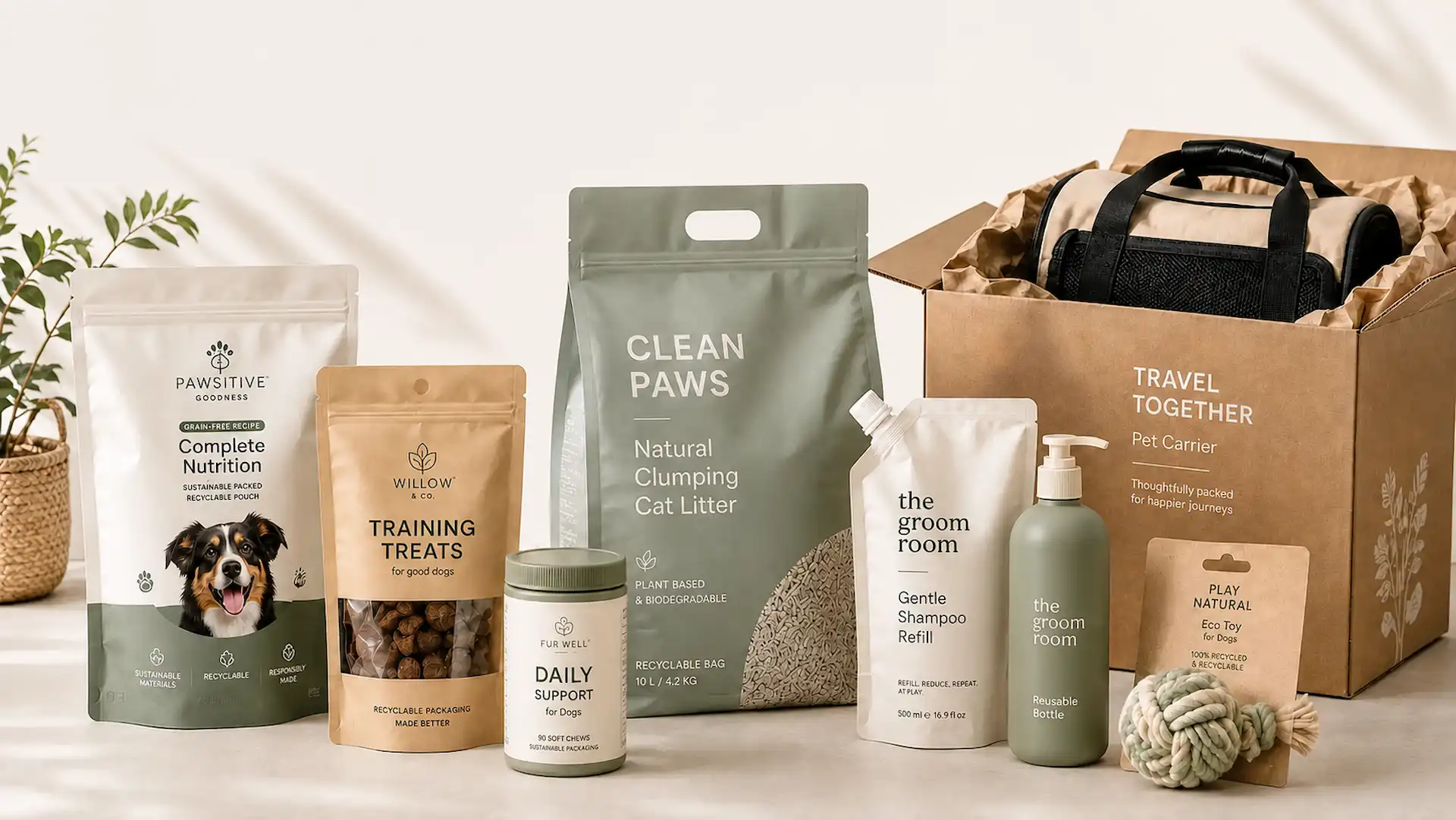
A bag of kibble lasts a month. Its packaging lasts a few hundred years. That gap is the whole reason sustainable pet product packaging has become a boardroom topic, and yet most brands only ever fix the kibble bag. The treat pouch still has a foil layer nobody can recycle. The litter sack is a plastic laminate with a paper-look print. The shampoo comes in a fresh bottle every month, the collar hangs on a clamshell the size of a dinner plate, and the carrier ships in a box that could hold two of them. Fix one product and you’ve fixed a fraction of the problem.
The good news is that most of these fixes are cheaper and simpler than brands expect. A treat pouch built as a mono-material film keeps the same shelf life as the old foil laminate and can go straight into a soft-plastic recycling stream. A collar on a small recycled card costs less than the clamshell it replaces. A shampoo refill pouch cuts plastic by around three quarters and gives the customer a reason to come back. The trick is matching each product to the right material and the right end-of-life route, and that’s what the rest of this guide walks through, product by product, with the materials, design details and claims rules you’ll need along the way.
What Makes Pet Product Packaging Sustainable?
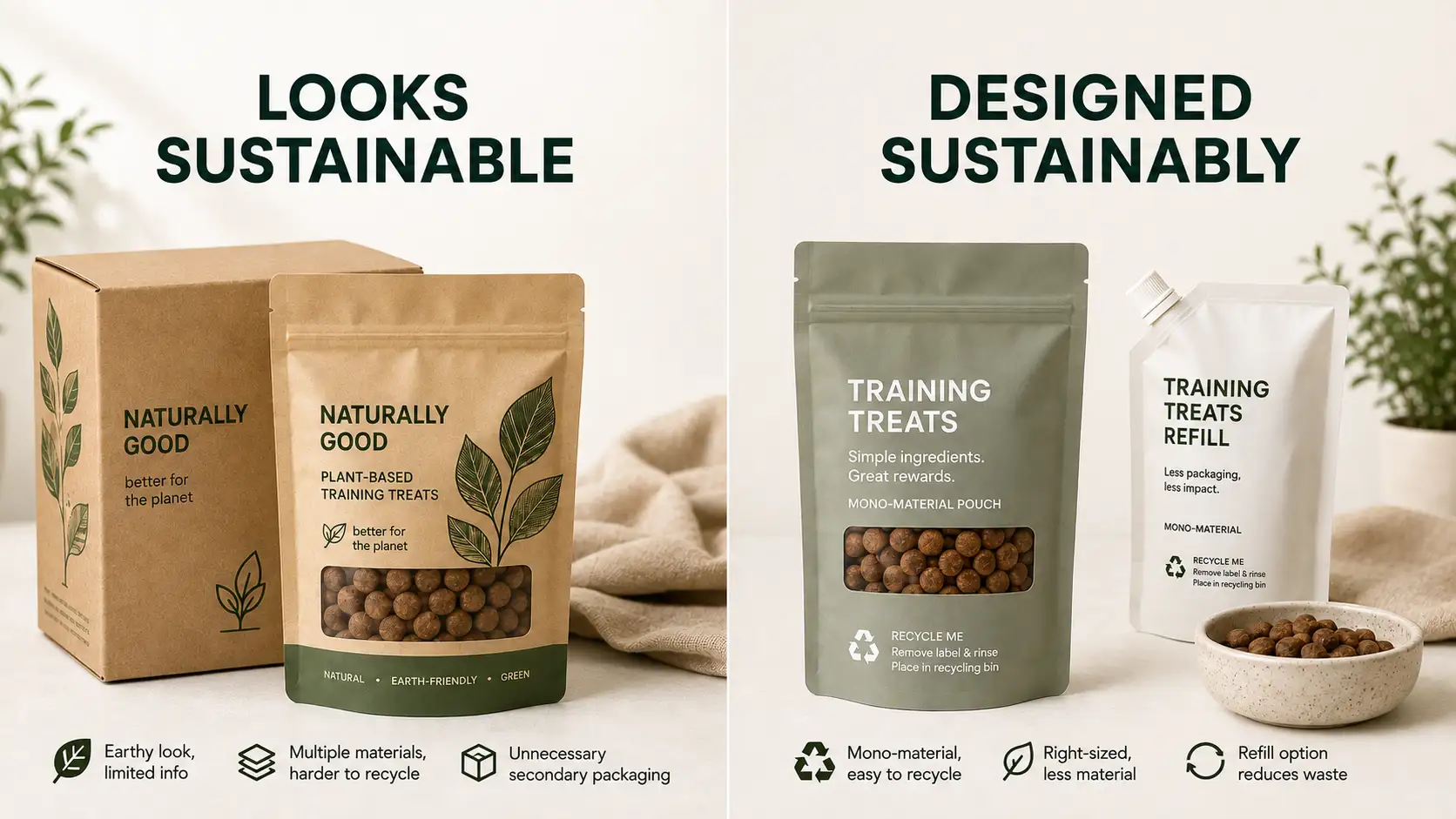
Here’s the thing about the word “sustainable.” It’s cheap. Anyone can print it. A brown paper look, a little green leaf, one plant-based layer buried inside a laminate, and suddenly a package is “eco.” None of that means anything on its own.
What actually counts is a handful of decisions that add up:
- Less material. Thinner films and lighter cartons that still do the job.
- Right-sized packaging. No dead air, no oversized box for a small item.
- Recyclable structures. Built so a sorting plant can process them, not just so the label can say “recyclable.”
- Recycled content. Put in where it’s safe and suitable.
- Compostable materials where they make sense. Only where there’s a real composting bin at the other end.
- Refillable and reusable formats. For the things people buy every month anyway.
- Product protection. Spoiled kibble is the biggest waste of all.
- Clear disposal instructions. So the customer knows what to do with the empty pack.
Eco-friendly pet packaging is the total of these, not any single one. Sustainable pet care packaging is really just packaging that does its job with the least stuff, and then has somewhere sensible to go afterwards.
Important Note: A pack that looks natural is not a pack that performs sustainably. Kraft-coloured pouches are very often a plastic laminate with a paper-print finish. Check the actual layer structure before you put any claim on the front.
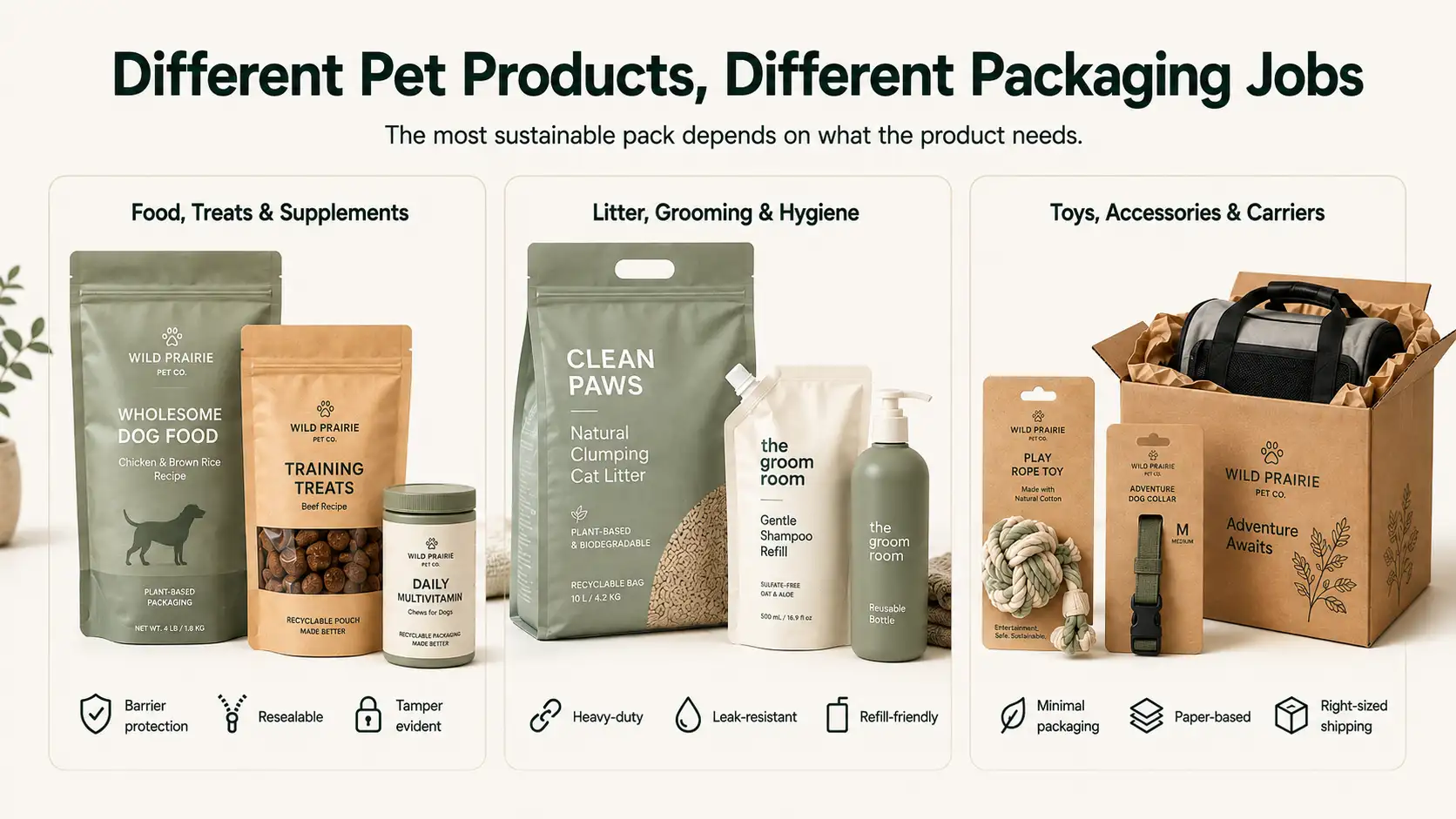
Why Pet Products Need Different Packaging
There’s no universal green pack, and anyone who tells you otherwise is selling one. A fiber sleeve is perfect for a tug toy. Put freeze-dried liver in it and you’ll have rancid liver in about a fortnight. A high-barrier pouch keeps kibble fresh for a year. Wrap a collar in it and you’ve wasted a barrier film on something that doesn’t spoil.
Each pet product asks something different of its packaging:
- Moisture protection for dry food, treats and powdered supplements
- Oxygen barriers so the fats in food and treats don’t go off
- Light protection for vitamins, oils and some wet foods
- Grease and oil resistance for fatty treats and dental chews
- Odor control for litter, treats and anything fishy
- Product weight in litter, big kibble bags and beds
- Leakage protection for shampoos, conditioners and liquid supplements
- Puncture resistance for sharp kibble corners and rough handling
- Shelf life that runs from a few weeks to over a year
- Repeated opening and closing for anything used daily
- Tamper protection for supplements and medicated products
- Shipping durability for anything that meets a courier
Line those up and it’s obvious why one material can’t cover the lot. The most sustainable package is the one that strips out unnecessary material while still protecting the pet product properly. Save two grams of plastic and lose a whole bag of treats to spoilage, and you’ve gone backwards.
Sustainable Packaging for Different Pet Products
This is the part that matters most, so it gets the most room. Let’s go group by group.
Pet Food, Treats and Supplement Packaging
Food and treats are the biggest slice of the market and the trickiest to pack sustainably, because freshness isn’t negotiable. Dry kibble, wet and semi-moist food, freeze-dried raw, dog treats, vitamin chews, powdered supplements. All of it touches something a pet eats, so material safety comes first, every time.
For a long time the answer was a multi-layer laminate with foil or nylon in the middle. It kept everything fresh and none of it could be recycled. The move now is to mono-material pouches, where every layer comes from one plastic family, usually PE or PP. You still get a strong moisture and oxygen barrier, and the empty pouch can go into a store drop-off or soft-plastic stream. If you’re weighing up which pouch style suits your product, our post on choosing the right custom flexible pouch walks through the options.
For recyclable pet food packaging and dog treat packaging, look for:
- A high-barrier mono-material film that matches the shelf life you actually need
- A zipper, so the pack reseals and the last third of the bag doesn’t go stale
- Lightweight flexible packaging instead of a tub or tin
- Tamper-evident seals on supplements and medicated chews
- Food-contact approval for the whole structure, not just the inner layer
- A recycling label that says where the empty pack goes
Pet treat pouches are honestly where flexible packaging shows off. A stand-up pouch with a zipper uses a fraction of the material of a tub, ships flat, and prints well in small runs. Custom pet treat bags in a mono-material film give you the brand, the freshness and a real end-of-life route in one go. Pet supplement packaging works the same way, with light protection and tamper evidence added on top.
Pet Litter, Grooming and Hygiene Packaging
Litter is a brute-force problem. One bag might hold 5 pounds or 40. It gets dragged along a shop floor, dropped in a boot, stacked six high in a warehouse. Sustainability here is mostly about not splitting. A bag that bursts in the store is a mess, a return and a wasted product, which is a far bigger waste than a slightly heavier film.
For cat litter packaging, focus on:
- Tear and puncture resistance that matches the fill weight
- Strong bottom and side seals
- Moisture protection so clumping litter doesn’t clump early
- A carry handle that won’t rip out
- Recyclable heavy-gauge mono-material PE
- Paper sacks only for light, dry, non-clumping litters
Recyclable cat litter bags are genuinely doable now because PE can be run thick enough to take the load. Paper and moisture don’t get on, so keep paper for the wood and plant litters that stay dry.
Grooming and hygiene is a different animal. Shampoo, conditioner, wipes, dental gel, cleaning spray, grooming powder. All of it has to not leak, and nearly all of it gets bought again and again. That repeat purchase is exactly where sustainable pet care packaging pays off.
- Refill pouches for shampoo and conditioner use roughly a quarter of the plastic of a new bottle
- Spouted pouches pour cleanly into the bottle the customer already has
- Lightweight containers with thinner walls for products that don’t need a heavy bottle
- Leak-resistant closures on wipes and gel packs, so the product doesn’t dry out and get binned
- Concentrates that ship small and get diluted at home
Pet grooming packaging doesn’t have to be a heavy bottle to feel premium. A well-printed spouted pouch next to a bottle on the shelf looks more current, not less.
Pet Toy, Accessory and Carrier Packaging
This is the category brands forget, and it’s where the easy wins hide. Toys, collars, leads, harnesses, bowls, beds, travel gear, carriers. None of it spoils. None of it needs a barrier. Most of the packaging exists to hang the thing on a hook and get it home undamaged. Which means a lot of it can simply go.
For pet toy packaging and sustainable pet accessory packaging, the moves are all subtractions:
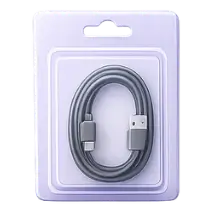
- Swap the plastic clamshell for recycled paperboard or a fiber sleeve
- Shrink the hang card to the size the hook actually needs
- Lose the plastic window, or die-cut a hole instead
- Put bowls, beds and travel gear in cartons that fit them
- Ship in recycled-content boxes with paper void fill
- Drop the secondary packaging unless there’s a real reason for it
A rope toy on a small recycled card with a label is about as low-impact as retail packaging gets. A collar in a fiber sleeve with a hang hole goes in the paper bin at home. Eco-friendly pet carrier packaging comes down to the outer box and what’s inside it. Sustainable packaging for pet carrier brands really means a recycled corrugated carton cut to the carrier’s size, molded pulp or paper padding instead of foam, and no plastic bag round the carrier unless something genuinely needs it.
Best Materials for Sustainable Pet Packaging
Five main routes. None wins everywhere, so it helps to see them next to each other.
Mono-Material PE and PP
Single-polymer films where the outer layer, barrier and seal all come from the same family. Good moisture barrier, decent oxygen barrier with a thin EVOH layer, solid seals. Recyclers like them because there’s nothing to separate. This is the default for food, treats and supplements when you need performance and recyclability at once. Our post on recyclable stand-up pouches covers what to check before you switch.
Post-Consumer Recycled Materials
PCR packaging is plastic that’s already lived one life as a bottle or tub. It cuts demand for new plastic and lowers the pack’s footprint. The catch is that food-grade PCR film is still scarce, so recycled-content packaging shows up more in bottles, caps, tubs and non-food pouches. For a shampoo bottle or a litter scoop, it’s a very practical choice today.
Paper and Fiber-Based Packaging
Paper-based pet packaging has the recycling route everyone already knows. Ideal for toys, accessories, cartons and some dry litter. The weakness is barrier. Plain paper doesn’t stop moisture or grease, so for food it needs a coating or liner, and the coating can make it harder to recycle. Kraft pet packaging looks great; just make sure the look isn’t hiding a laminate.
Compostable Materials
Certified compostable films are usually kraft paper with a PLA or similar bio-based seal layer. They suit dry products with a short-to-medium shelf life. They struggle with long shelf life and high-fat treats because the barrier is lower. And home compostable and industrially compostable are two different certifications, not one.
Refillable and Reusable Packaging
The route with the biggest long-run saving. One decent container plus refill pouches can replace dozens of single-use packs a year. Works best for grooming, hygiene and anything else people rebuy monthly.
Material Comparison
| Material | Main Benefit | Main Limitation | Best Pet Product Uses |
| Mono-material PE/PP | Recyclability and performance | Recycling access varies | Food, treats, supplements |
| PCR materials | Reduces virgin material | Application limitations | Bottles, tubs, selected pouches |
| Paper/fiber | Familiar recycling route | Lower barrier performance | Toys, accessories, litter |
| Compostable films | Alternative end-of-life option | Composting access varies | Selected dry products |
| Refill/reuse | Reduces repeat packaging | Requires suitable system | Grooming and hygiene |
Pet Packaging Design That Reduces Waste
Material gets all the attention. Design decides how much material you use. A recyclable pouch twice the size it needs to be is still wasteful, it’s just wasteful with a better label.
The boring details are where the savings live:
- Right-sized pet packaging. A 500 g treat pouch that holds 500 g, not 800.
- Lightweight structures. Down-gauge the film wherever the product allows.
- Less secondary packaging. Drop the carton round the pouch unless it’s doing something.
- Appropriate barrier. The barrier the product needs, not the highest one on the price list.
- Resealable pet pouches. Stop half a bag of treats going stale and into the bin.
- Spouts for liquids and refills. Less spillage, fewer bottles.
- Handles for heavy products. A handle on a litter bag stops rips and drops.
- Reduced plastic windows. Smaller, or none, makes the pack easier to recycle.
- Efficient e-commerce packaging. Flat-packed pouches and snug cartons mean less empty air in every parcel.
Sizing is harder than it sounds because density is all over the place. Two products can weigh exactly the same and need completely different pouches. Our flat bottom pouch size chart shows this with real examples.
One more thing on packaging waste reduction. A pack that keeps kibble fresh for the full month, or stops shampoo leaking in the post, is doing more for the planet than a thinner film that fails. Product waste is packaging waste, just wearing a different hat.
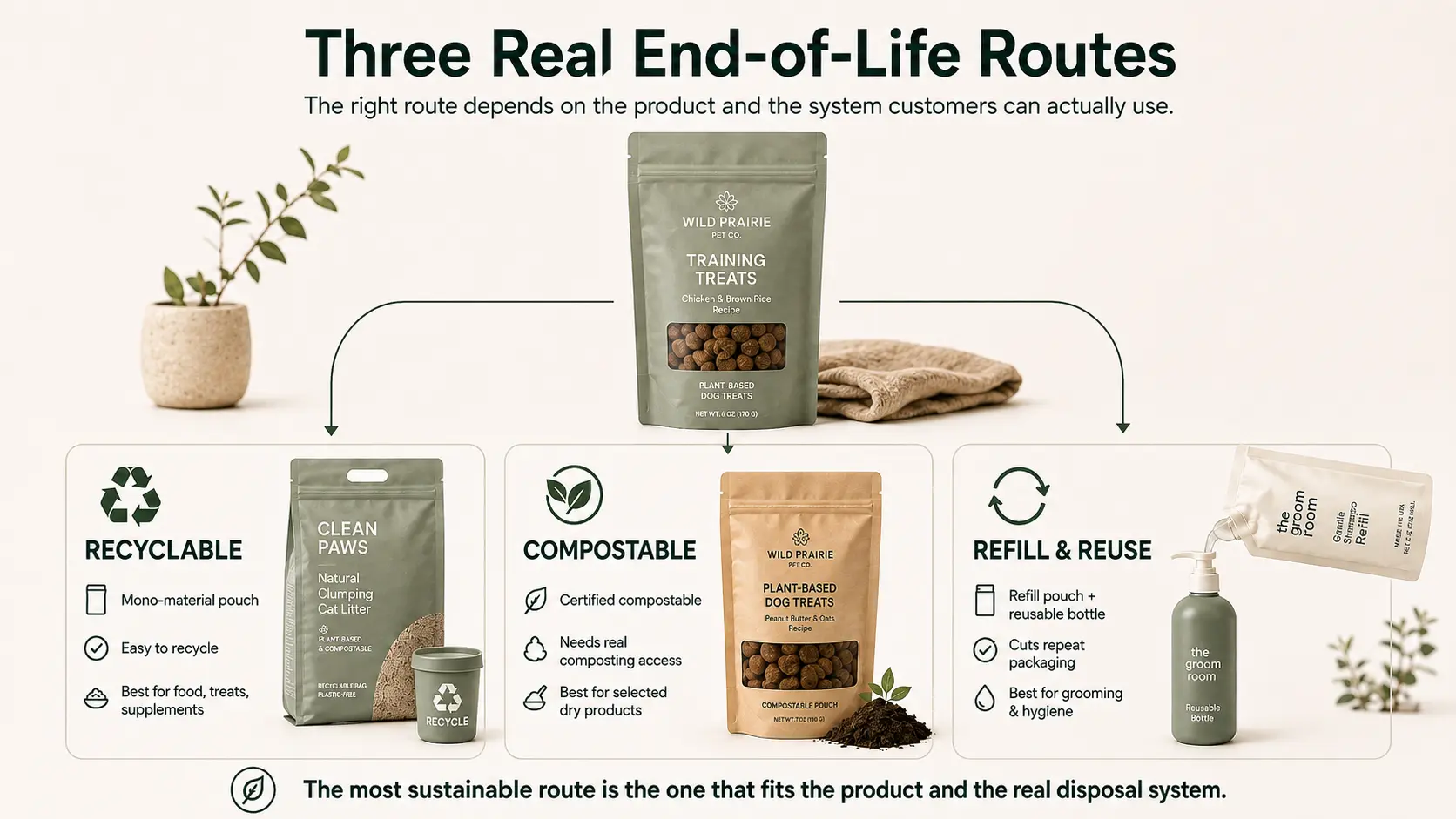
Recyclable, Compostable or Reusable Pet Packaging?
Everyone wants to know which of the three is “best.” Honest answer: it depends on the product, and on what your customer can actually do with the empty pack on a Tuesday evening.
Recyclable pet packaging
- Works where soft-plastic or store drop-off recycling exists
- Mono-material structures keep sorting simple
- Needs clear on-pack instructions, because plenty of people still bin every pouch
- Best fit: food, treats, supplements, litter
Compostable pet packaging
- Should use certified materials, not vague “biodegradable” language
- Still has to protect the product for its full shelf life
- Only makes sense where customers have home or industrial composting
- Best fit: dry, shorter-life products sold to people who compost
Reusable and refillable pet packaging
- Cuts packaging across many purchases instead of one
- Needs a container customers will actually keep
- Best fit: grooming, hygiene, anything rebought regularly
There’s interesting stuff happening at the edges too, from films that dissolve to wrappers you can eat. We had a look at where edible packaging might go. For pet products today, though, the three routes above are the practical ones.
The takeaway is plain. The best option depends on the pet product, the performance it needs, and the end-of-life route customers can realistically use. A compostable pouch sold in a town with no composting facility ends up in landfill like everything else.
Sustainable Pet Packaging Claims and Certifications
Getting the material right is half the job. Describing it honestly is the other half. Regulators in the US, UK and EU are now going after vague green claims, and pet brands aren’t exempt.
A few rules keep you out of trouble:
- Don’t say “100% eco-friendly” or “planet safe”
- State recycled-content percentages accurately and keep the paperwork
- Give recycling instructions that match where the pack can really be recycled
- Say whether it’s home compostable or industrially compostable
- Don’t use a kraft look as evidence of anything
- Get material data and certificates from your supplier in writing
- Check food-contact rules for anything a pet eats
- Keep an eye on regional rules, especially the EU, where packaging law is tightening fast
Certifications and programs worth knowing:
- How2Recycle for on-pack recycling labels in North America
- ASTM D6400 for industrially compostable plastics
- ASTM D6868 for compostable coatings on paper
- EN 13432 for compostable packaging in Europe
Check what’s in the coating as well. Some grease-resistant papers and films have used PFAS chemicals, which are now restricted in a growing list of markets. Our post onPFAS-free packaging explains what’s changing and what to ask your supplier.
Important Note: “Biodegradable” and “compostable” are not interchangeable. Biodegradable has no set timeframe or conditions attached. Certified compostable means the pack breaks down in a defined time under defined conditions. Use the certified term, and name the certification.
How to Choose Sustainable Pet Packaging
All of this boils down to three steps when you sit down to spec a new pack.
Match Packaging to the Pet Product
Start with the product, never the material. Write down:
- Weight of the fill
- Moisture sensitivity
- Oxygen sensitivity and fat content
- Light sensitivity
- Grease or oil content
- Odor strength
- Leak risk for liquids and gels
- Shelf life you need
- Puncture risk from sharp pieces
- How often the pack gets opened
A freeze-dried treat scores high on moisture, oxygen and grease. A rope toy scores zero on all of it. That list alone rules out most materials before you’ve looked at a sample.
Choose a Realistic End-of-Life Route
Now pick one: recycling, composting, reuse or refill. The choice has to match both the material and the waste system your customers actually use. Selling online across the US? Store drop-off for mono-material PE is realistic. Selling in a region with kerbside soft-plastic pickup? Even better. Selling compostable pouches to customers with no composting access? The pouch won’t deliver what it promised.
Test Pet Packaging Before Production
Test filled samples, not empty ones. Check:
- Seal strength with product inside
- A drop from waist height onto concrete
- A full courier cycle
- Leaks through the spout or cap
- Puncture resistance with your actual kibble or chews
- Shelf life under real storage conditions
- Opening and reclosing over several weeks
- Whether the print scuffs
While you’re at it, confirm the material structure, barrier figures, certifications, recycled content, food-contact status, custom sizes, print options, MOQ and lead times in writing. It’s dull. It saves you a reprint.
Choosing the Right Pet Packaging Partner
Your supplier shapes how sustainable your packaging really is. A good one gives you straight answers and real numbers. A weak one gives you a brochure with a leaf on it.
Ask any potential supplier about:
- The exact layer-by-layer structure of every option
- Whether it’s recyclable, and through which stream
- The recycled-content percentage and where it came from
- Compostability certifications by name and number
- Actual moisture and oxygen barrier figures
- Food-contact suitability for pet food and treats
- Custom pouch sizes so you can right-size the pack
- Closures and features like zippers, spouts, handles and tear notches
- Print capability and minimum run sizes
- Samples and prototypes with your product inside
- MOQs and lead times for first runs and repeats
- Quality control, and what happens when something goes wrong
Plenty of brands start on stock pouches and go custom later. Nothing wrong with that, but know the trade-offs early. Our comparison of premade vs custom pouches walks through when each makes sense. And don’t underestimate low minimums. A supplier who’ll print 1,000 units lets you trial a sustainable format on one line before you bet the whole range on it.
Conclusion
It comes down to three things. Protect the product. Cut the packaging that isn’t doing anything. Pick an end-of-life route your customers can actually use. A pack that does all three is doing well, whatever it’s made of.
And that goes for the whole aisle, not just the food shelf. Treats, supplements, litter, grooming products, toys, accessories, carriers. Each has its own needs and each has a better option than the default. Start with the product, be honest on the label, and ignore whichever green trend is shouting loudest this year.
Find the Right Packaging for Your Pet Product
Treats, supplements, litter, grooming refills, toys, carriers. Whatever sits on your shelf, we’ll build the pack around it. Recyclable mono-material pouches for anything a pet eats, home-compostable kraft where it genuinely fits, spouted refill pouches for grooming, and paper-based options for the rest. Any custom size, digitally printed, minimums from 1,000 units, and the material data to back up every claim you put on the front.
Get a Quote for Your Pet Packaging →
FAQs
1- What is the most sustainable packaging for pet products?
There isn’t one. A lightweight mono-material pouch for food and treats, recycled paperboard for toys, refill pouches for grooming. The right answer is the one that fits the product and can actually be recycled, composted or reused where your customers live.
2- Is recyclable pet food packaging really recyclable?
It is if the film is a genuine mono-material and your customer has somewhere to take it, usually a store drop-off in North America. A How2Recycle label on the pack tells them exactly where it goes.
3- What packaging is best for pet treats and supplements?
A resealable stand-up pouch in a high-barrier mono-material film. It keeps moisture and oxygen out, reseals after every use and uses far less material than a tub. Add tamper evidence for supplements.
4- Can cat litter packaging be recyclable?
Yes. Heavy-gauge mono-material PE takes the weight and still goes through soft-plastic recycling. Paper sacks are recyclable at home but only suit light, dry, non-clumping litters.
5- Is compostable pet packaging better than recyclable packaging?
Only if the customer has a real composting route and the film can protect the product for its full shelf life. For long-life food and fatty treats, a recyclable mono-material pouch usually does the better job.
6- How can pet toy and accessory brands reduce packaging waste?
Take away what isn’t needed. Swap clamshells for recycled paperboard, shrink the hang card, cut a hole instead of fitting a plastic window, and right-size the shipping box. It usually saves money as well.